

Core objective: Expand the tokenization story beyond capital markets into tangible, physical assets.
In Summary
Real assets such as property and gold are historically illiquid. Tokenization converts these into tradeable digital units.
Real estate tokenization allows fractional ownership. Investors can hold small stakes in large properties for modest amounts.
Gold-backed tokens like PAXG and XAUT offer digital exposure to physical gold. Each token is redeemable for real gold.
Tokenization achieves liquidity transformation. It creates broader secondary markets for assets that previously had very few buyers.
BCG projects that the tokenized illiquid asset market could reach $16 trillion by 2030. Real estate and commodities lead this growth.
Regulatory clarity and secondary market depth remain key risks. Due diligence is essential before any investment in this space.
Table of Contents
- Table of contents will be generated automatically when the page loads.
Real estate and gold attract investors worldwide. However, they share one critical weakness: illiquidity. A building worth $50 million cannot be divided easily. Physical gold requires secure vaults and complex logistics to transfer. Tokenization is now solving both problems.
In this seventh article of the Tokenization 101 series, we explore how physical assets enter the digital world. We examine real estate, gold, and other commodities. Furthermore, we explain how this technology converts illiquid assets into programmable, tradeable units.
What Are Real Assets?
Real assets are tangible resources with intrinsic value. They include property, gold, silver, oil, farmland, and infrastructure. Unlike stocks or bonds, their value comes directly from their physical existence.

These are vast pools of wealth. Yet most of it remains inaccessible to ordinary investors. High entry costs and illiquidity are the primary barriers. Tokenization directly addresses both challenges.
How Real Estate Tokenization Works
Real estate tokenization converts property ownership into digital tokens on a blockchain. Each token represents a fractional share of the asset. Therefore, investors can buy into a property with far less capital than before.
Consider a commercial building valued at $10 million. A platform can divide ownership into 10,000 tokens, each priced at $1,000. An investor in Colombo can then buy five tokens for $5,000. They instantly hold a fractional stake in a New York office building.
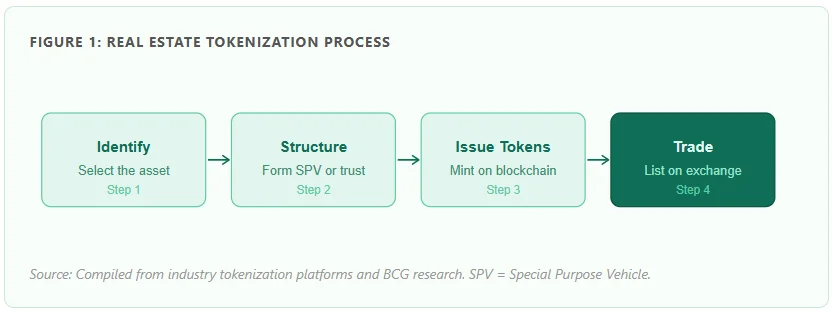
RealT, a U.S.-based platform, has already tokenized dozens of residential properties. Token holders receive rental income automatically through smart contracts. Moreover, settlement happens in minutes rather than weeks. Traditional property transactions often take months to close.
Commodity-Backed Tokens: Gold in Your Digital Wallet
Gold is one of the oldest stores of value in human history. The global gold market is worth approximately $13 trillion, according to the World Gold Council. Yet owning physical gold involves real challenges. Storage, insurance, and transport add friction and cost.
Gold-backed tokens remove this friction entirely. Each token is pegged to a fixed amount of physical gold held in an audited vault. Paxos Gold (PAXG) is one of the most established examples. Each PAXG token represents one troy ounce of gold stored at Brink’s vault in London. Investors can hold PAXG digitally, transfer it globally in seconds, and redeem it for physical gold on request.
Tether Gold (XAUT) offers a similar structure backed by bars stored in Switzerland. Both products enable fractional gold ownership. An investor can hold 0.001 of a troy ounce. This accessibility dramatically lowers the entry barrier.
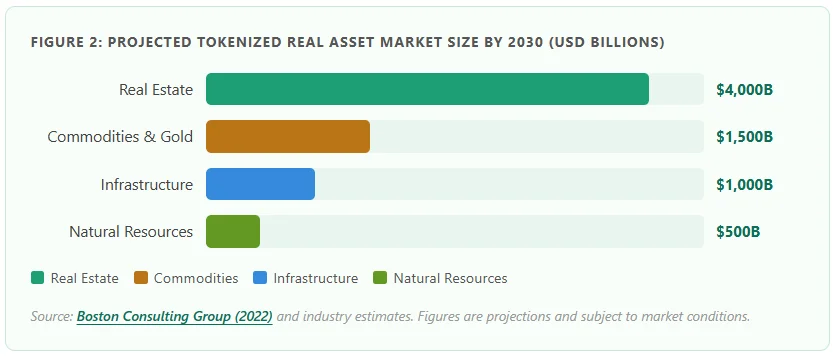
Tokenized Physical Asset Market: 2030 Projections
Liquidity Transformation: The Core Value Proposition
Liquidity transformation is the most powerful outcome of tokenization. Traditional real assets sit in narrow markets with few buyers and sellers. A commercial property owner may wait months to find a qualified buyer willing to commit millions of dollars.
Tokenization breaks this cycle fundamentally. By converting an asset into thousands of small tokens, it creates a much broader market. More buyers can participate. Furthermore, tokens can trade on secondary exchanges around the clock, seven days a week.
According to Boston Consulting Group, tokenized illiquid assets could reach $16 trillion by 2030. Real estate and commodities will represent a meaningful share of this total. The growth trajectory is substantial.
What This Means for Investors
Tokenization opens meaningful new pathways for a wider group of investors. Previously, real assets required large capital commitments. Now, smaller investors can access these markets at a fraction of the traditional cost. This democratizes a segment once reserved for institutions and ultra-high-net-worth individuals.
Additionally, tokenized assets offer greater transparency. Every ownership change is recorded permanently on the blockchain. Smart contracts automate income distribution without intermediaries. There is no need for paper-based record keeping or expensive notaries.
However, the regulatory landscape is still evolving. Different countries treat tokenized asset ownership differently. Some jurisdictions have clear rules; others remain ambiguous. The World Economic Forum has identified regulatory clarity as the primary driver of adoption. Before investing, understanding the applicable legal framework is essential.
Furthermore, market liquidity varies across platforms. Some tokenized assets trade in thin markets with limited daily volume. Therefore, investors should assess platform quality, asset fundamentals, and legal structure carefully before committing any capital.
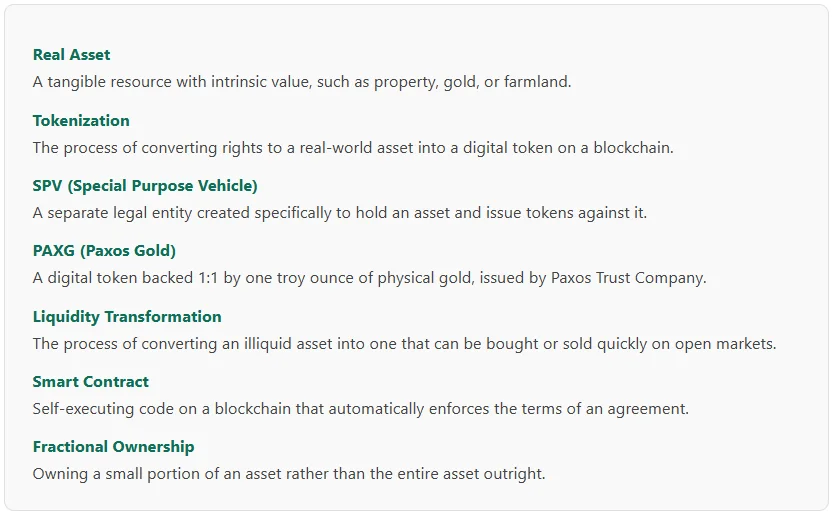
Glossary of Terms