


June 05, 2026 – The corporate spend management startup secures new funding. Investors back its AI expansion strategy and strong revenue growth.
In Summary
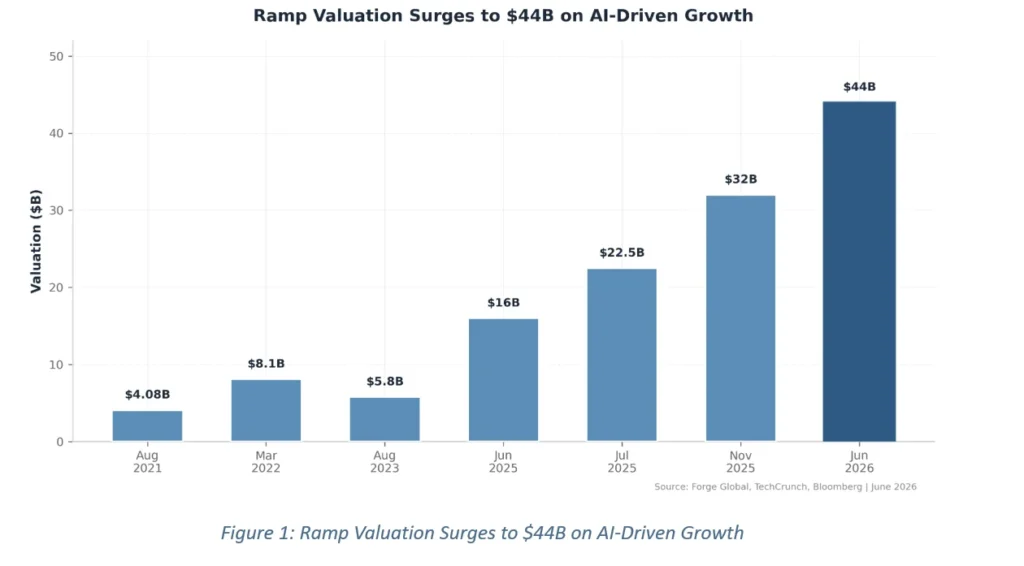
Ramp reaches a $44 billion valuation in June 2026
ICONIQ, GIC, and Ontario Teachers co-lead the funding round
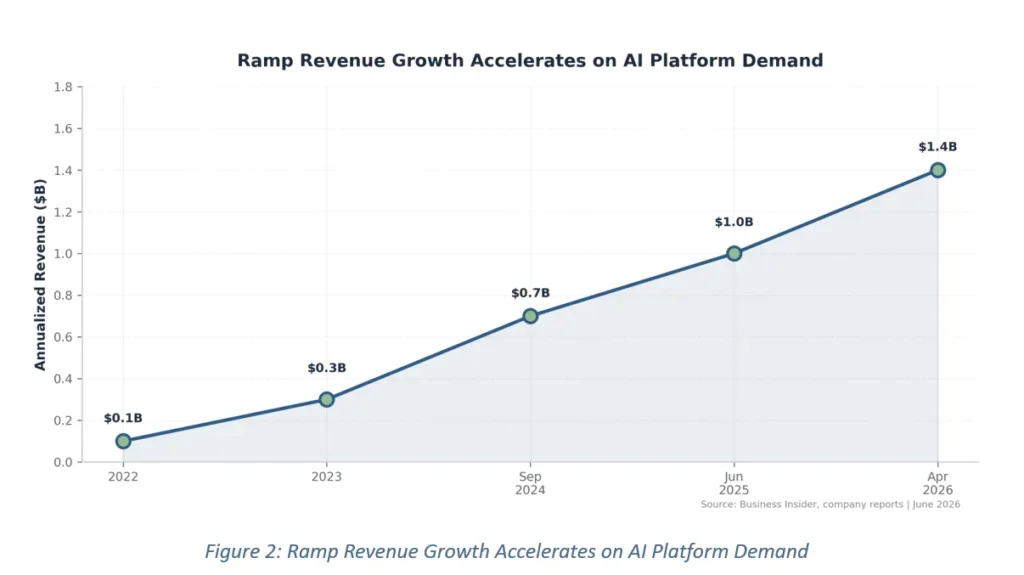
Annualized revenue hits $1.4 billion as of April 2026
The startup serves over 45,000 business customers globally
Ramp prepares for IPO readiness by year-end
Ramp has closed a new funding round at a $44 billion valuation. The round marks another major milestone for the fast-growing fintech startup. The company continues to attract top-tier investors.
Bloomberg first reported the news on June 4, 2026. The round underscores investor confidence in AI-powered finance.
Funding Round Details
Ramp announced the fresh financing on June 4, 2026. The round brings its total equity funding to roughly $2.5 billion. This marks a stunning rise from its $5.8 billion valuation in 2023. The startup has defied market headwinds with consistent growth.
ICONIQ Capital, GIC, and Ontario Teachers’ Pension Plan co-led the round. Goldman Sachs Alternatives and D.E. Shaw also joined as new investors.
Existing backers such as Founders Fund and Thrive Capital participated too. The round signals strong confidence in Ramp’s business model and future growth.
The valuation leap reflects Ramp’s rapid expansion into AI-powered tools. The company has nearly tripled its value in just twelve months.
AI Strategy Fuels Growth
Ramp embeds artificial intelligence across its spend management platform. AI agents now handle expense approvals, fraud detection, and policy enforcement.
The company released its first autonomous finance agents in July 2025. These bots manage real-time policy enforcement and fund optimization tasks.
CEO Eric Glyman sees AI as a core growth driver. He predicts AI agents will take over routine finance tasks by 2026. This vision has attracted major institutional investors to the company.
The platform uses machine learning to flag out-of-policy spending. It also automates invoice processing and travel booking for clients.
Revenue and Customer Metrics
Ramp now powers over $80 billion in annualized purchase volume. Its revenue run rate reached $1.4 billion in April 2026.
Business Insider reported the $1.4 billion revenue figure in April. This marks sharp growth from $1 billion just months prior.
The startup serves more than 45,000 companies worldwide. Notable customers include Shopify, Anduril, and Notion.
Half of all clients use two or more platform products. The company reports positive free cash flow this year. Ramp has saved customers $10 billion and 27.5 million hours total.
Competitive Landscape
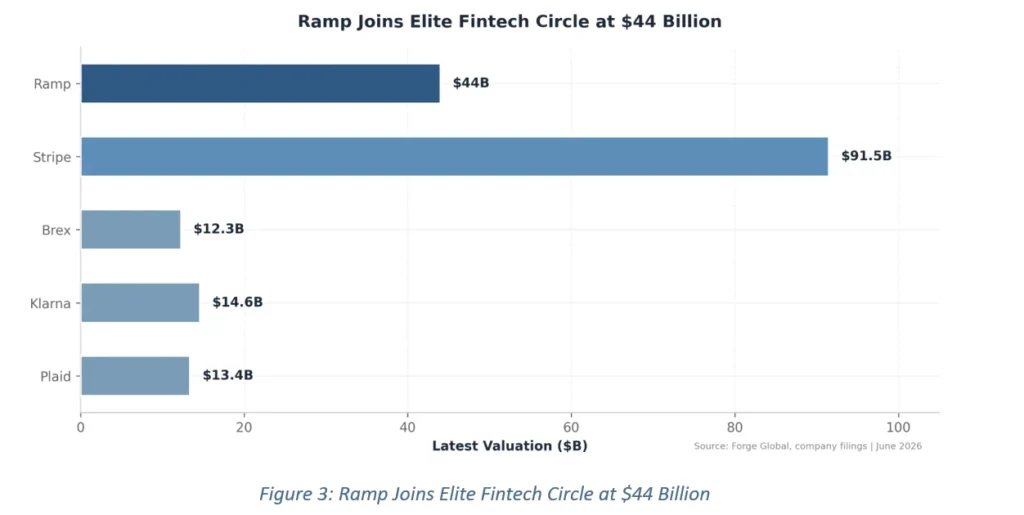
Ramp competes with Brex, BILL, and traditional card issuers. Its $44 billion valuation surpasses many peers in the sector.
The Wall Street Journal covered Ramp’s fundraising in May. The paper noted the startup’s valuation was already nearing $40 billion.
The company holds about 1.5% of the U.S. corporate card market. American Express remains the dominant player with a one-third share.
However, Ramp’s rapid growth threatens incumbents. Its AI-first approach gives it a key competitive edge. Venture capitalists see massive upside in the startup. One investor called it a potential $100 billion company.
The startup now targets larger enterprise clients. It also plans to expand into international markets beyond the United States.
Looking Ahead
Ramp aims to be IPO-ready by year-end. The company builds financial reporting infrastructure now.
TechCrunch first reported Ramp’s talks for a $40B+ round in May. The final $44B figure exceeded early expectations. (TechCrunch)
Only 30% of traders on Kalshi bet on a 2026 IPO. The startup may stay private longer despite the hype around its growth.
Glyman has stated that Ramp is not in a rush to go public. The company has sufficient cash reserves to fund its expansion plans.
Yahoo Finance noted the round included blue-chip investors. The participation signals strong institutional confidence.
The fintech sector watches Ramp’s next move closely. Its success could reshape corporate finance for years to come. Other startups will likely follow its AI-first playbook.




