

Core objective: Examine how real estate, gold, oil, and agricultural commodities are individually tokenized and what this means for investors.
In Summary
Real estate tokenization converts property into fractional ownership shares. Token holders earn rental yield and appreciation automatically via smart contracts.
Gold tokens like PAXG and XAUT are pegged 1:1 to physical gold in audited vaults. They are redeemable for physical gold and allow fractional ownership starting at $3.
Oil tokenization represents revenue rights, not physical oil. Token holders receive a share of oil sale proceeds, making it an income-oriented model.
Agricultural tokens such as Agrotoken’s WHEA are backed by grain stored in certified warehouses. Holders can redeem for a physical commodity or cash.
All four asset classes benefit from the same core mechanism: liquidity transformation. Tokenization converts illiquid, high-minimum assets into accessible, tradeable digital units.
Due diligence is essential. Platform regulation, asset auditing, and secondary market depth vary significantly across all four categories.
Physical assets have always attracted investors. Property, gold, oil, and wheat represent enormous pools of real-world value. However, they share a common weakness: they are hard to buy, divide, and sell quickly. Tokenization is changing this reality across all four asset classes.
In this article, we examine each asset class individually. We explain how tokenization works for each one. Furthermore, we highlight the key differences, benefits, and risks that investors should understand before participating in these markets.
Asset Class 01: Real Estate Tokenization
Real estate is the world’s largest asset class. It exceeds $326 trillion in global value, according to Savills Research. Yet purchasing property requires substantial capital. It also demands weeks or months of legal processes to complete a single transaction.
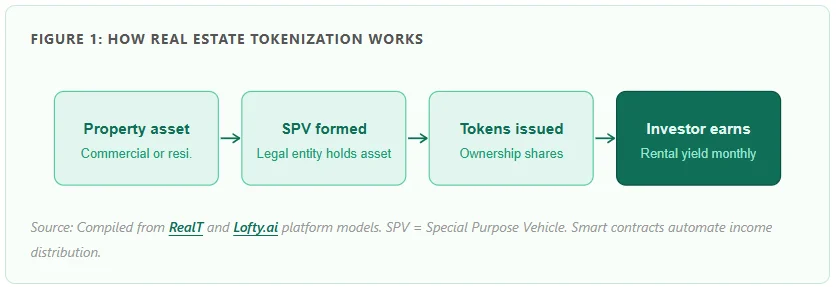
Real estate tokenization solves this by converting fractional ownership rights into blockchain tokens. A property owner forms a Special Purpose Vehicle (SPV) to legally hold the asset. The platform then issues tokens representing proportional ownership shares. Each token holder earns a share of rental income. Additionally, they benefit from any future increase in property value.
Consider a residential building generating $10,000 per month in rent. An investor holding 1% of the tokens receives $100 per month, automatically via a smart contract. There are no lawyers, paper contracts, or lengthy wire transfers involved.
RealT has tokenized U.S. residential properties with entry prices starting around $50 per token. Lofty.ai distributes rental income to holders daily. Both platforms allow global investors to own U.S. real estate without geographic restrictions. Moreover, secondary market transactions settle in minutes, not weeks.
Asset Class 02: Gold Tokenization
Gold has served as a store of value for thousands of years. Today, the global gold market is worth approximately $13 trillion, according to the World Gold Council. However, owning physical gold carries real costs. Storage, insurance, and international transport add friction and expense.
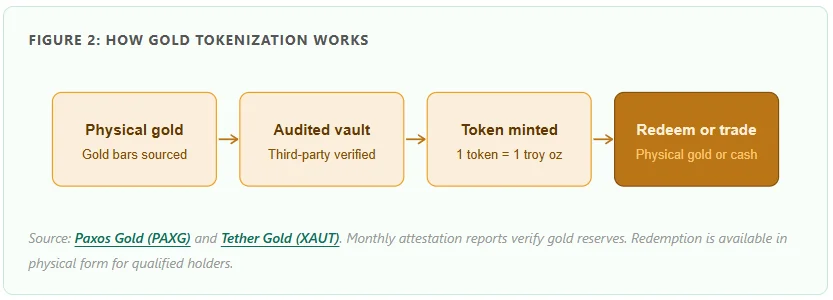
Gold-backed tokens eliminate this friction. Each token is pegged to a fixed quantity of physical gold held in a certified, audited vault. The token’s price tracks the spot price of gold in real time. Token holders avoid storage costs but retain full exposure to gold price movements.
Paxos Gold (PAXG) is one of the most established examples. Each PAXG token represents exactly one troy ounce of gold stored at Brink’s vault in London. Paxos publishes monthly attestation reports confirming all gold reserves. Investors can redeem PAXG for physical gold or sell it on supported exchanges.
Tether Gold (XAUT) follows a similar model. Each XAUT token is backed by one troy fine ounce of gold stored in Switzerland. Fractional ownership is a major benefit. An investor can purchase as little as 0.001 of a troy ounce. This gives access to gold for as little as $3. Furthermore, gold tokens transfer instantly across borders, unlike physical bars.
Asset Class 03: Oil Tokenization
Oil is one of the world’s most actively traded commodities. Global oil markets handle trillions of dollars in annual transactions, according to the International Energy Agency. Traditionally, direct oil investment required futures contracts, commodity ETFs, or equity stakes in oil producers. Each route involves complexity, cost, and restricted access.
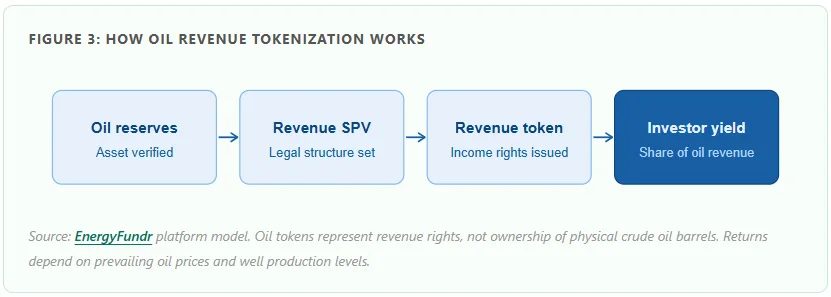
Oil tokenization introduces a simpler alternative: revenue rights tokens. These tokens represent a contractual share of the income generated by a producing oil asset. Token holders do not own physical barrels of crude. Instead, they hold a legal right to a defined portion of the revenue from oil sales.
Platforms such as EnergyFundr have pioneered this model for North American oil and gas wells. Investors can access fractional stakes in producing wells. Smart contracts automate monthly revenue distributions directly to each token holder’s wallet. There is no need for a broker or intermediary.
However, oil tokenization carries unique risks. Commodity prices are highly volatile. Geopolitical events can cause sharp and sudden price swings. Furthermore, the regulatory framework for oil revenue tokens varies significantly by jurisdiction. Therefore, oil tokens are best suited for investors with a higher risk tolerance and a clear understanding of energy markets.
Asset Class 04: Agricultural Commodities Tokenization-Wheat and Beyond
Agricultural commodities form the backbone of global food supply chains. Wheat, soybeans, and corn underpin the diets of billions of people every day. Yet gaining direct investment exposure to grain prices has traditionally been complex. Futures contracts require specialist knowledge and carry margin call risks.
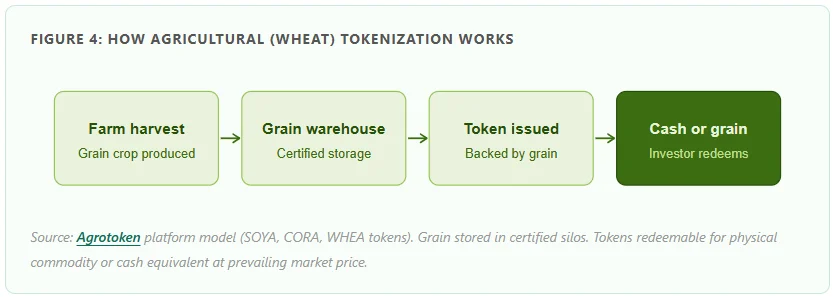
Agricultural tokenization offers a simpler path. Each token represents ownership of a specific quantity of physical grain stored in a certified warehouse. Token holders can redeem their tokens for physical grain. Alternatively, they can sell the tokens on a digital exchange for cash at the prevailing commodity price.
Agrotoken, based in Argentina, has pioneered this model. Their platform issues tokens backed by soybeans (SOYA), corn (CORA), and wheat (WHEA). Farmers can tokenize their stored grain and use these tokens as collateral to access working capital loans. Meanwhile, investors can buy the tokens for direct exposure to grain price movements without a futures account.
This model creates a dual benefit. Farmers gain flexible liquidity from their harvests. Investors gain access to commodity markets at lower cost and complexity. However, agricultural tokens carry weather-related risks. A poor harvest or supply chain disruption affects both token value and availability. Investors should assess the warehouse certification, the issuer’s credibility, and the commodity’s storage quality before investing.
How the Four Asset Classes Compare
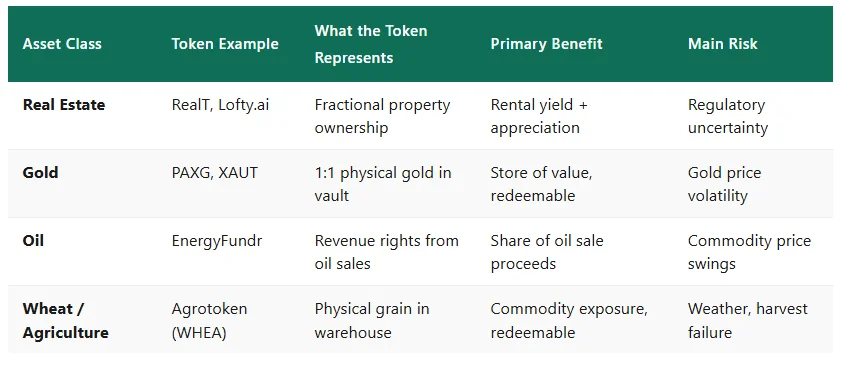
Each asset class has a distinct tokenization mechanism and risk profile. The table below summarises the key differences.
The Shared Value
Despite their differences, all four asset classes share the same core problem: illiquidity. A property seller waits months for a buyer. A gold bar requires physical transport. An oil well investment requires complex legal structuring. A grain farmer waits until harvest to monetise stored crops.
Tokenization solves each of these problems through the same mechanism. It converts ownership rights into small, tradeable units. Each unit can be bought or sold on a secondary market. Furthermore, smart contracts automate income distribution, removing intermediaries and delays.
What This Means for Investors
Tokenization creates meaningful new pathways across all four asset classes. Fractional access is the most obvious benefit. An investor can now hold a slice of a Miami apartment, a gram of gold, a revenue share in an oil well, and a kilo of wheat simultaneously. Previously, this level of diversification was only available to large institutions.
However, each asset class carries distinct risks. Real estate tokens face regulatory and liquidity risks. Gold tokens track commodity price volatility. Oil revenue tokens are sensitive to geopolitical events and energy market cycles. Agricultural tokens are exposed to weather, harvest failure, and supply chain disruption.
Additionally, platform quality matters significantly. Investors should verify whether platforms are regulated, whether underlying assets are properly audited, and whether secondary markets have sufficient trading volume.
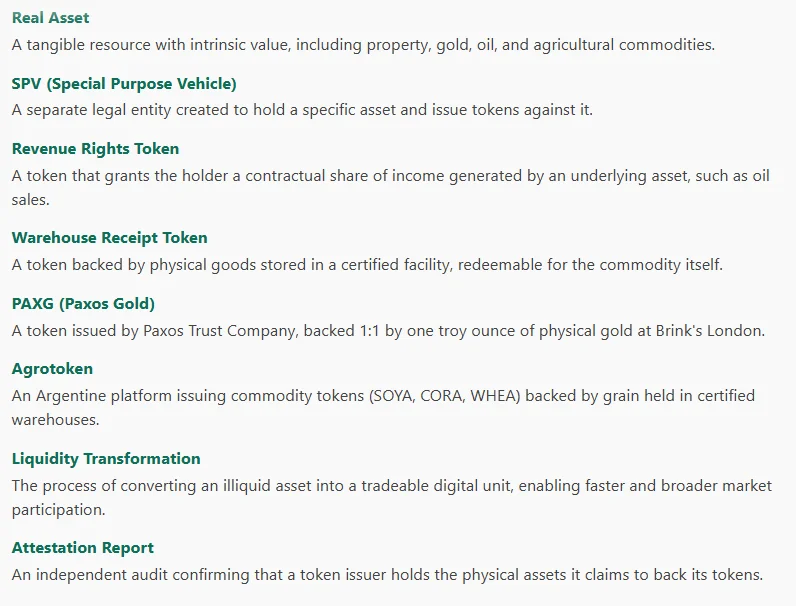
Glossary of Terms