

September 17, 2026 – Memory has become the tightest link in the AI supply chain. Two quarters of record price rises have reshaped the industry and reached consumer devices.

In Summary
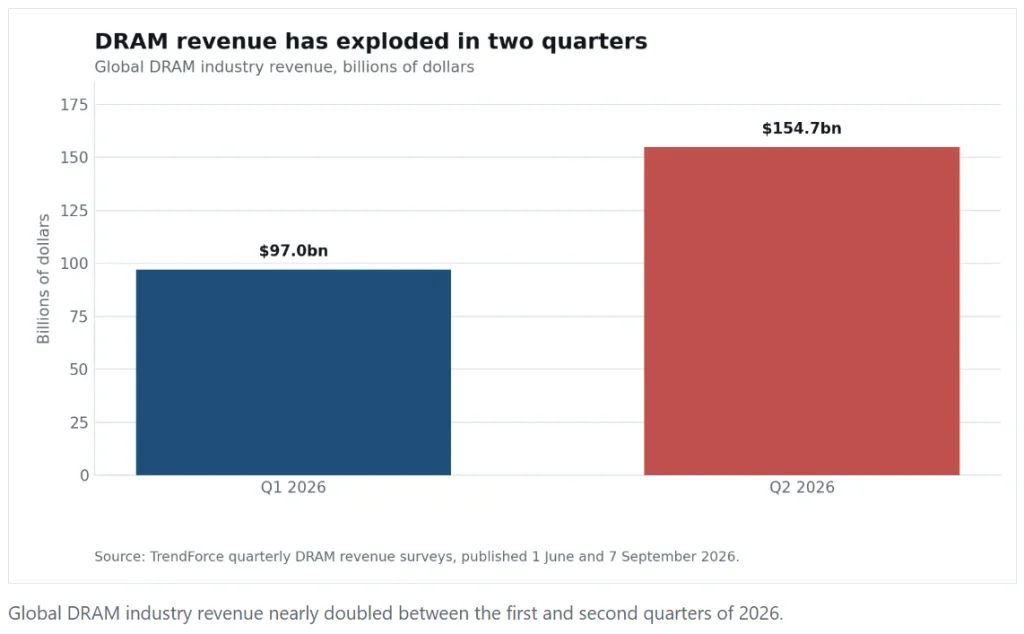
Global DRAM revenue reached 154.73 billion dollars in the second quarter of 2026.
Industry revenue grew 81 percent in the first quarter and 59.5 percent in the second.
Samsung holds a 39.4 percent share, ahead of SK hynix at 24.9 percent and Micron at 23.3 percent.
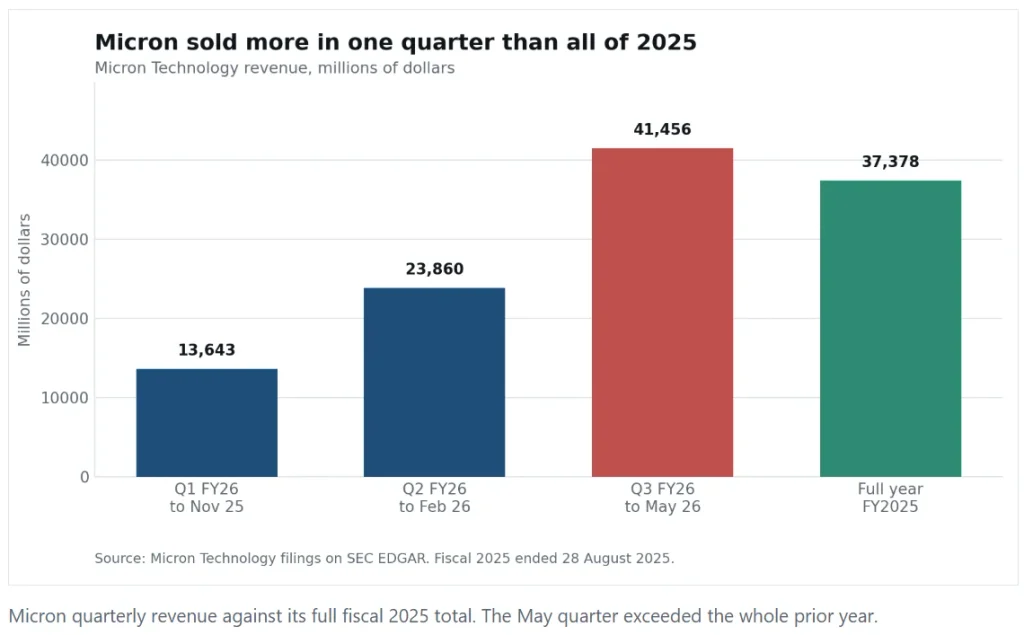
Micron earned more in the quarter to May than in all of fiscal 2025.
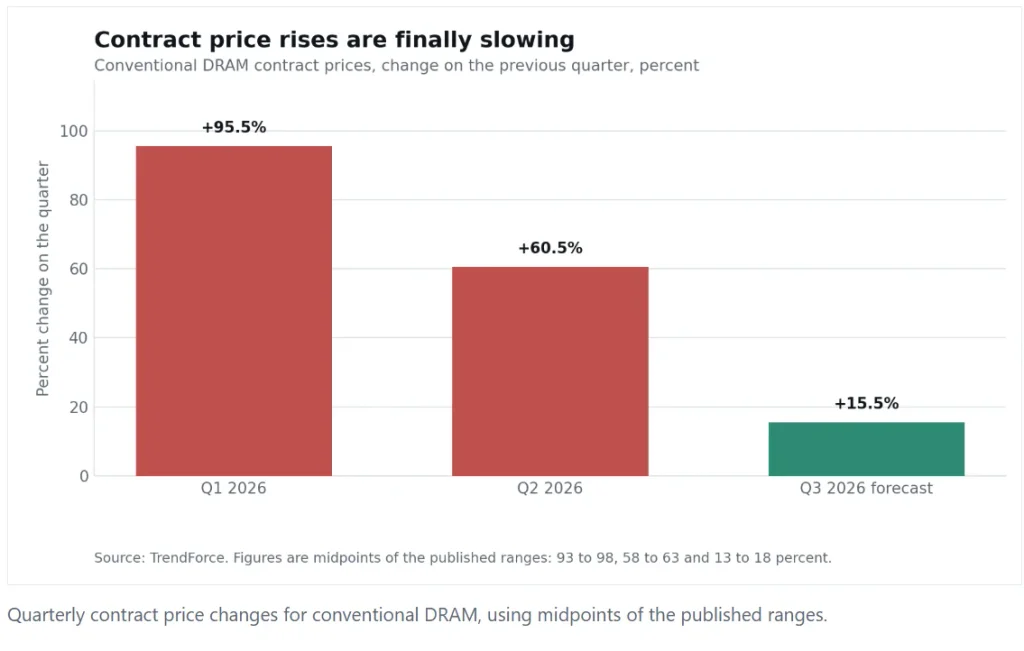
Third quarter contract price rises should slow to between 13 and 18 percent.
The quietest corner of the chip industry has become its most profitable. Global memory chip revenue reached 154.73 billion dollars in the June quarter. That is a jump of 59.5 percent in three months.
Artificial intelligence servers caused the squeeze. They need vast amounts of memory, and supply cannot expand fast enough.
Buyers of phones and laptops now pay the price. Consumer devices compete with data centres for the same chips.
Two quarters that changed the industry
The first quarter already looked extraordinary. Industry revenue hit 97 billion dollars, a rise of 81 percent on the quarter before.
Contract prices explain most of that. Conventional DRAM prices rose between 93 and 98 percent in the March quarter alone.
June brought another 58 to 63 percent increase. Two quarters of that scale roughly triple the cost of the same chip.
Supply simply could not respond. Memory fabs cost tens of billions and take years to build. Producers had also cut investment during the previous downturn.
Demand meanwhile moved in one direction. Every AI server needs far more memory than a traditional one. High bandwidth memory also eats wafer capacity at a punishing rate. Each stacked die multiplies the silicon a single module needs.
Every supplier gained, but not equally
Samsung leads on scale. It earned 60.98 billion dollars in the June quarter, up 63.4 percent, for a 39.4 percent share.
Micron grew fastest among the big three. Revenue rose 65.5 percent to 36.00 billion dollars, lifting its share to 23.3 percent.
SK hynix lagged its rivals. Growth of 37.9 percent cut its share to 24.9 percent from 28.8 percent three months earlier.
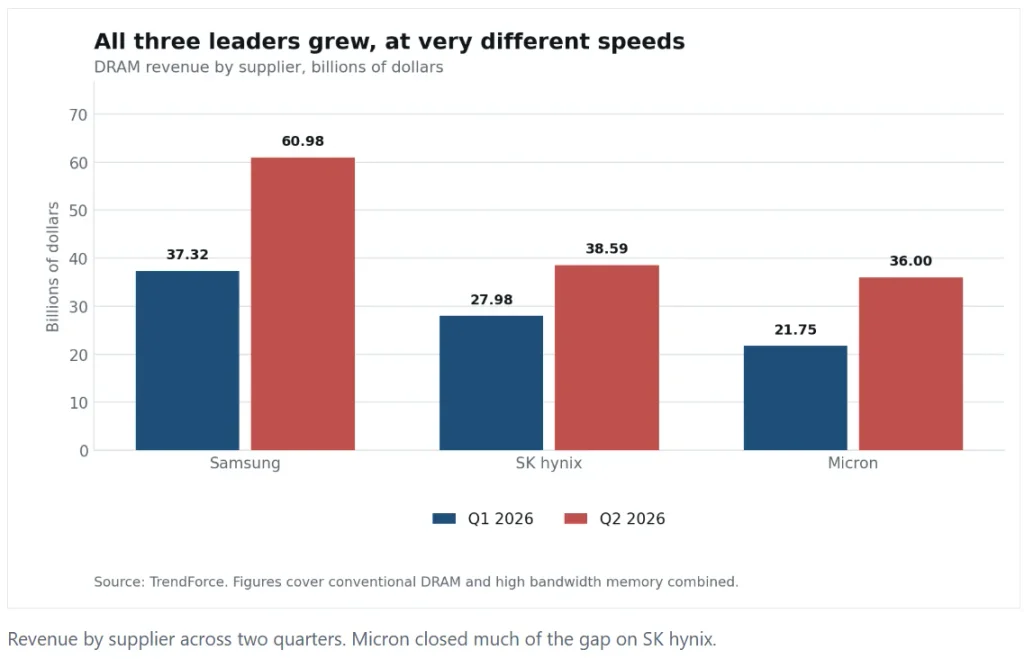
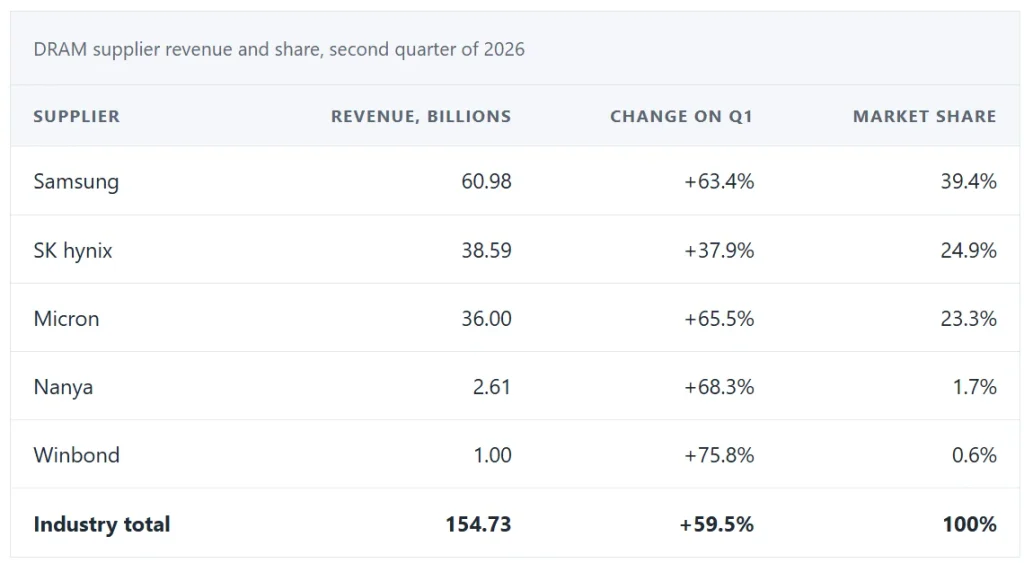
Smaller names grew even faster in percentage terms. Winbond rose 75.8 percent and Nanya 68.3 percent. Both work from a far smaller base.
Product mix explains the gap between the leaders. SK hynix leaned heavily on high-bandwidth memory, which sells under long-term contracts. Conventional DRAM repriced far faster during the quarter.
One company shows the scale
Micron files quarterly accounts with American regulators. Its numbers confirm what the survey data suggests.
Revenue in the quarter to 28 May reached 41,456 million dollars. Its quarterly report shows 13,643 million for the quarter to November 2025.
Compare that with the full year. Micron earned 37,378 million dollars across all of fiscal 2025. One quarter of 2026 beat an entire prior year.
Memory chip prices are starting to cool
The third quarter should bring relief. TrendForce expects conventional DRAM contract prices to rise just 13 to 18 percent.
That still means higher prices, but the pace has broken. The July forecast points to weaker consumer demand and a much higher comparison base.
Affordability sets the ceiling. Record contract prices have pushed consumers to their limits, and they simply stop buying.
Long term agreements also cap the damage. Large cloud buyers locked in supply early, so their prices move more slowly than the spot market.
Server memory still rises faster than the rest. TrendForce expects server DRAM contract prices to gain 13 to 18 percent in the third quarter. Mobile and graphics memory follow a similar path.
Flash memory followed the same path
NAND flash tells a parallel story. Combined revenue across the top five brands rose 77 percent in the June quarter.
Micron climbed to third place in that ranking. Enterprise drives drove the gains, while consumer drives lagged.
Third quarter NAND contract prices should rise 10 to 15 percent. Client drives face smaller increases because customers hold heavy inventory.
What this means for buyers
Device makers face a hard choice. They can absorb the cost, cut memory capacity, or raise prices. Most will do some of each.
Entry-level models take the hardest hit. Memory forms a larger share of their bill of materials. Budget phones and laptops therefore lose storage before premium ones do.
Watch specifications rather than headline prices. A phone with less storage at the same price is a price rise in disguise. Industry analysts expect exactly that pattern through the coming cycle.
Capacity offers the only real fix. New fabs take two to three years to build, so relief will not arrive quickly. Until then, AI demand sets the price for everyone.
Investors face a familiar warning too. Memory has always been cyclical, and record margins invite heavy new investment. The last three upswings all ended in oversupply.
Timing that turn is the hard part. Order books stay full while fabs remain under construction, so the correction usually arrives later than the sceptics expect.