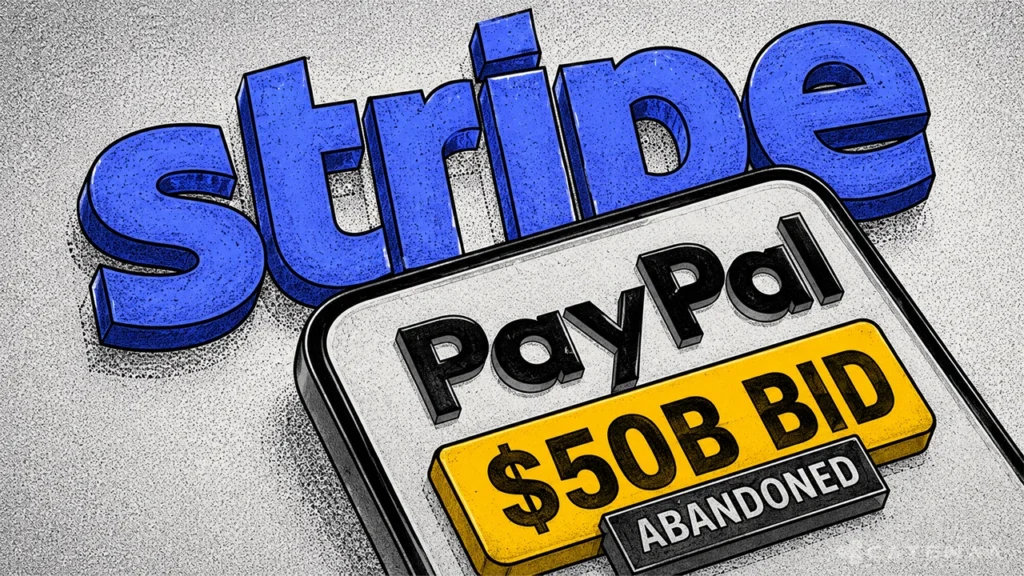


August 31, 2026 – The private equity consortium walked away from months of buyout talks, sending PayPal shares tumbling in premarket trading.
In Summary
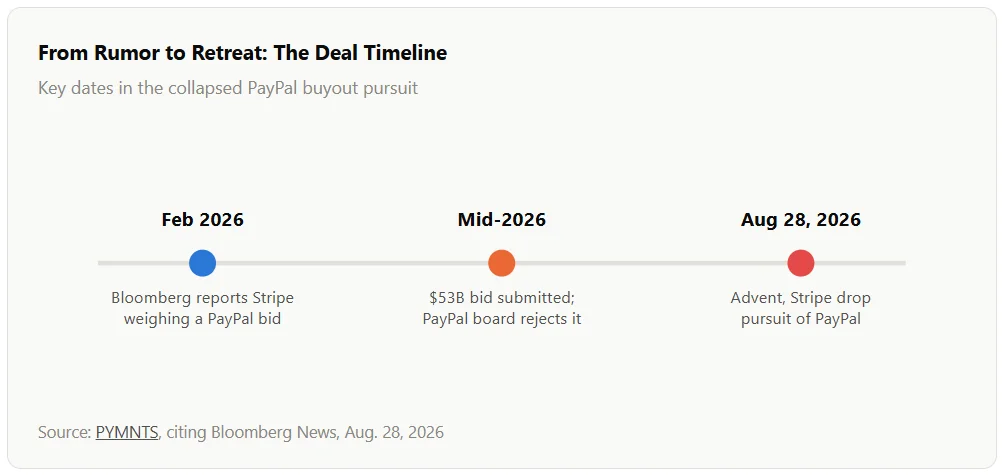
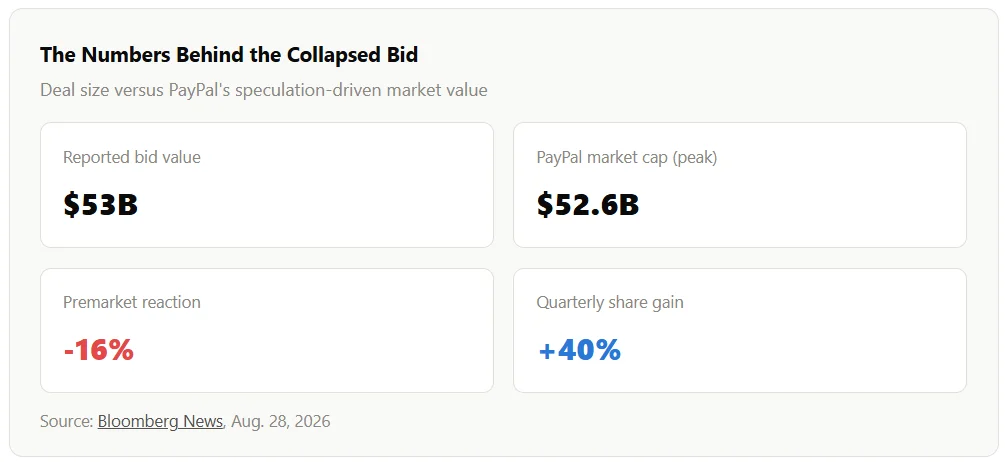
Advent International and Stripe offered more than $50 billion for PayPal, reportedly $53 billion.
PayPal’s board viewed the offer as insufficient, according to Bloomberg News.
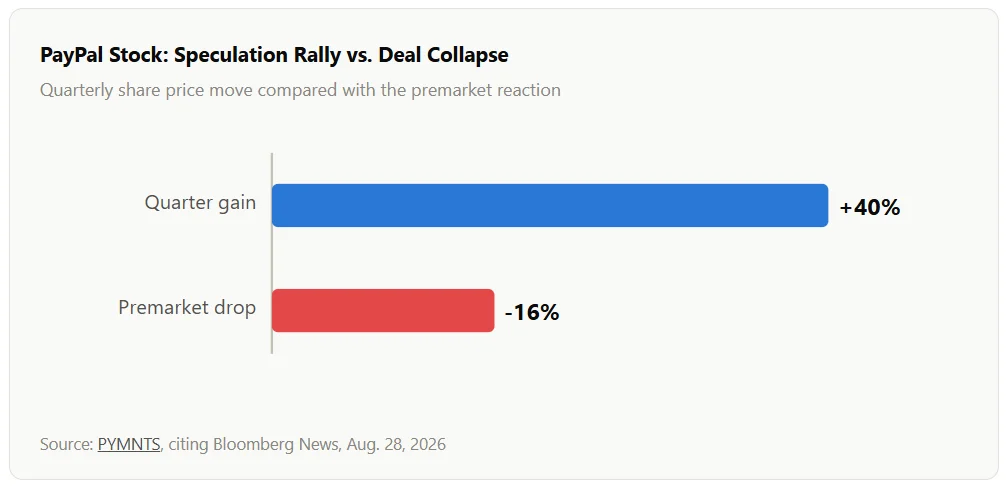
PayPal shares fell as much as 16% in premarket trading once the news broke.
The stock had gained over 40% this quarter on takeover speculation alone.
Stripe is now redirecting capital toward AI infrastructure, including its OpenRouter acquisition.
Advent International and Stripe have walked away from PayPal. The private equity consortium dropped its pursuit after months of talks. Bloomberg first reported the retreat on Friday. PayPal shares tumbled as much as 16% in premarket trading. The reversal erases weeks of takeover speculation. Investors are now repricing PayPal without a deal on the table.
A Deal Months in the Making
Rumors began back in February 2026. Bloomberg reported then that Stripe was weighing a bid for PayPal, or parts of it. PayPal’s stock had slumped at the time, which made the fintech pioneer a tempting target. Advent International, a private equity firm, joined Stripe to form a consortium. Together, they reportedly offered $53 billion for the company. That figure would have ranked among the largest leveraged buyouts on record.
PayPal remains a household name in online payments. Still, the company has struggled to match younger rivals on growth. Its stock traded well below prior highs for several years. That backdrop is exactly why a buyout looked plausible to many analysts. A private equity owner could strip out costs. It could also run PayPal without the pressure of quarterly earnings calls. Stripe, meanwhile, could have folded PayPal’s merchant network into its own payment rails.
Why PayPal’s Board Said No
PayPal’s board judged the offer insufficient. Details on its exact reasoning remain unclear. However, the timing offers some clues. Enrique Lores took over as CEO in March 2026. He replaced Alex Chriss after a rocky stretch for the company. Lores quickly pledged specific financial targets for each business unit. That restructuring push may have shifted the board’s view of PayPal’s standalone value. Representatives for Advent, PayPal, and Stripe all declined to comment on the matter, according to Investing.com.
Shares Reverse Course Sharply
Markets reacted swiftly to the news. PayPal shares fell as much as 16% in premarket trading. That drop marks a sharp reversal in sentiment. The stock had actually climbed more than 40% this quarter. Takeover speculation drove much of that rally. At its peak, the speculation pushed PayPal’s market value to roughly $52.6 billion. That figure sat close to the reported $53 billion bid itself. Now, without a deal, investors must reassess PayPal’s value on fundamentals alone.
Stripe Pivots Toward Artificial Intelligence
Stripe is not standing still, either. The payments company recently acquired OpenRouter, an AI model marketplace. That move suggests Stripe sees more value in AI infrastructure right now. Building payment rails for AI agents may offer faster growth than a costly PayPal acquisition. Bloomberg noted that the buyers could still return if circumstances change. For now, though, Stripe appears focused elsewhere.
What This Means for Fintech Consolidation
This collapsed bid says something about the current deal environment. Even well-funded consortiums are growing more disciplined on price. Private equity firms face higher financing costs in this rate environment. That makes mega-deals harder to justify financially. PayPal, meanwhile, must now prove it can grow independently. Lores’ restructuring plan faces fresh scrutiny without a buyout safety net. Investors will watch the company’s next earnings report closely for signs of real progress.
Other payment companies will likely study this outcome too. A $53 billion offer getting rejected sets an informal price floor. Future suitors now know PayPal’s board expects a larger premium. That standard could discourage some bidders altogether. It could also invite a higher offer down the road, should conditions shift again. Either way, PayPal enters the fall with its independence intact but its strategy under a brighter spotlight.
For PayPal, the message looks clear. No rescue is coming, at least not now. The company must deliver on its own turnaround plan. Wall Street will be watching every quarter for proof that it can.