

August 02, 2026 – Tether Q2 2026 profit reached $1.5 billion from operations. However, falling asset values cut its reserve cushion by half.
In Summary
Net operating profit reached $1.5 billion, mainly from Treasury bills and repurchase agreements.
Excess reserves fell 50% to $4.11 billion as gold and Bitcoin values declined.
Liquid assets remained dominant, while secured lending dropped 15% during the quarter.
Tether Q2 2026 profit comes from Treasuries
Tether reported $1.50 billion in second-quarter net operating profit. Its Treasury and repurchase agreement portfolio generated most earnings.
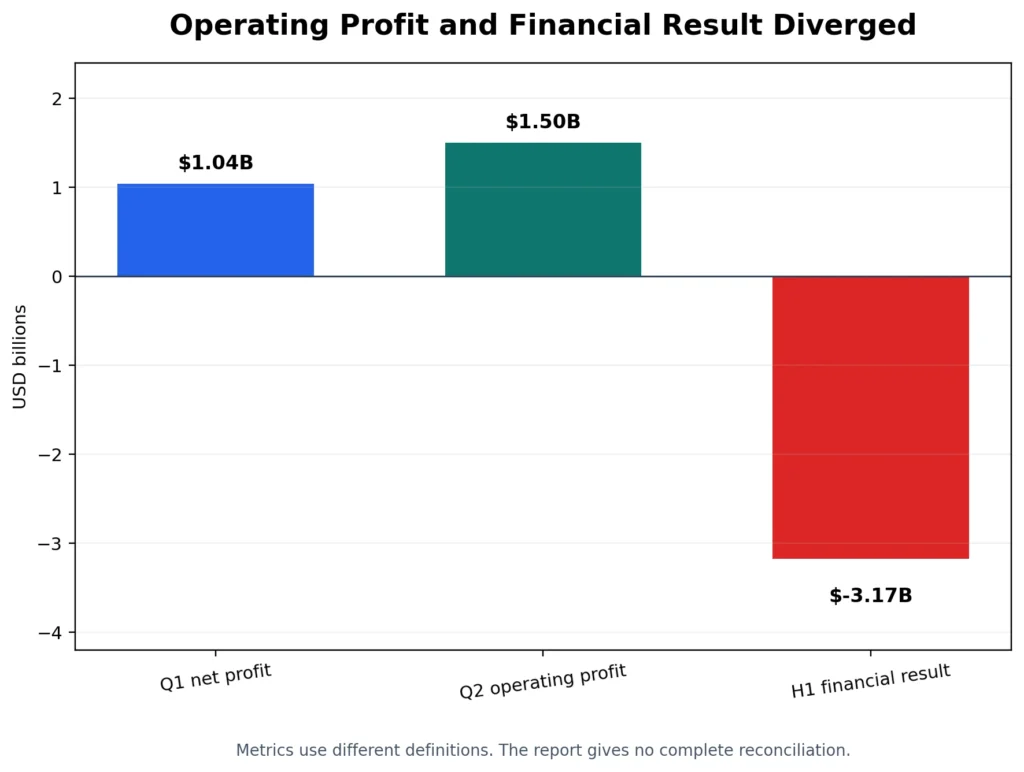
That result exceeded the $1.04 billion net profit recorded during the first quarter. However, the measures are not fully comparable.
June’s three-month Treasury bill rate averaged 3.66%. Therefore, a large short-term portfolio still produced substantial recurring income.
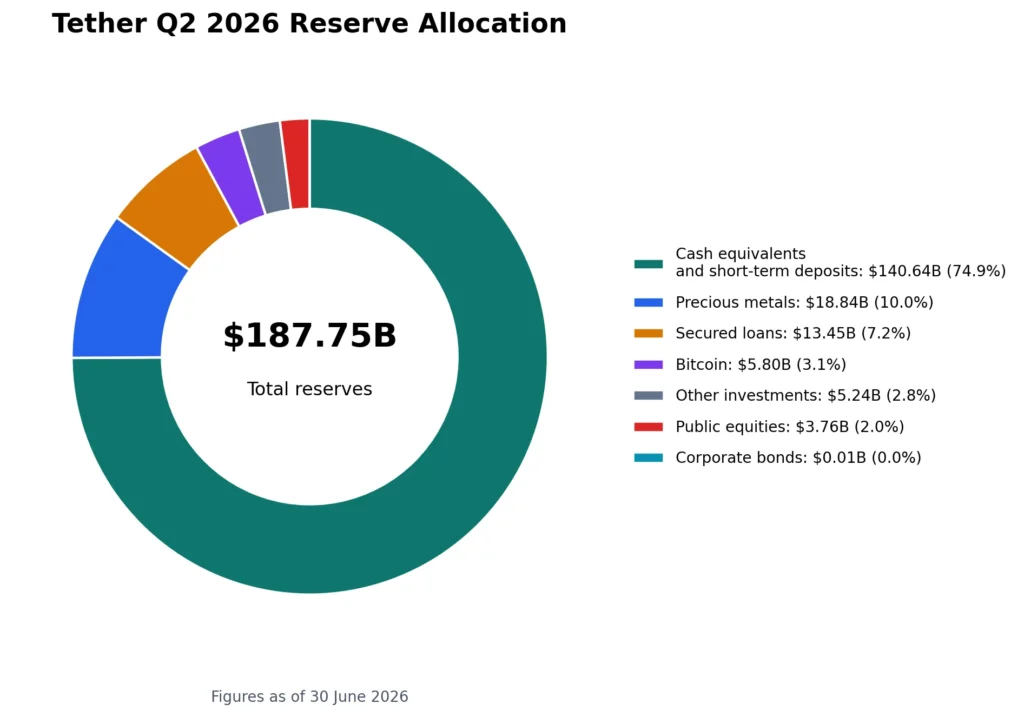
At June-end, US Treasury bills represented $114.96 billion. Overnight and term repurchase agreements added another $25.62 billion.
Together, those instruments equalled almost 75% of total reserves. This concentration supports daily liquidity and predictable interest income.
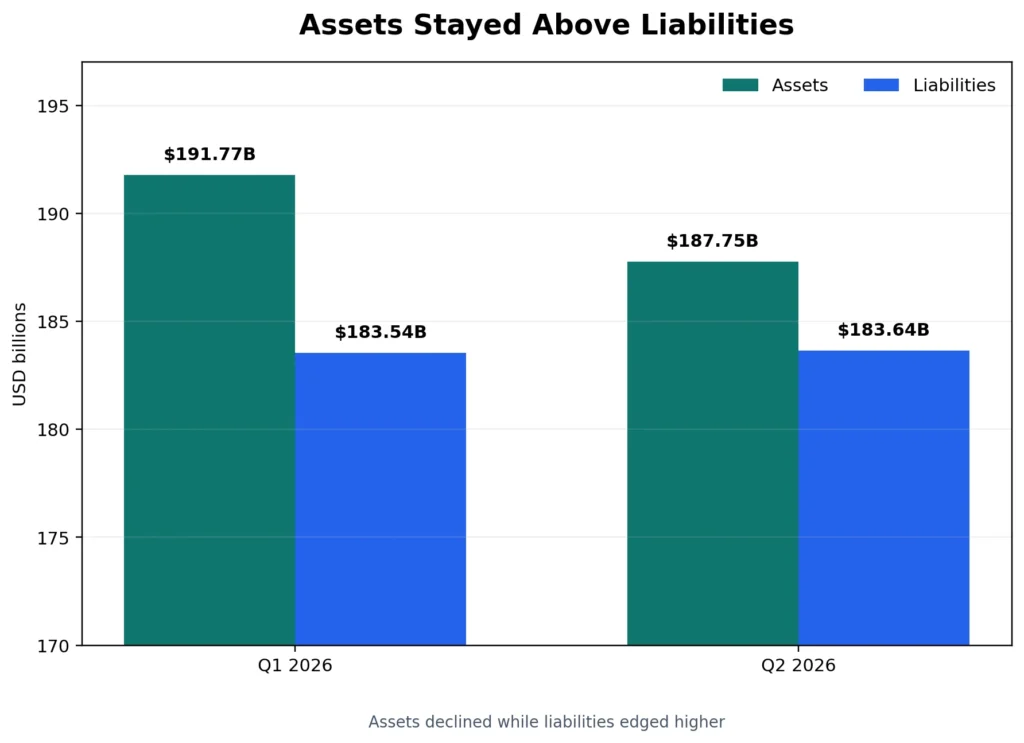
Tether held total assets of $187.75 billion against liabilities of $183.64 billion. Consequently, reported reserve coverage stood near 102.24%.
The reserve buffer tells a different story
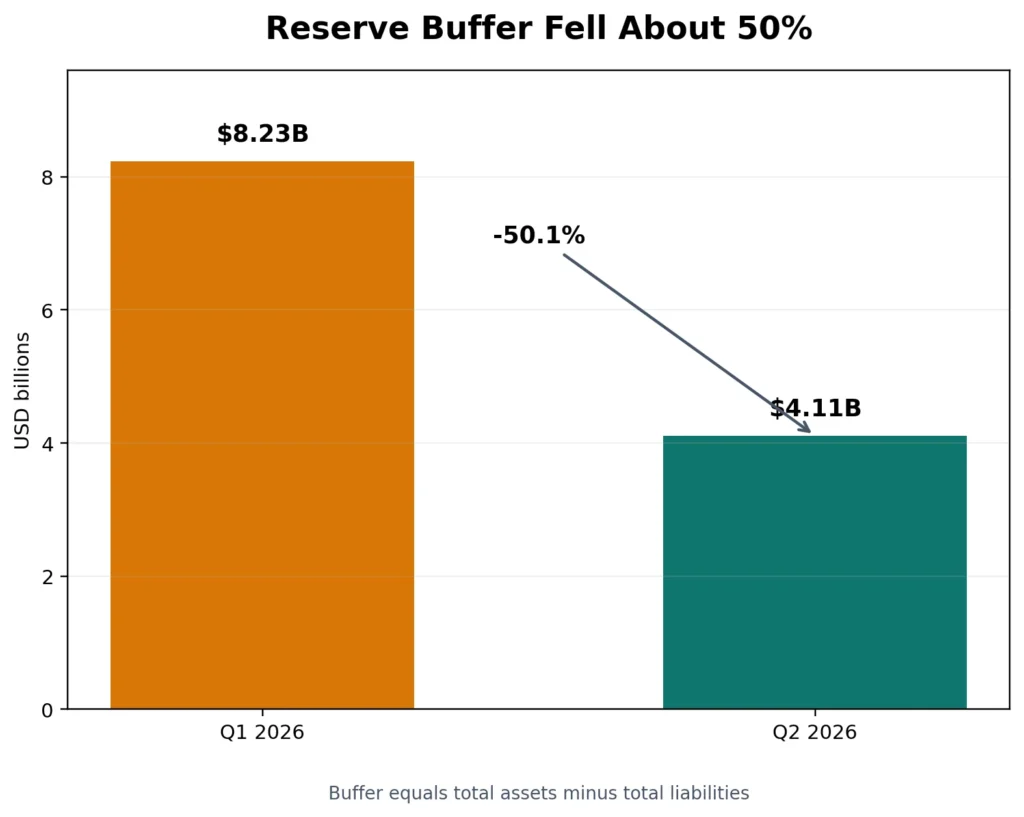
The headline profit masks a sharp decline in Tether’s financial cushion. Excess reserves fell from $8.23 billion to $4.11 billion.
That represents a quarterly reduction of about 50%. Meanwhile, total liabilities increased slightly, despite broader digital-asset market weakness.
Gross issued tokens reached $184.59 billion. The figure rose roughly $446 million from March, showing continued demand for digital dollars.
However, total assets fell by $4.02 billion during the quarter. This decline explains why the coverage ratio weakened.
The Q2 assurance report shows a negative $3.17 billion financial result for the first half. That contrasts with positive operating profit.
The report does not provide a complete reconciliation. Still, fair-value movements likely created much of the gap.
This distinction matters. Operating earnings measure the reserve engine, while financial results also capture changing asset prices.
More gold, but a lower market value
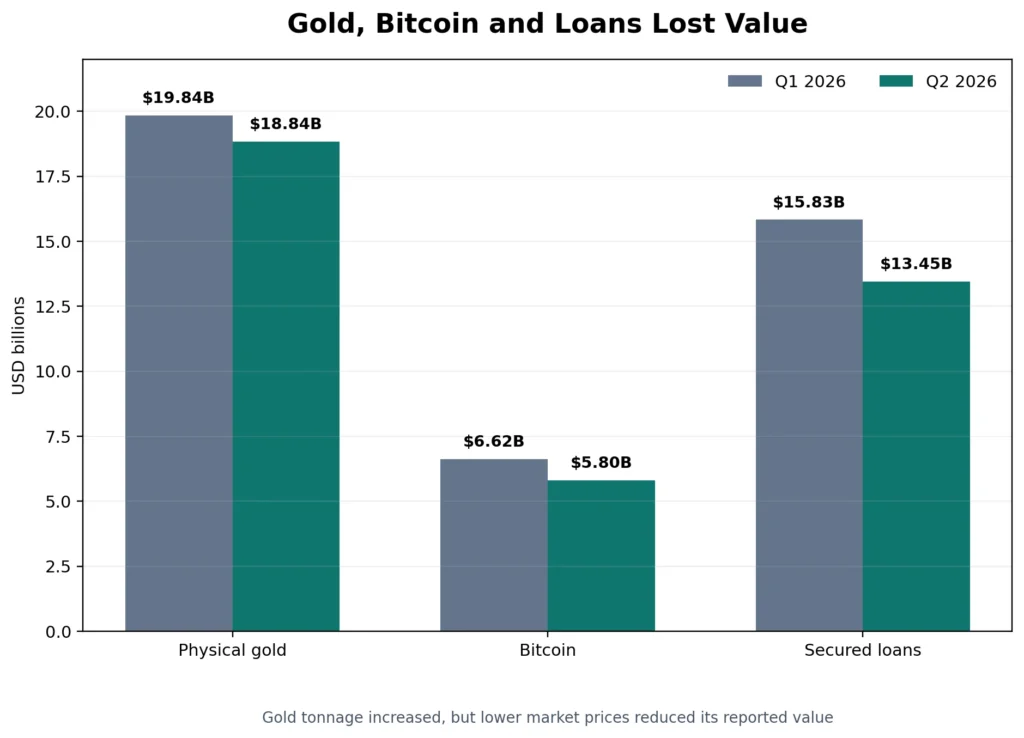
Tether added 14 metric tons of physical gold, taking holdings above 146 tons. Yet precious-metal value fell by $999 million.
Gold reserves ended June at $18.84 billion, down from $19.84 billion in March. The reporting price dropped to $4,008 per ounce.
March’s report used $4,668 per ounce. Therefore, higher bullion volume could not offset the quarter’s price decline.
Bitcoin reserves showed a similar effect. Their reported value dropped from $6.62 billion to $5.80 billion.
The June valuation used a Bitcoin price of $58,642. March’s assurance report used $68,194.
These assets diversify reserves and can increase long-term returns. However, they also make the reserve buffer more sensitive to market swings.
Secured lending falls as liquidity stays high
Tether reduced secured loans by $2.38 billion, or 15%. The balance declined to $13.45 billion by June-end.
This reduction improves reserve quality because loans carry borrower, collateral, and liquidation risks. Treasury bills usually offer simpler liquidity.
Still, secured loans represented 7.17% of total assets. Gold accounted for 10.03%, while Bitcoin represented 3.09%.
Cash equivalents and short-term deposits remained stable near $140.64 billion. The total slipped only 0.41% from March.
Therefore, the main liquidity layer changed little. Most pressure came from marked-down gold, Bitcoin, and declining secured loans.
Why the quarter matters
Tether’s business model remains highly profitable while short-term rates stay elevated. Scale turns modest Treasury yields into large earnings.
That dependency also links stablecoin economics to monetary policy. Lower rates could compress returns unless circulation expands enough to offset declining yields.
Yet the second quarter highlights an important trade-off. Diversification can support returns, but volatility can quickly absorb accumulated capital.
The reserve buffer still covered all reported liabilities. Nevertheless, its decline reduces protection against further market losses or redemption pressure.
Attestation work provided reasonable assurance over the June snapshot. It did not cover other dates or extraordinary market conditions.
Furthermore, the report is not a complete set of financial statements. Readers should not treat it as a full statutory audit.
For markets, the central signal remains mixed. Tether’s liquidity engine strengthened, but its shock absorber became materially thinner.
Future quarters will test whether operating income rebuilds that buffer. Gold prices, Bitcoin prices, and token growth will shape the outcome.




