

July 31, 2026 – Ondo Finance may pursue a major acquisition as tokenized securities move from experimentation toward scaled financial infrastructure.
In Summary
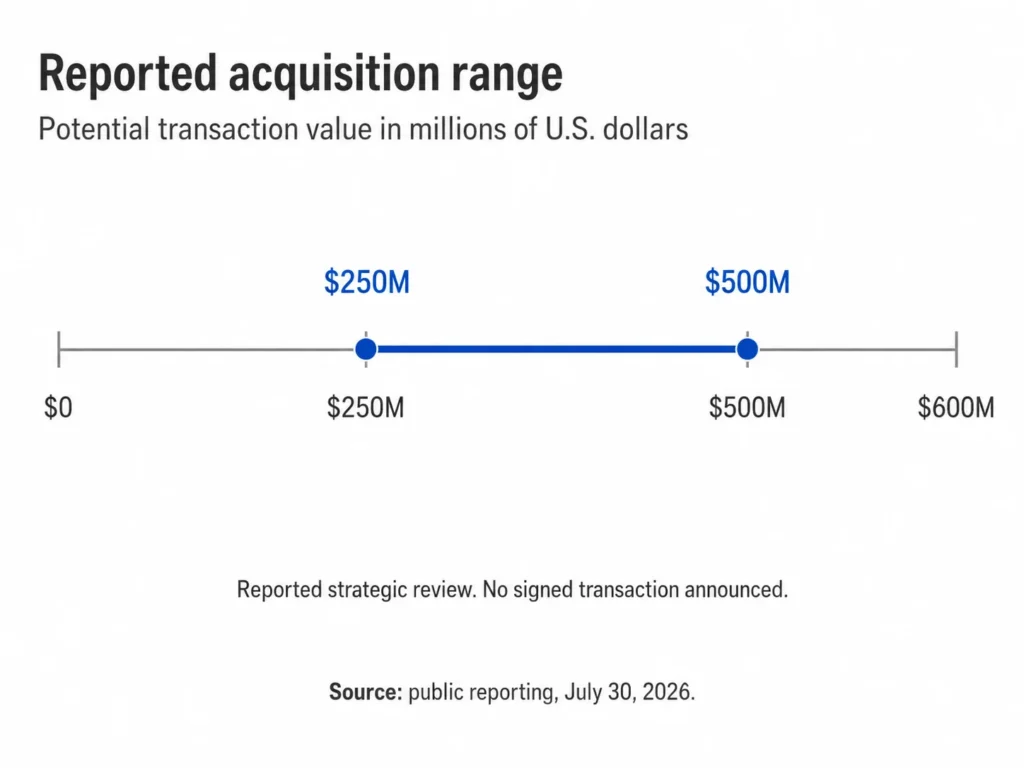
Ondo is reportedly assessing a transaction valued between $250 million and $500 million.
The company says it reviews opportunities but is not discussing a deal with any party.
A wealthtech purchase could add distribution, customers, licenses, and recurring fee income.
Execution risk remains high across securities, custody, and blockchain rules.
Ondo Finance is considering its largest strategic move yet. A reported review covers possible targets worth $250 million to $500 million.
The process remains preliminary. No formal advisers have been appointed, and Ondo says no counterparty discussions are underway.
That distinction matters. Investors should treat the range as strategic exploration, not an agreed valuation or signed transaction.
The key question is whether an acquisition adds profitable distribution, rather than simply expanding Ondo’s asset count.
Why a wealthtech target makes sense
Ondo already owns substantial product infrastructure. Its platform spans yield-bearing dollars, tokenized Treasuries, and tokenized stocks.
However, infrastructure alone does not guarantee durable distribution. Wealthtech firms can provide users, adviser channels, compliance systems, and portfolio tools.
Those capabilities could shorten Ondo’s route from product issuer to full investment platform. They could also deepen recurring revenue.
The logic resembles vertical integration. Ondo could control more of the customer journey, from onboarding through trading and portfolio reporting.
Current scale gives Ondo negotiating power
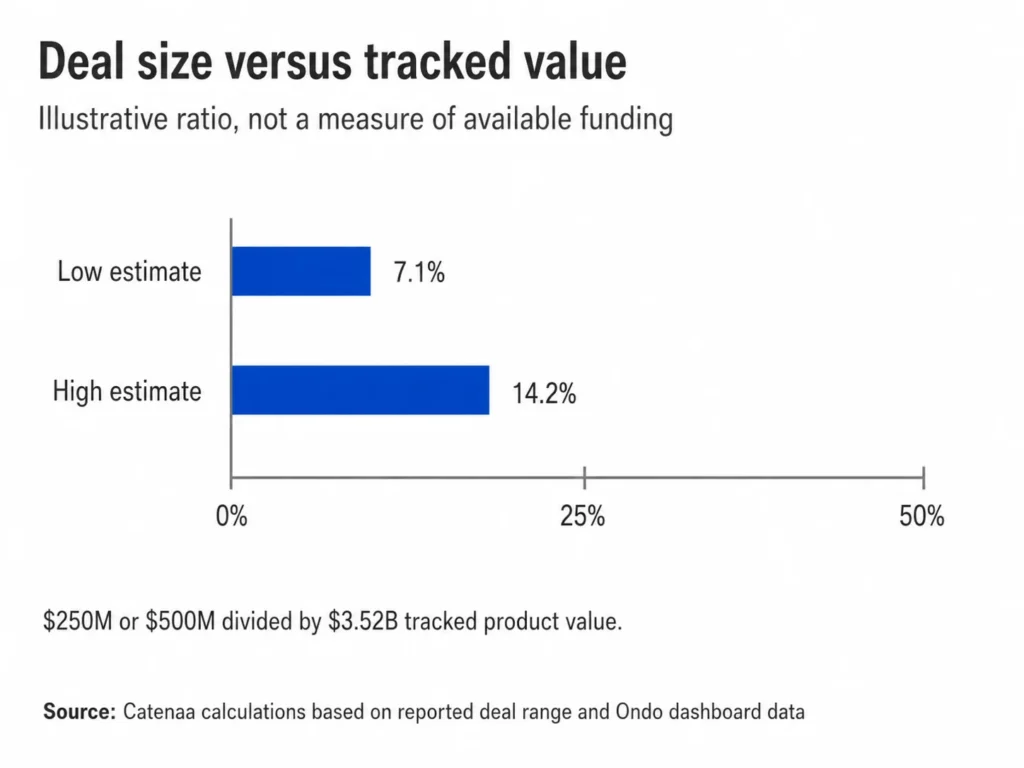
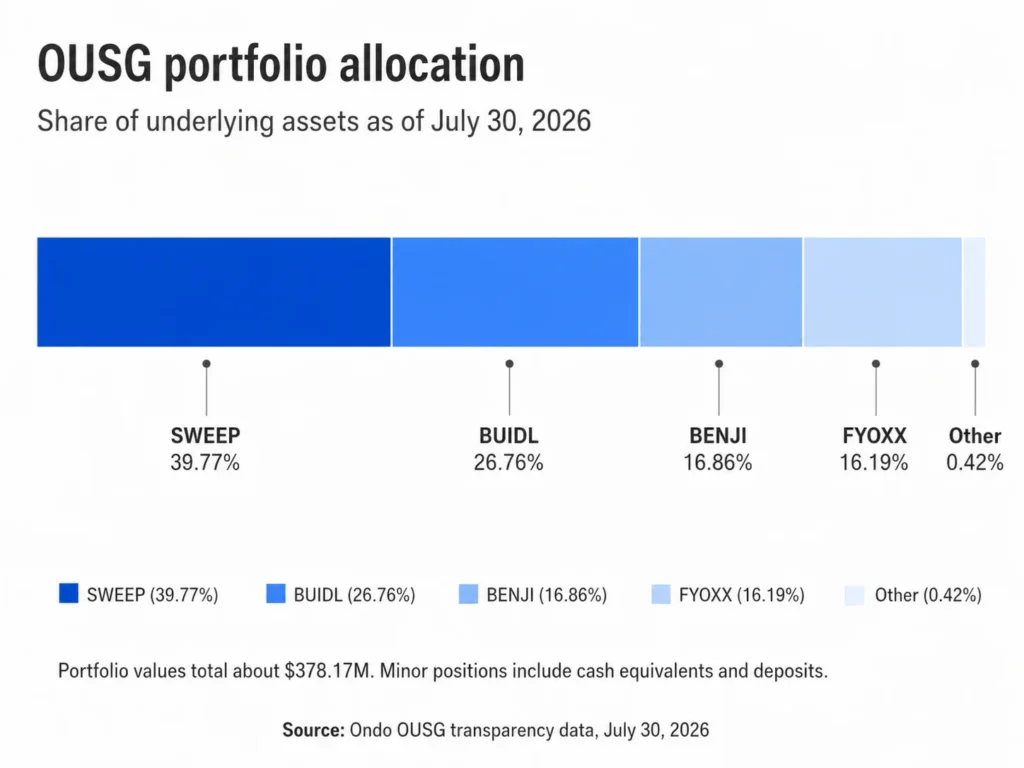
Ondo’s live dashboard shows about $2.16 billion in USDY value. OUSG holds roughly $378 million.
Ondo Stocks reports about $979 million across more than 440 assets. Combined, these products represent approximately $3.52 billion.
Therefore, the proposed deal range is approximately 7.1% to 14.2% of the tracked product value.
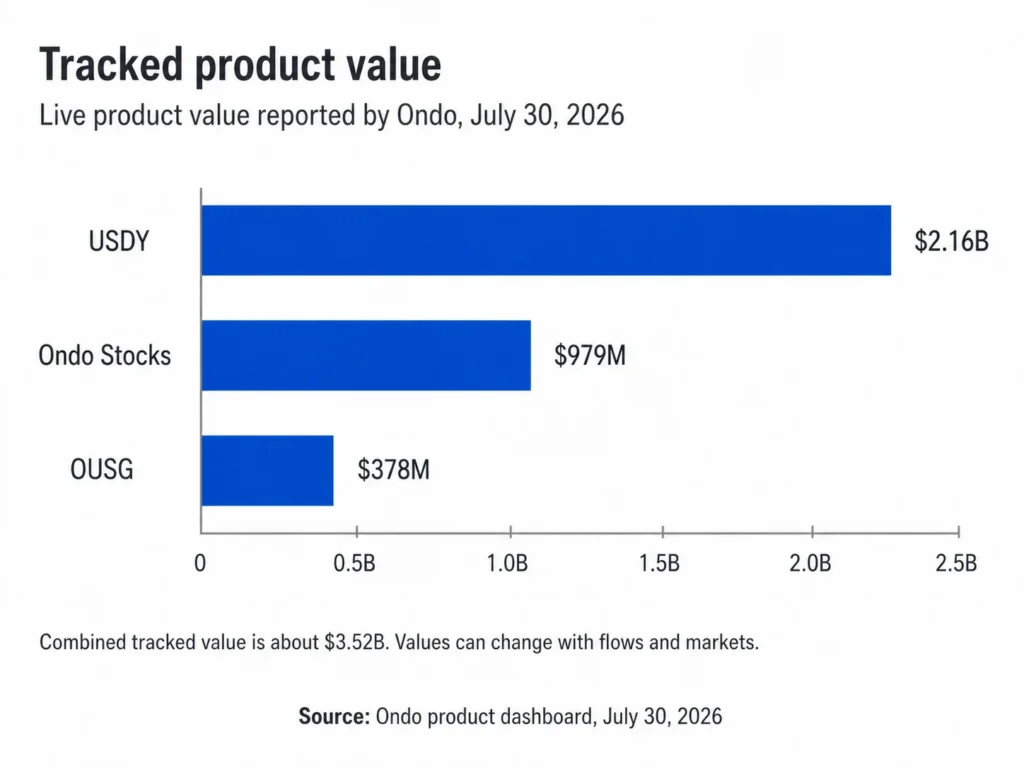
That comparison shows strategic scale, not affordability. Product value does not equal corporate cash, revenue, or available acquisition funding.
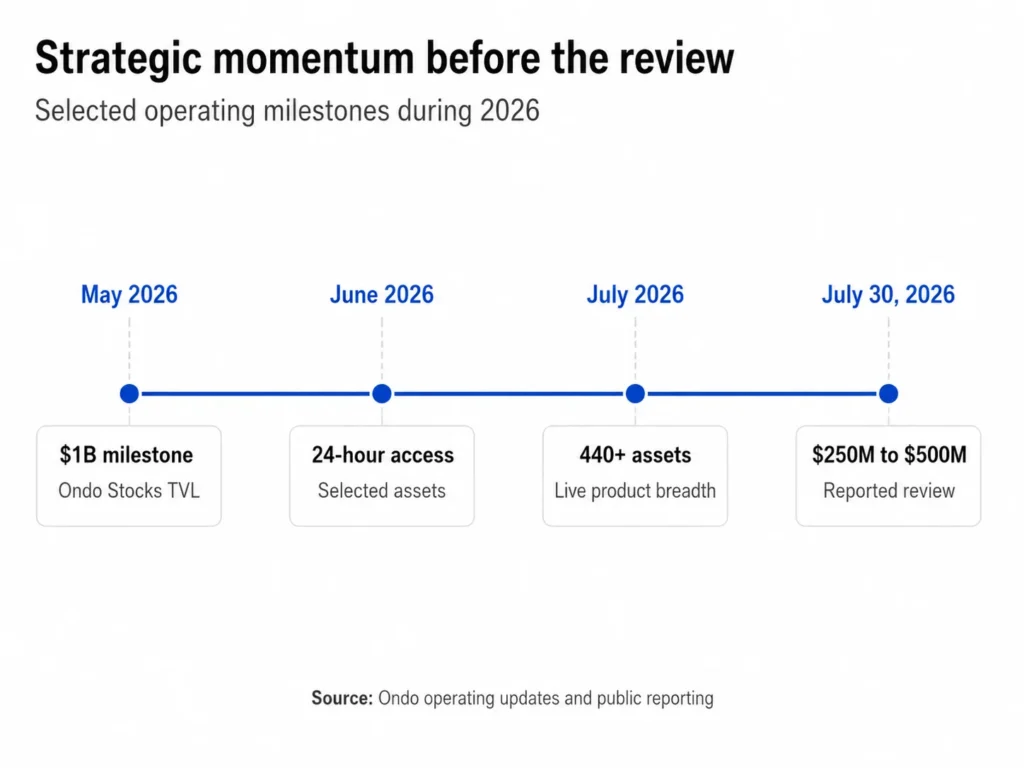
Still, the platform has grown quickly. Ondo Stocks crossed $1 billion in May, less than eight months after launch.
The company then expanded selected stock minting and redemption to continuous 24-hour access during June.
These milestones suggest that management may prioritize faster distribution before rivals and regulated incumbents close the technology gap.
Regulation could drive target selection
A wealthtech acquisition could supply more than customers. It may also bring licenses, supervisory processes, and access to regulated markets.
Ondo’s April submission to the SEC described three business lines. These include software, tokenized asset issuance, and market support services.
The filing also outlined an alternative trading system, transfer-agent functions, and an investment adviser within Ondo’s structure.
Therefore, any target must fit a complex legal perimeter. Cross-border ownership and customer eligibility could complicate integration.
A regulated target could reduce market-entry time. However, it could also increase capital requirements, reporting costs, and regulatory scrutiny.
Valuation discipline will be decisive
The upper estimate is twice the lower estimate. That wide range suggests Ondo is considering different target types or operating models.
A $250 million platform might offer technology and users. A $500 million business may include licenses, revenue, and established distribution.
Ondo must assess customer acquisition costs, retention, regulatory capital, and integration expenses. Headline valuation alone reveals little.
Integration must also protect asset backing, redemption speed, cybersecurity, and service continuity.
Funding structure also matters. Cash would preserve token economics but reduce liquidity. Equity could dilute existing shareholders.
Token financing would create additional governance questions. Debt could pressure earnings if integration takes longer than expected.
What investors should watch next
The first signal will be adviser appointments or direct confirmation from Ondo. Target geography will also reveal strategic priorities.
Management should publish expected synergies, funding sources, and post-deal operating targets once negotiations become material.
A United States deal would emphasize regulatory access. A European purchase could support passporting across established securities frameworks.
An Asian target could bring large mobile investor networks. However, fragmented local rules would make integration harder.
The strongest acquisition would connect Ondo’s products with sticky customer relationships. It should also create measurable fee revenue.
For now, the proposal remains unconfirmed. Yet the reported range shows how tokenization strategy has shifted toward consolidation and distribution.
The next phase will reward firms that combine compliant assets, reliable infrastructure, and trusted access to investors.