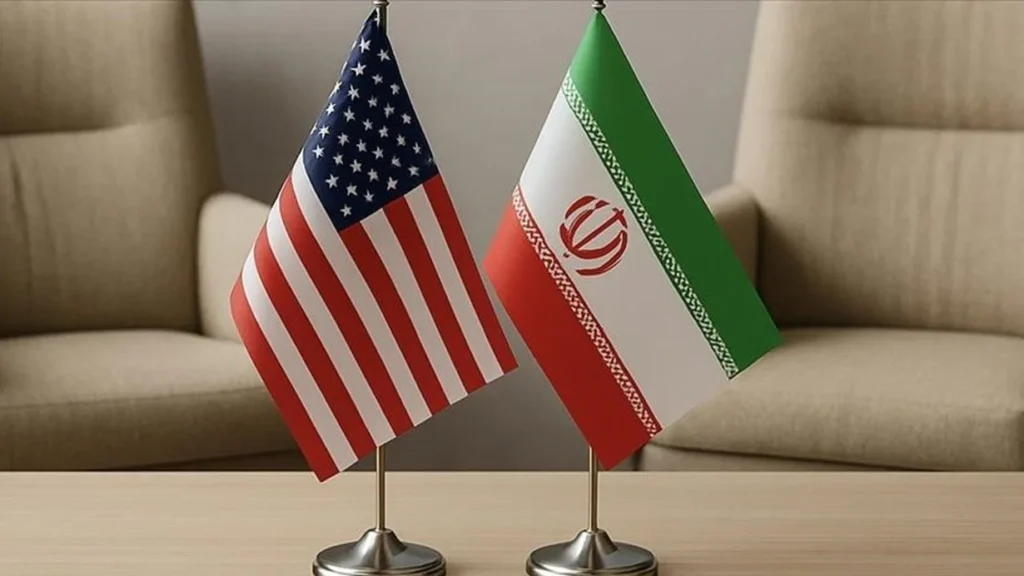


Catenaa, Saturday, June 20, 2026- Iran said it has closed the Strait of Hormuz for shipping transit due to Israel’s violation of a ceasefire by attacking Lebanon.
The Hormuz action casts a new cloud over the talks, which are aimed at permanently ending a conflict that’s thrown the Middle East into disarray.
The immediate impact on vessel traffic was unclear, but even before the recent ceasefire, millions of barrels of oil had been quietly escaping the waterway each day.
Iran’s joint military command said the closure is Iran’s first step in response to Israel’s continued attacks in southern Lebanon, the semi-official Tasnim news agency reported on Saturday.
Negotiations on a peace deal were meant to start on Friday, but were delayed after fighting between Israel and Iran-backed Hezbollah militants in Lebanon intensified.
Iranian state TV reported Saturday that a delegation was now en route to the talks, which Pakistan’s foreign ministry said will open on Sunday.
Vice President JD Vance, who had originally planned to be in Switzerland on Friday, said US envoys Steve Witkoff and Jared Kushner were already there laying the groundwork for technical talks, and that he hoped to travel there in “the next couple of days.”
“I am very confident we can maintain the ceasefire,” he said in an interview with Fox News. “We’re going to give this negotiation a chance.”
Hopes were running high that normal traffic would resume through the strait, a conduit for about a fifth of the world’s oil and natural gas before the war, after US President Donald Trump signed a memorandum of understanding with his Iranian counterpart, Masoud Pezeshkian, to end dual blockades. But the announcement about a new closure suggests the optimism may have been premature.
Ships have been crossing Hormuz using two routes in recent weeks: one by the coast of Iran and another to the south of the waterway by the Omani coast.
Iran said in guidance to shipping this week that no ship would cross the waterway without its permission. The middle section between those two routes is believed to have been mined during the war.
On Saturday, US Central Command said commercial ship traffic increased in the strait, with 55 merchant ships transiting cargo and more than 17 million barrels of oil.
Still, even before the US-Iran ceasefire, oil tankers were using the Omani route by transiting at night with their satellite signals turned off. In recent days, vessels appeared to transit Hormuz using both routes, including earlier on Saturday.
Iran’s declaration on Saturday will likely make more risk-averse shipowners with vessels that have been trapped inside Hormuz for months more wary of exiting.
Earlier in the day, Western naval forces had said vessels using the corridor could cross at any time and with their satellite signals either on or off.
The Lebanese army said in a post on X on Saturday that Israel had attacked the south of the country and the Bekaa valley, causing fatalities, injuries and extensive destruction of property.
Lebanon’s state-run National News Agency said five people were killed around the southern town of Nabatieh.
Hezbollah said on Telegram that its forces confronted Israeli troops who tried to advance in Nabatieh overnight and were ambushed.
It said it had abided by the ceasefire since Friday evening, but won’t tolerate “any attempts by the enemy to seize land and expand its occupation.”
Meanwhile, the Israel Defense Forces said it had struck Hezbollah targets, including weapon storage facilities, rocket launch positions and command centers, after the group fired more than 50 projectiles at its forces in southern Lebanon overnight. While the IDF is committed to the truce, it will “continue to operate to remove any threat” posed to Israel and its soldiers, it said in a statement.