

July 26, 2026 – Gold has lost its early momentum, yet structural demand remains firm. Inflation and central-bank policy will decide the next major move.
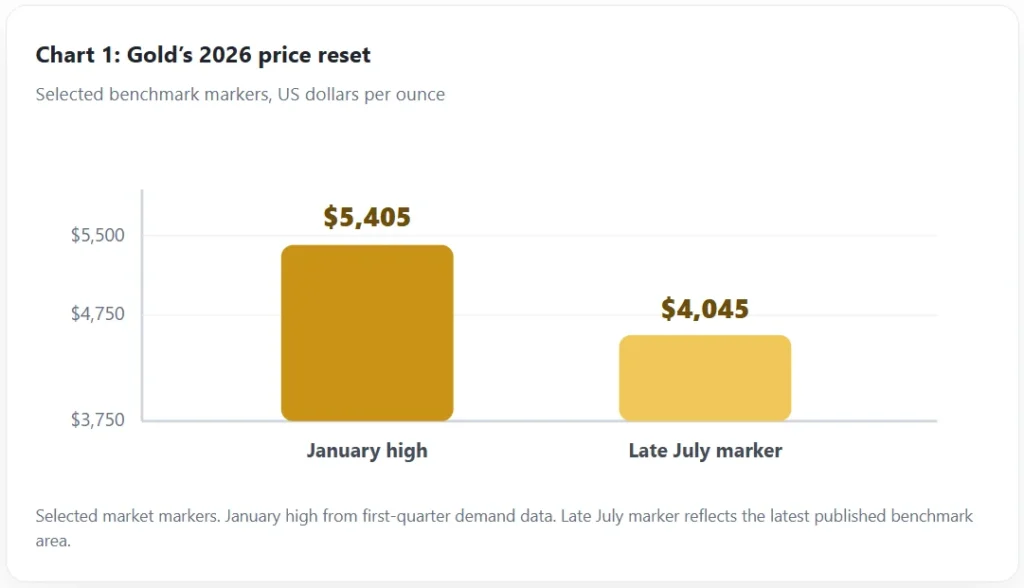
Gold enters the second half of 2026 after one of its most volatile periods in decades. The metal reached $5,405 in January. It then retreated toward $4,045 by late July. That reversal erased much of the early surge. However, it did not destroy gold’s structural investment case.
The next move will depend on inflation, interest rates, energy prices, and institutional demand. These forces create three credible paths for the gold price forecast 2026. That makes policy signals unusually important.
In Summary
Gold remains caught between restrictive monetary policy and strong long-term demand.
A softer inflation trend could reopen the path toward $5,000.
Sticky inflation could keep gold trapped between $3,900 and $4,500.
Another energy shock could push prices toward deeper technical support.
Central-bank buying may reduce the risk of a prolonged collapse.
Gold’s dramatic reset changes the debate
Gold’s January peak reflected geopolitical stress, softer yield expectations, and heavy institutional buying. The correction later became equally dramatic.
The late-July benchmark near $4,045 sat about 25% below January’s record. That decline matters because gold offers no interest income. Therefore, higher bond yields raise its opportunity cost.
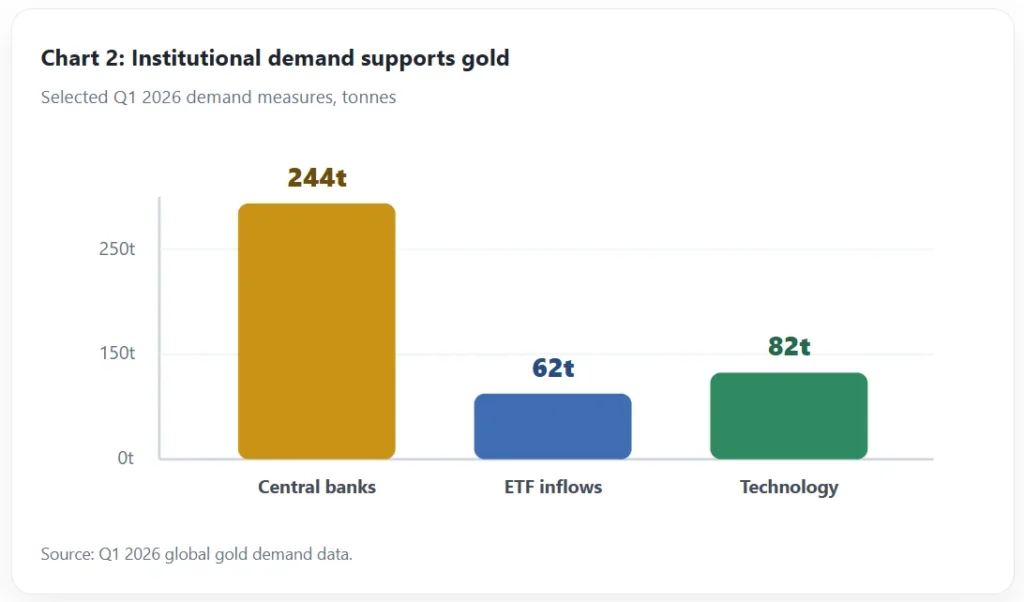
Still, physical demand remains unusually firm. The World Gold Council reported 244 tonnes of net central-bank purchases during the first quarter. Gold-backed exchange-traded funds also added 62 tonnes. Technology demand reached 82 tonnes.
That demand mix gives gold a stronger floor than speculative positioning alone would provide.
Scenario one: Inflation cools and gold rebounds
The bullish scenario requires a clear improvement in inflation and policy expectations.
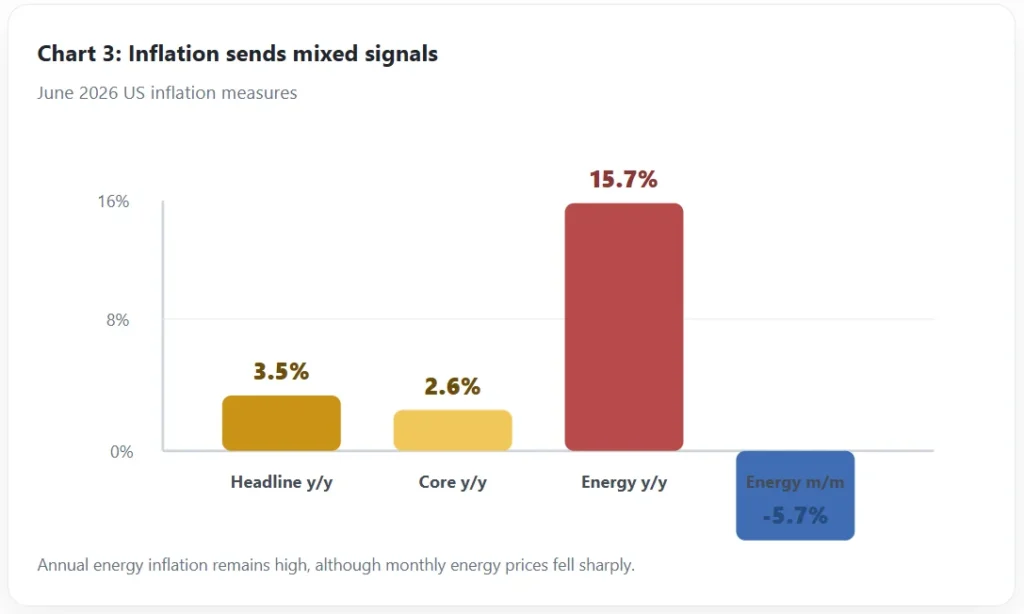
June inflation offered an early signal. Headline consumer prices fell 0.4% during the month. Core prices were unchanged. However, annual headline inflation remained 3.5%, while core inflation stood at 2.6%.
Several similar reports could change the market narrative. Investors may then expect lower policy rates during 2027. Treasury yields could decline, while the dollar could weaken.
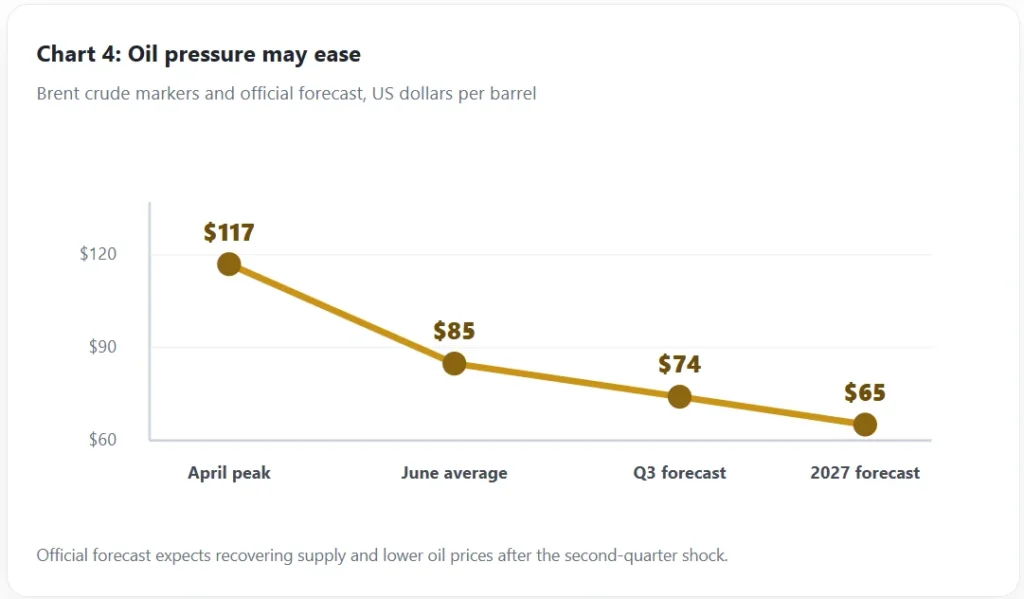
Oil also matters. The energy agency expects Brent crude to average $74 per barrel during the third quarter. That forecast reduces immediate inflation pressure.
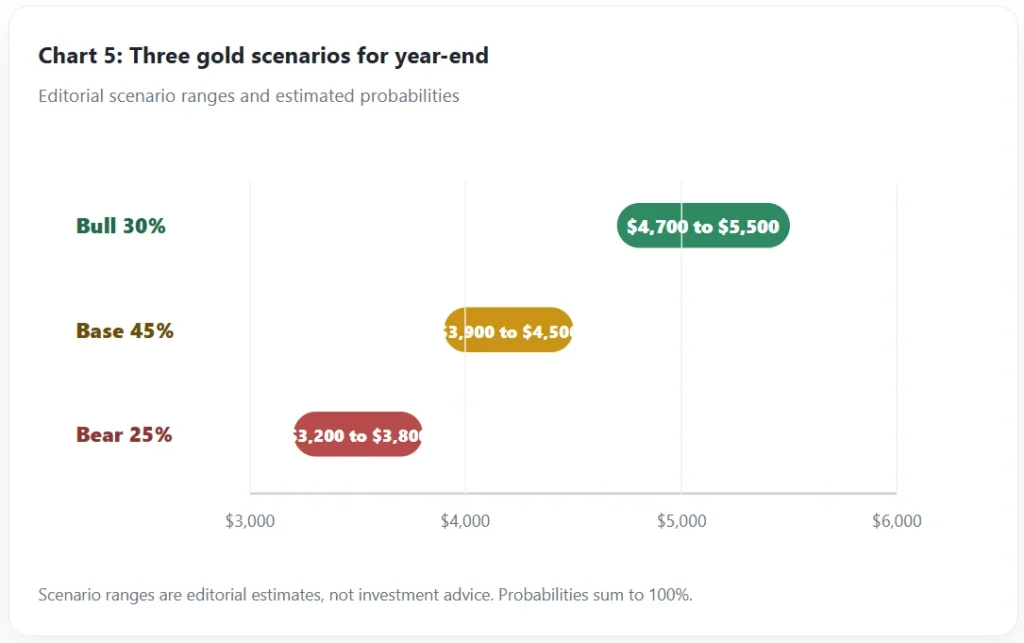
Under this scenario, gold could recover toward $4,700. A decisive policy shift could extend the move toward $5,500.
This outcome carries an estimated 30% probability.
Scenario two: The Fed pauses and gold consolidates
The base case assumes inflation improves slowly, while economic growth remains resilient.
The Federal Reserve held its target rate between 3.5% and 3.75% in June. It also said inflation remained elevated against its 2% goal.
A long pause would create mixed conditions for gold. Stable rates would prevent a fresh monetary shock. Yet high real yields would restrict aggressive upside.
Meanwhile, central banks could continue buying during price weakness. Long-term investors may also rebuild positions after the correction.
This balance supports a broad range between $3,900 and $4,500. Prices may move sharply within that band.
The base case carries an estimated 45% probability.
Scenario three: Inflation returns and gold breaks lower
The bearish scenario starts with another energy or supply shock.
Annual energy inflation reached 15.7% in June, despite a 5.7% monthly decline. Therefore, renewed oil disruption could quickly revive headline inflation.
The Fed could respond with tighter guidance or additional rate increases. A stronger dollar would add pressure. ETF investors might also reduce exposure as cash yields rise.
In that environment, gold could fall toward $3,800. A severe policy shock could expose the $3,200 area.
However, sustained central-bank demand may slow the decline. Buyers could view lower prices as a reserve diversification opportunity.
This scenario carries an estimated 25% probability.
What investors should watch next
The gold price forecast 2026 now depends less on headlines alone. It depends on the interaction between inflation and monetary policy.
Investors should track monthly core inflation, energy prices, Treasury yields, and central-bank purchases. ETF flows will offer another timely signal.
The gold price forecast 2026 favors consolidation with a modest recovery bias. Gold’s structural demand looks durable. However, the metal needs lower yields for another record-breaking advance.
For now, patience matters. A durable breakout needs confirmation from both macro data and investment flows.
The next signal may arrive before year-end. Until then, volatility will remain part of the gold story.




