

August 04, 2026 – Curium’s proposed acquisition of Lantheus could create a major nuclear medicine platform. However, the payment structure leaves investors sharing future commercial risk.
In Summary
Curium offers $102.50 cash per share, plus contingent rights worth up to $12.00.
The maximum $8 billion value equals roughly 5.2 times Lantheus’ 2025 revenue.
Lantheus still depends heavily on PYLARIFY, while recent operating income has weakened.
Cash certainty comes with conditions
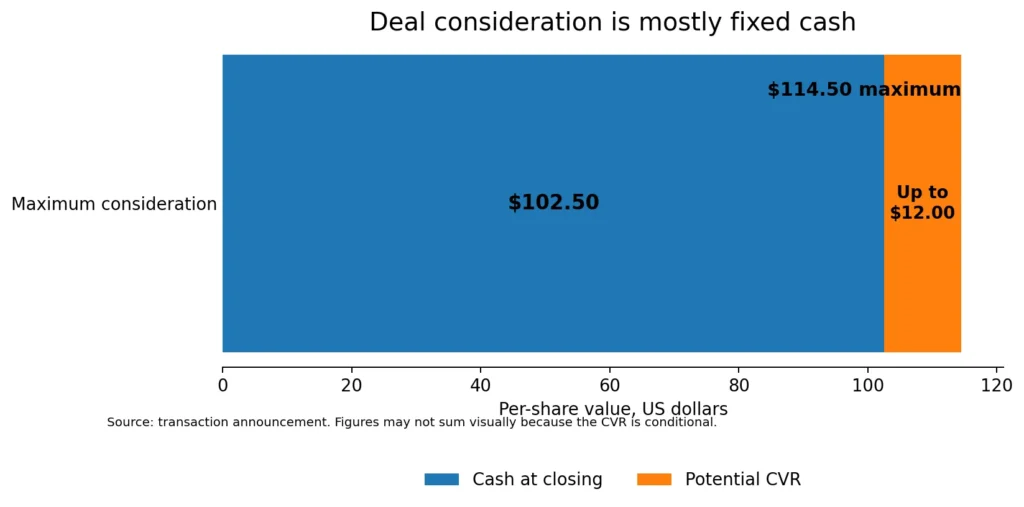
The Curium Lantheus acquisition values the target at up to $114.50 per share. Its maximum transaction value reaches about $8 billion.
Shareholders would receive $102.50 in cash when the deal closes. They could receive another $12.00 through contingent value rights, or CVRs.
Therefore, fixed cash represents 89.5% of maximum consideration. The remaining 10.5% depends on commercial milestones through 2030.
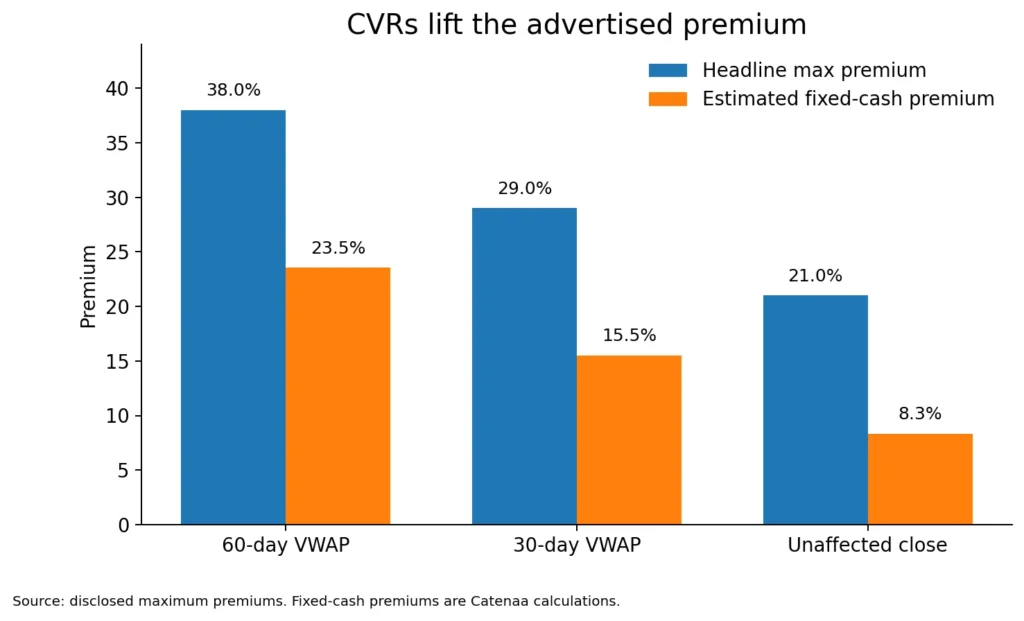
The headline price carries a 38% premium to the unaffected 60-day average. It also carries a 21% premium to the unaffected closing price.
However, those premiums include the full CVR value. Based on disclosed benchmarks, fixed cash offers an estimated 8.3% premium to that closing price.
That difference matters because investors cannot treat $114.50 as guaranteed cash. The CVRs could deliver nothing if products miss targets.
Why the strategic fit matters
Curium brings global manufacturing, isotope production, and targeted radioligand therapy capabilities. Lantheus adds a strong United States diagnostics franchise.
The combined group would serve patients across more than 70 countries. Curium operates over 80 manufacturing sites and employs more than 3,800 people.
Lantheus provides three commercial anchors. PYLARIFY supports prostate cancer imaging, DEFINITY serves cardiac imaging, and Neuraceq targets neurological diagnostics.
This combination links diagnosis with therapy across the nuclear medicine value chain. It may spread Lantheus products through Curium’s international network.
That opportunity addresses a clear weakness. Lantheus generated 93.9% of first-quarter 2026 revenue inside the United States.
Financial profile shows strength and pressure
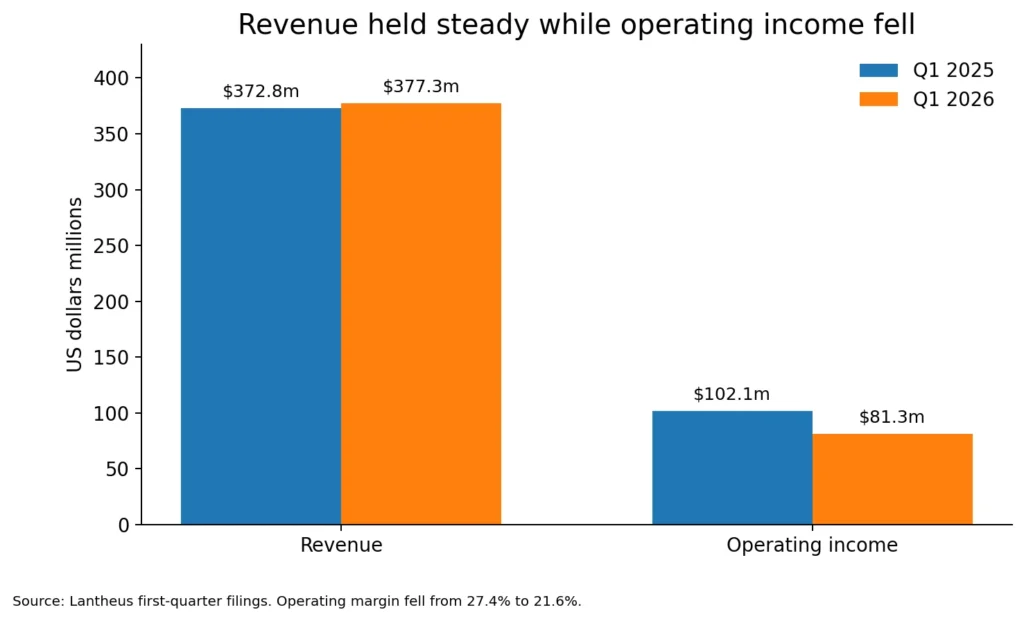
Lantheus produced $377.3 million of first-quarter 2026 revenue. That represented only 1.2% annual growth.
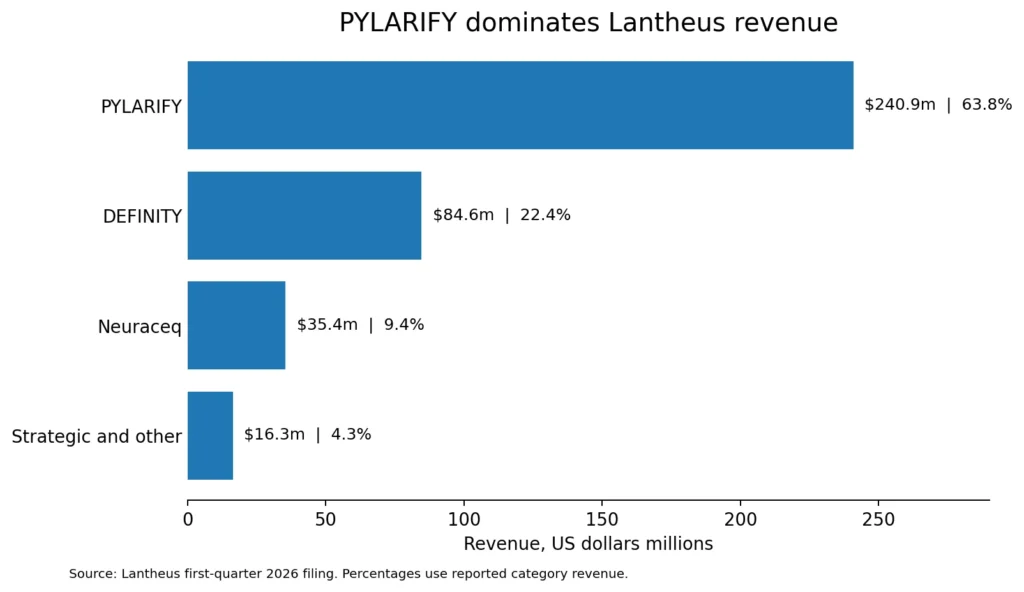
PYLARIFY generated $240.9 million, or 63.8% of quarterly revenue. Yet its sales fell 6.5% from the prior-year period.
DEFINITY revenue increased 6.8% to $84.6 million. Neuraceq contributed $35.4 million after its portfolio joined Lantheus in 2025.
Meanwhile, operating income dropped 20.3% to $81.3 million. The operating margin fell to 21.6%, from 27.4% one year earlier.
Still, the figures explain why Curium protected part of its price.
For 2025, Lantheus reported $1.54 billion of revenue. The maximum deal value equals about 5.2 times that revenue.
This is not a formal enterprise-value multiple. However, it shows the value assigned to commercial franchises and pipeline optionality.
Product concentration remains another concern. PYLARIFY and DEFINITY generated 85.6% of 2025 revenue, according to the annual filing.
CVRs shift execution risk
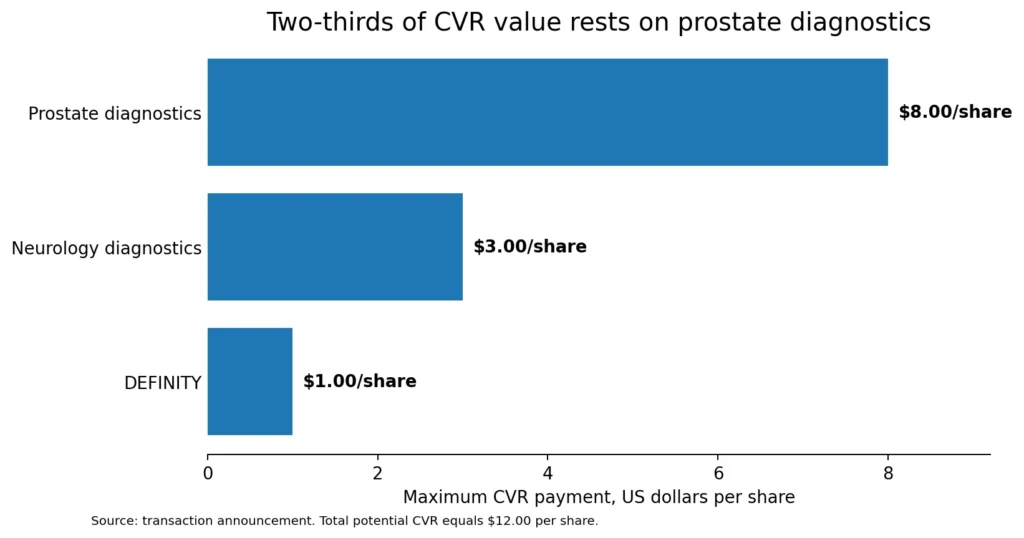
The CVR package allocates up to $8.00 per share to prostate cancer diagnostics. Neurology can add $3.00, while DEFINITY can add $1.00.
Consequently, two-thirds of the contingent payment depends on prostate diagnostics. That franchise faces pricing pressure despite continued volume growth.
The structure aligns payment with future performance. It also protects Curium if product adoption, reimbursement, or competition disappoints.
For shareholders, the CVR adds upside without requiring continued ownership. However, the rights will be non-transferable, which limits liquidity.
Regulatory and closing risk remain
The transaction should close during the first half of 2027. It still requires shareholder approval and customary regulatory clearances.
Curium plans to fund the purchase with debt and equity. The agreement carries no financing condition, according to the regulatory filing.
Product execution will remain important before closing. The FDA approved PYLARIFY TruVu in March 2026, creating another commercialization task.
Furthermore, Lantheus suspended its earlier 2026 guidance after announcing the transaction. That removes a near-term benchmark for standalone performance.
What investors should watch
Investors should first monitor regulatory progress and the shareholder vote. Any delay could widen the discount to fixed consideration.
Second, PYLARIFY pricing and volumes will shape confidence in the largest CVR component. Neurology adoption will influence further potential value.
Finally, investors should separate guaranteed consideration from milestone value. The cash offer provides certainty, but the CVRs preserve execution exposure.
The strategic logic appears strong. Yet the outcome depends on closing certainty and commercial delivery through 2030.




