

August 01, 2026 – Record inflows lifted Ares assets to $671.3 billion. Yet lending slowed, leaving a quarter of the book uninvested and fee income trailing the raise.
In Summary
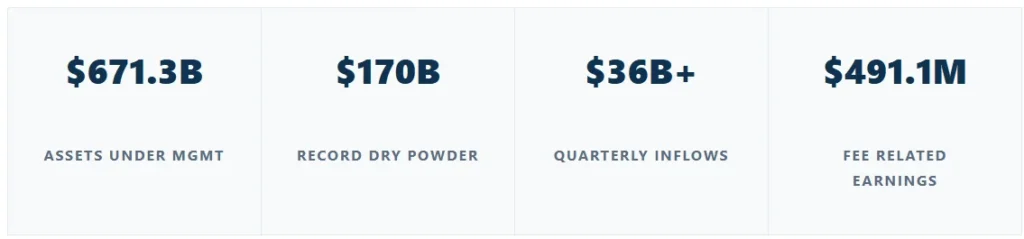
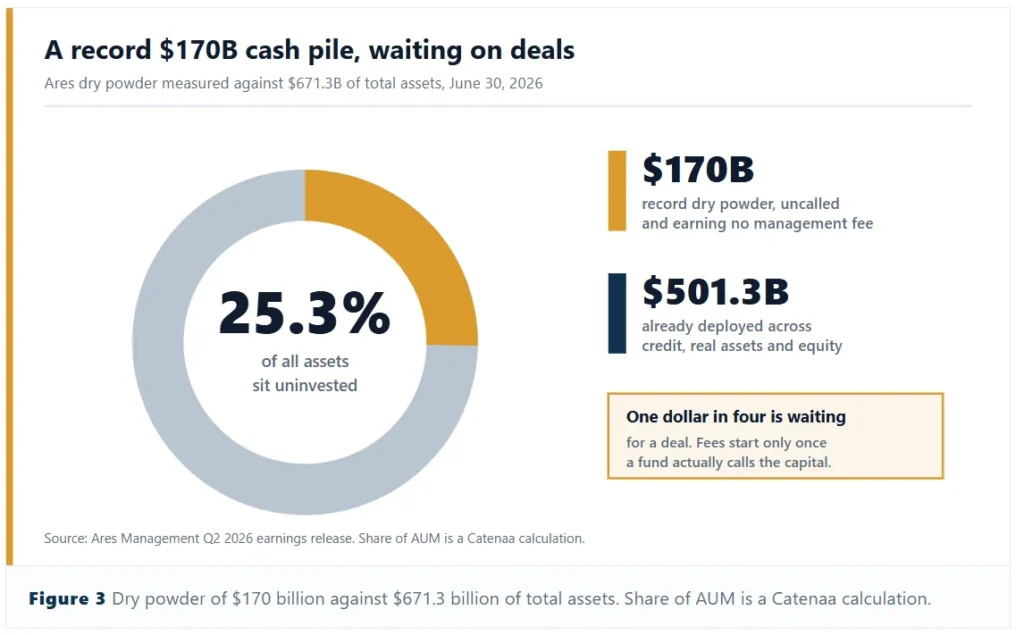
Ares dry powder reached a record $170 billion, roughly 25% of total assets.
Record inflows topped $36 billion, lifting assets 17% to $671.3 billion.
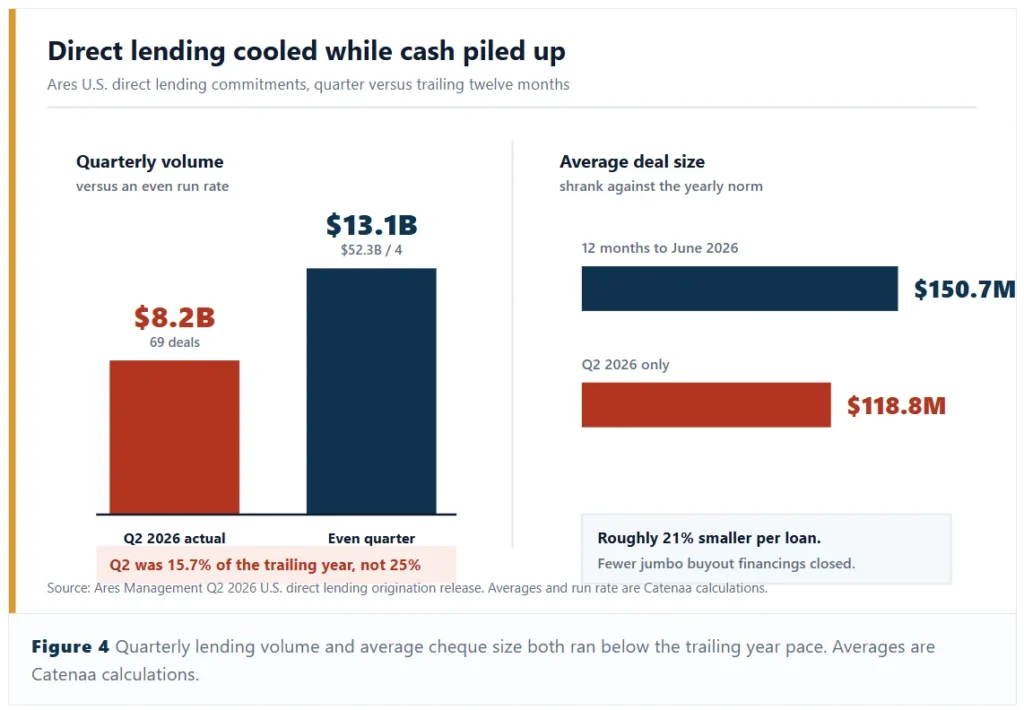
Quarterly direct lending of $8.2 billion ran at just 16% of the trailing year.
Average deal size slipped near $119 million, about a fifth below the yearly norm.
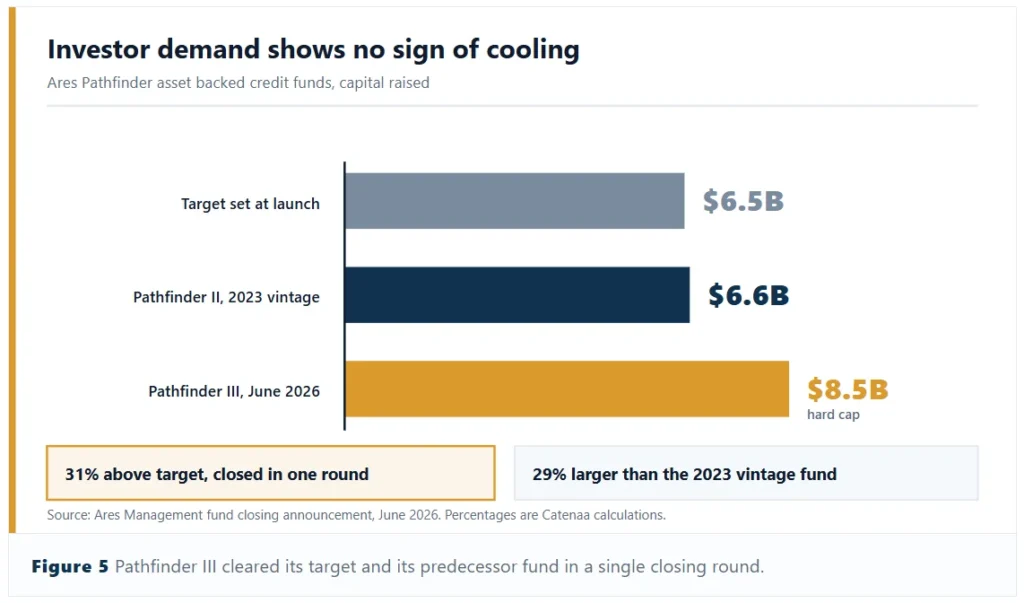
Pathfinder Fund III closed at $8.5 billion, some 31% above its target.
Ares dry powder hit a record $170 billion on June 30, 2026. Moreover, the firm pulled in more than $36 billion of new money last quarter. Assets under management rose to $671.3 billion. However, the pace of new lending lagged far behind the pace of fundraising.
That gap is the real story inside the second quarter numbers. Ares raised cash faster than it could put that cash to work.
Record Inflows, Slower Clock On Deals
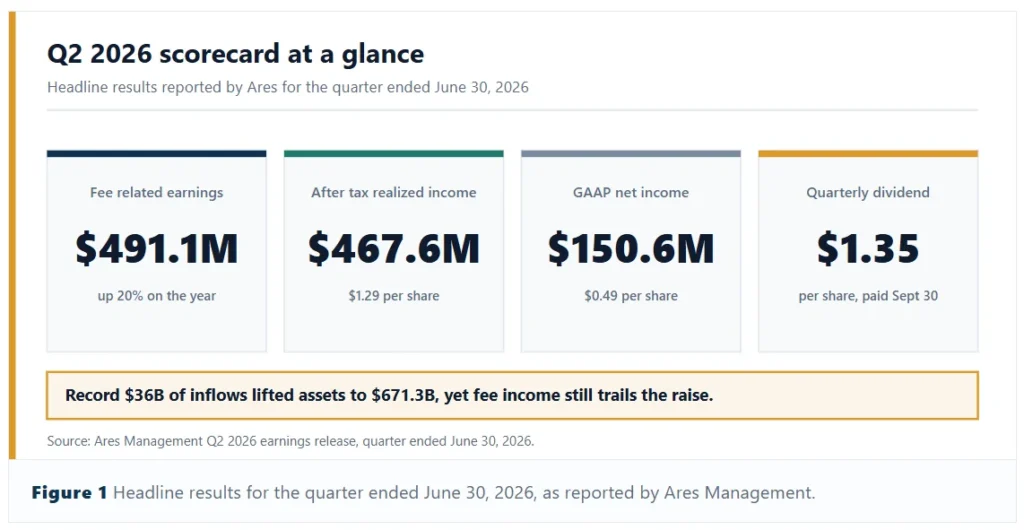
The headline figures looked strong. Fee-related earnings reached $491.1 million, up 20% from a year earlier. After-tax realised income came in at $467.6 million, or $1.29 per share. Ares also declared a quarterly dividend of $1.35 per share.
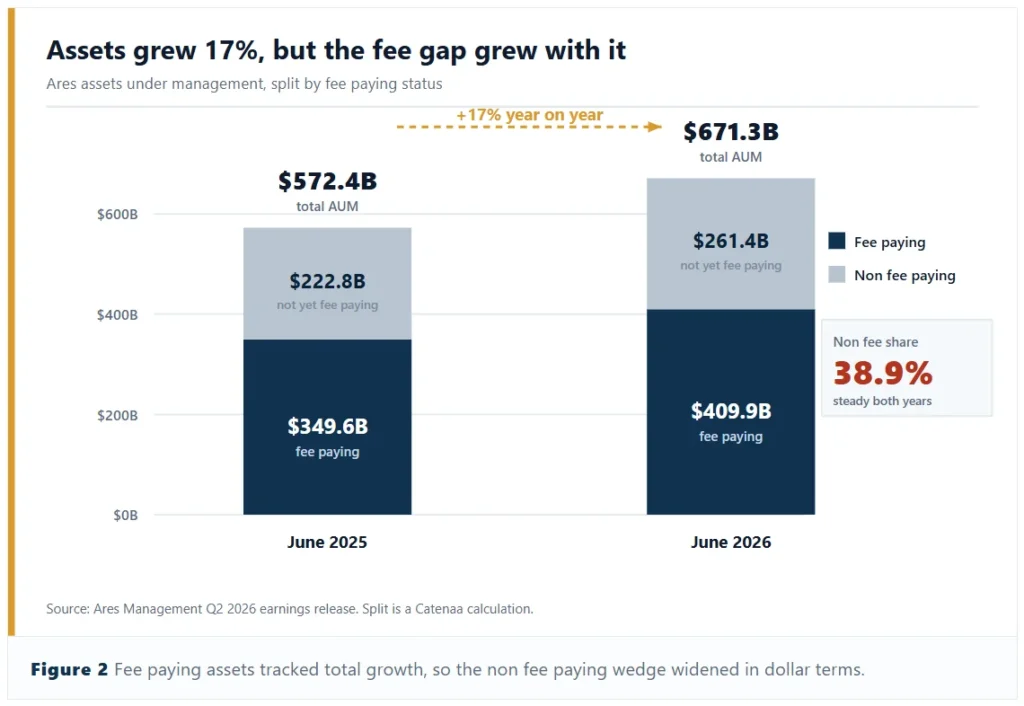
Total assets grew 17% over twelve months. Fee-paying assets grew 17% too, reaching $409.9 billion. Therefore, the mix held steady even as the base got bigger.
Yet the firm added roughly $98.9 billion of assets over the year. Of that sum, only about $60.3 billion turned into fee-paying assets. In short, close to 39% of the yearly gain does not yet earn a management fee.
Ares Dry Powder Now Equals A Quarter Of Assets
Here the math gets interesting. The record $170 billion of unspent cash equals roughly 25% of all assets. Consequently, one dollar in four sits idle, waiting for the right deal.
Chief Financial Officer Jarrod Phillips framed that pile as a strength. He called it fuel for the largest forward pipeline the firm has ever held. Investors, though, tend to reward fees rather than promises.
Uncalled capital earns little or nothing until a fund draws it down. As a result, a bigger stack of Ares dry powder can flatter future growth while capping today’s revenue. That tension explains why record inflows drew a muted market response.

Direct Lending Tells The Real Story
The lending data makes the point plainly. Ares closed about $8.2 billion of U.S. direct lending deals across 69 transactions in the quarter. Over the prior twelve months, it closed about $52.3 billion across 347 deals.
Do the arithmetic and the slowdown shows. A steady quarter would have delivered roughly a quarter of that yearly total. Instead, the second quarter accounted for just under 16% of it.
Deal sizes shrank as well. Each transaction averaged near $119 million in the quarter. Across twelve months, the average ran near $151 million. Hence the typical new loan came in about a fifth smaller than the yearly norm.
Smaller cheques usually signal fewer large buyout financings. Chief Executive Michael Arougheti described a slower trading market. Still, he flagged a clear pickup in the firm-wide pipeline. Quarterly filings lodged with the Securities and Exchange Commission will show whether that pickup converts.
Fund Demand Stays Hot Despite The Lull
Investor appetite has not cooled at all. Ares closed Pathfinder Fund III at $8.5 billion in June, well above its $6.5 billion target. That total sits roughly 31% beyond target and about 29% above the 2023 vintage fund.
Notably, the fund reached its cap in a single round within six months of launch. Such speed points to deep demand for asset-backed credit. Ares now counts about $57.3 billion across its alternative credit arm.
Arougheti also pointed to fast growth in secondary markets. He said sellers want cash back, while buyers want spread exposure without long lock-ups. Return spreads in those deals also cluster more tightly than in classic buyout funds.
Meanwhile, AI now handles routine desk work. Compliance checks, document review and client questionnaires all sit on that list. Investment teams apply the same tools to deal data, which trims research hours. Management says the savings already show up in margin.
What The Numbers Suggest Next
Two forces now pull in opposite directions. Fundraising momentum keeps building the base. Slow deal flow delays the fee income that the base should throw off.
For the second half, watch three markers. First, track whether quarterly lending volume climbs back toward $13 billion. Second, watch fee-paying assets close the gap with total assets. Third, see whether Ares dry powder falls as a share of the book. The firm’s quarterly earnings presentation reports each of these figures.
Should deals return, that idle capital converts quickly into fees. If they stay scarce, record fundraising simply parks more cash on the sidelines. Either way, the coming months will test the pipeline story.




