

August 12, 2026 – Archer is building defense revenue beside Midnight. The strategy could finance a slower civilian rollout while adding valuable flight experience.
In Summary
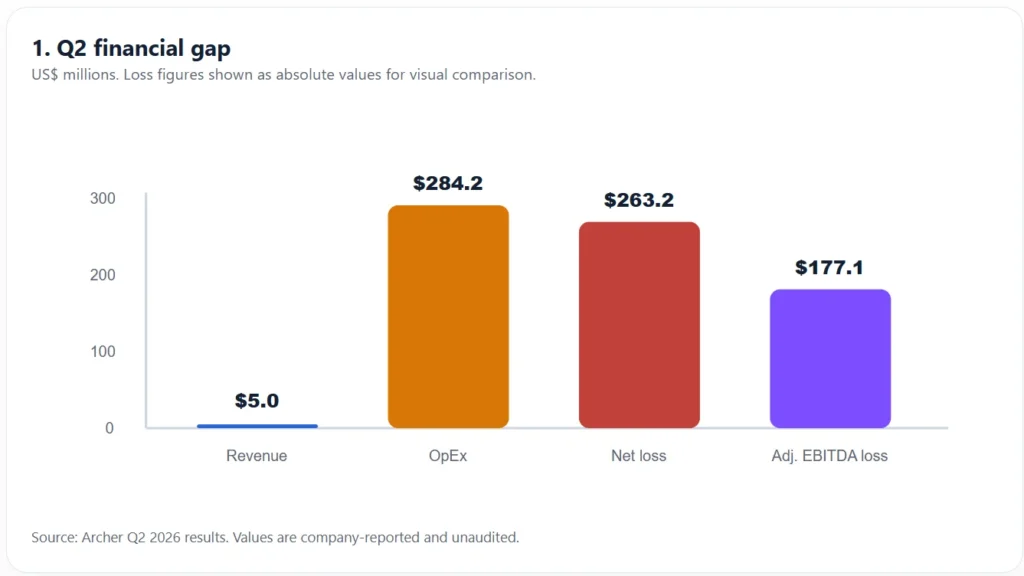
Q2 revenue was $5.0 million, while operating expenses reached $284.2 million.
Insitu could add more than $200 million in annual revenue and an established defense footprint.
Defense may accelerate revenue, but acquisition dilution and integration risk remain material.
Archer Aviation is trying to solve two problems at once. It must commercialize Midnight while funding expensive aviation development.
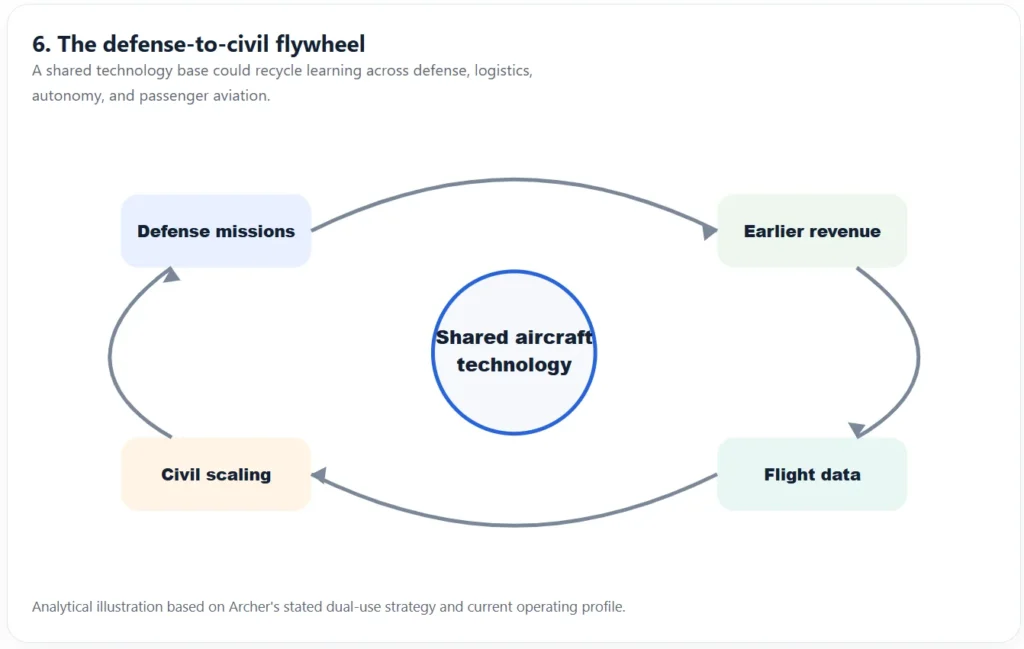
The company now sees defense as a faster route to revenue, operating data, and customer-funded learning. That could ease civilian rollout pressure.

The financial gap explains the pivot
Archer’s second-quarter numbers show why the strategy matters. Revenue reached $5.0 million, while operating expenses hit $284.2 million.The company posted a $263.2 million net loss and a $177.1 million adjusted EBITDA loss.
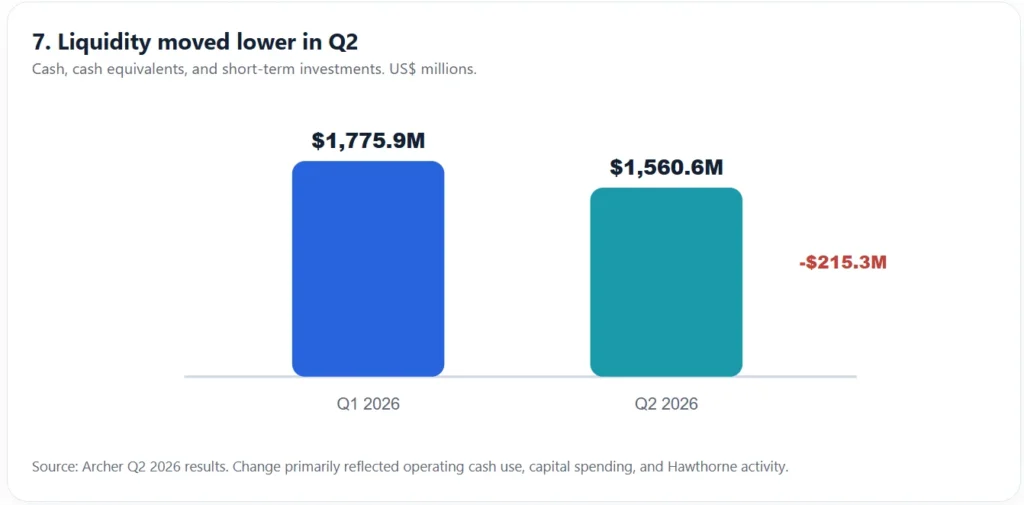
Cash, equivalents, and short-term investments ended June at $1.56 billion. That balance fell by $215.3 million from the first quarter. Those figures come from Archer’s Q2 2026 financial release.
Insitu changes the revenue equation
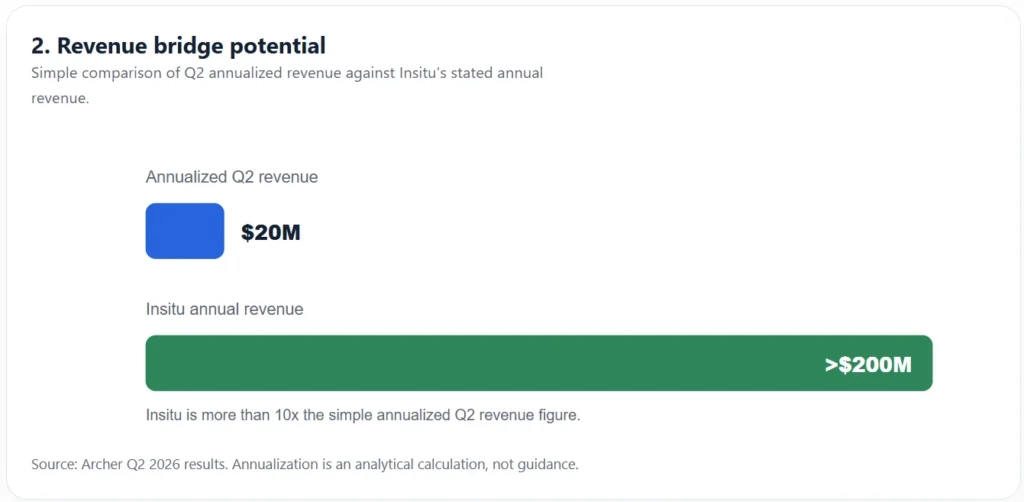
The planned Boeing asset deal changes that profile. Insitu alone is expected to add more than $200 million in annual revenue.
It also operates across 35 countries, creating an established global defense footprint.
A simple annualization of Q2 revenue equals $20 million. Insitu therefore represents more than ten times that run-rate figure.
This comparison is illustrative, not company guidance.
The deal also creates dilution
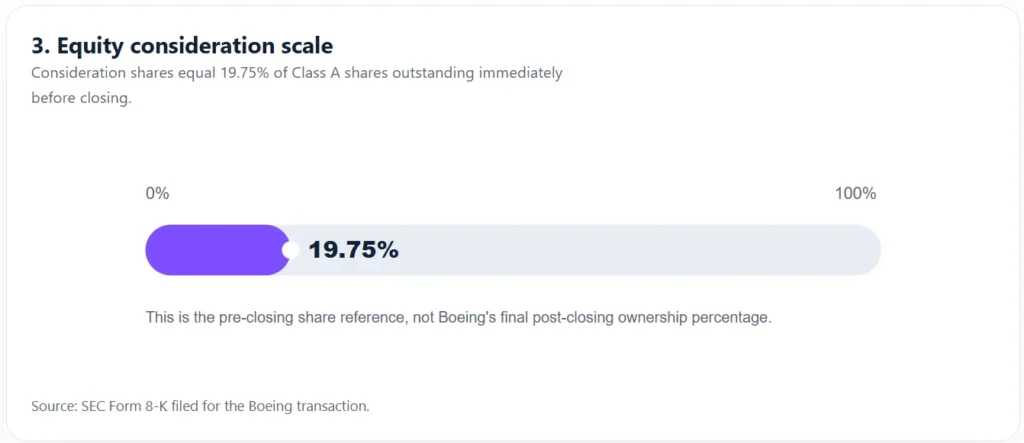
The acquisition carries a meaningful equity cost. Archer agreed to issue Boeing shares equal to 19.75% of pre-closing Class A shares. Boeing will also receive two warrants with $100 million-equivalent share counts. Their exercise prices are $13.00 and $17.88. The terms are detailed in Archer’s SEC Form 8-K. Investors therefore gain a faster revenue platform, but they also face dilution risk.
The deal also creates dilution
The acquisition carries a meaningful equity cost. Archer agreed to issue Boeing shares equal to 19.75% of pre-closing Class A shares. Boeing will also receive two warrants with $100 million-equivalent share counts. Their exercise prices are $13.00 and $17.88.
The terms are detailed in Archer’s SEC Form 8-K. Investors therefore gain a faster revenue platform, but they also face dilution risk.
Civil aviation still moves differently
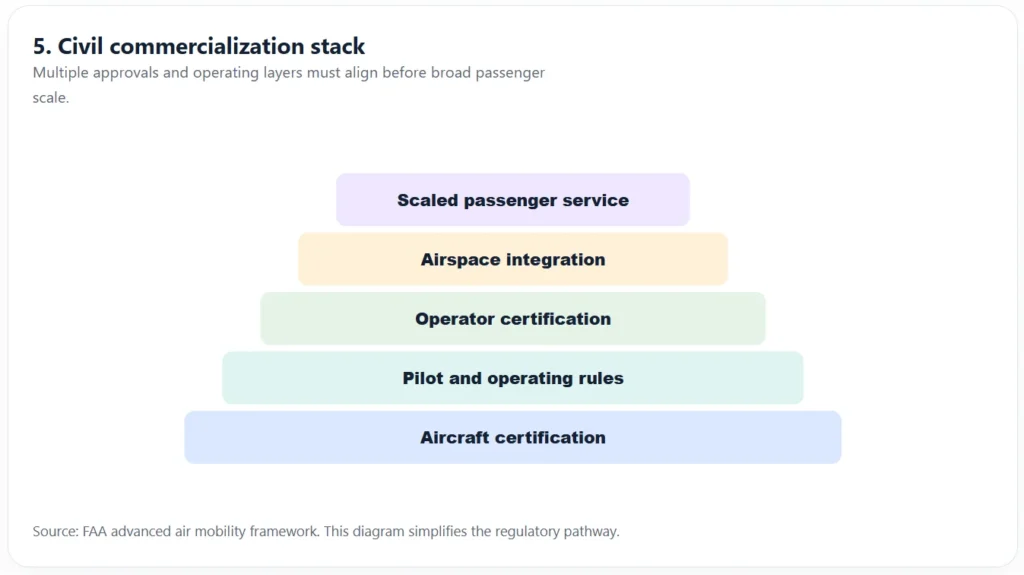
That pathway matters because civilian aviation has a higher certification burden. The FAA treats many air taxis as powered-lift aircraft. It has rules for pilot qualifications, operations, aircraft certification, and commercial operator certification. These safeguards are essential, but they can slow passenger networks at scale. The FAA’s advanced air mobility framework also highlights the federal eVTOL Integration Pilot Program.
Halo and Thunder widen the platform
Archer is also building a separate dual-use platform with Anduril. Halo serves commercial missions, while Thunder targets defense applications.
Both aircraft share an airframe, hybrid powertrain, and core systems. That common architecture can spread engineering investment across several markets. It can produce operating knowledge before urban air taxi demand reaches scale.
Archer describes the shared design in its Halo and Thunder platform announcement.
Why defense could move sooner
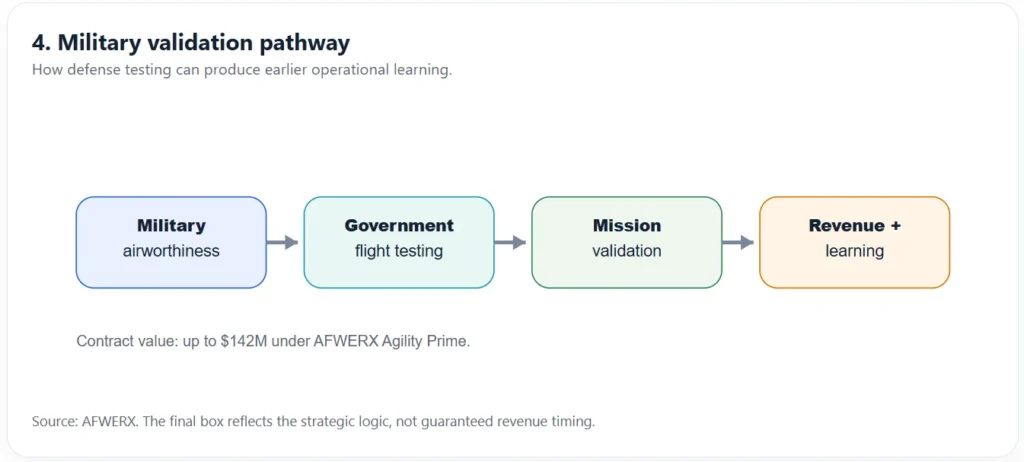
Military customers often buy capability for defined missions rather than citywide passenger networks. That can narrow operating conditions and reduce dependence on public adoption.
Still, defense procurement can be slow, competitive, and politically exposed. Archer must show that programs move beyond prototypes.
Cash burn remains the second test
Liquidity looks substantial, but Archer is still consuming cash. Management used $156.4 million in operating activities during Q2. It spent another $37.1 million on property and equipment. Archer also paid $25 million for the Hawthorne Airport operator business.
The current balance therefore provides flexibility, not immunity from future financing needs.
What investors should watch next
For investors, the strongest signal would be improving revenue quality before Midnight reaches full scale.
Insitu can add an established operating business. Defense programs could add contract-backed demand around new platforms. Halo may also open industrial logistics markets outside passenger travel, diversifying the path toward positive cash flow. They also increase integration demands on management.
Midnight remains central to the civilian thesis. Archer recently completed piloted city-to-city flights in California. Each leg took about nine minutes, versus more than 35 minutes by car. The company is preparing for federal pilot-program operations.
Those demonstrations show progress, but they do not equal mass-market commercialization.

The investment case now depends on execution across several fronts. Archer must close the Boeing transaction and integrate three distinct businesses.
It must control cash burn while advancing Midnight certification. It must also convert defense demand into durable margins and repeat orders.
If those pieces connect, defense could become the bridge to air taxi scale. If not, complexity and dilution could outweigh the benefits.