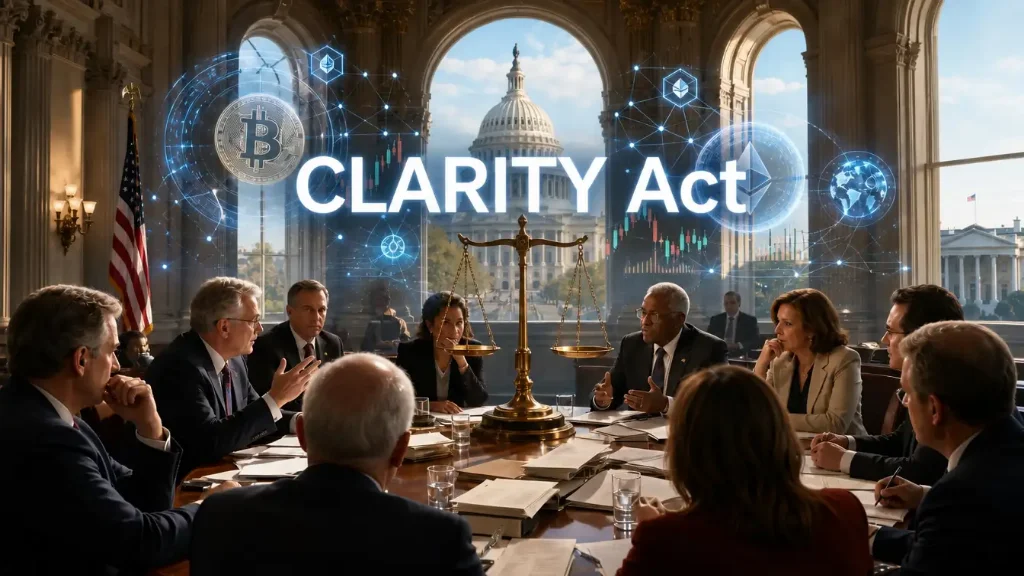


Catenaa, Friday, July 17, 2026- The US Senate’s long-awaited cryptocurrency market structure legislation is nearing a decisive vote, but negotiations have shifted away from digital asset policy toward political ethics, making conflict-of-interest rules the final major hurdle before Congress can approve the country’s first comprehensive federal crypto framework.
Lawmakers from both parties have largely resolved earlier disputes over stablecoin provisions and software developer protections, leaving ethics language governing elected officials’ cryptocurrency interests as the principal issue preventing bipartisan agreement.
The Senate returned from its Independence Day recess with limited legislative time before lawmakers depart again in early August. Senate leaders are aiming to bring updated legislative text to the floor before the recess, although any Senate changes would still require approval from the House of Representatives before the bill could reach the president’s desk.
Negotiators have spent months discussing provisions that would restrict presidents, vice presidents, members of Congress and other senior federal officials from financially benefiting from cryptocurrency ventures while serving in office. The issue has gained prominence following scrutiny of President Donald Trump’s family’s expanding interests in digital assets.
A high-level White House meeting involving President Trump, Sens. Cynthia Lummis and Bernie Moreno, senior White House officials and crypto policy advisers was expected to seek agreement on ethics provisions and secure presidential backing for the legislation. Industry representatives described the meeting as critical to advancing the bill.
Several Democratic lawmakers argue the current draft does not contain sufficiently strong ethics safeguards, raising questions about whether the legislation can attract the bipartisan support needed to clear the Senate’s 60-vote threshold.
Despite the political impasse, lawmakers and industry groups remain cautiously optimistic that an agreement can still be reached.
Rep. William Timmons said cryptocurrency regulation remains one of the administration’s priorities and predicted lawmakers would ultimately complete the legislation despite temporary setbacks. Blockchain Association CEO Summer Mersinger similarly said discussions with Senate offices suggested broad support for the bill’s overall framework, even as ethics negotiations continue.
Industry participants also warned against attaching unrelated amendments to the legislation, including proposals governing prediction markets, arguing that additional policy changes could jeopardize its prospects.
The CLARITY Act would establish the first comprehensive federal regulatory framework for digital assets in the US, clarifying oversight responsibilities between the Securities and Exchange Commission and the Commodity Futures Trading Commission while creating clearer rules for cryptocurrency issuers, exchanges and market participants.
For much of the past year, debate centered on regulatory jurisdiction and stablecoin rules. Today, the legislation’s success depends largely on whether lawmakers can reconcile competing views over ethics standards for public officials with cryptocurrency interests.
The outcome could determine not only the timing of US crypto regulation but also investor confidence in how digital asset legislation balances innovation with public accountability.
The CLARITY Act is designed to establish the first comprehensive federal framework governing US digital asset markets. The House of Representatives approved its version of the legislation last year, while Senate committees have advanced separate proposals during 2026. Negotiators have since worked to reconcile differences involving market structure, stablecoins and regulatory oversight. As Congress approaches its August recess, lawmakers face mounting pressure to complete negotiations before the legislative calendar becomes dominated by the November midterm elections. Failure to secure bipartisan agreement this summer could delay final passage until a later congressional session.