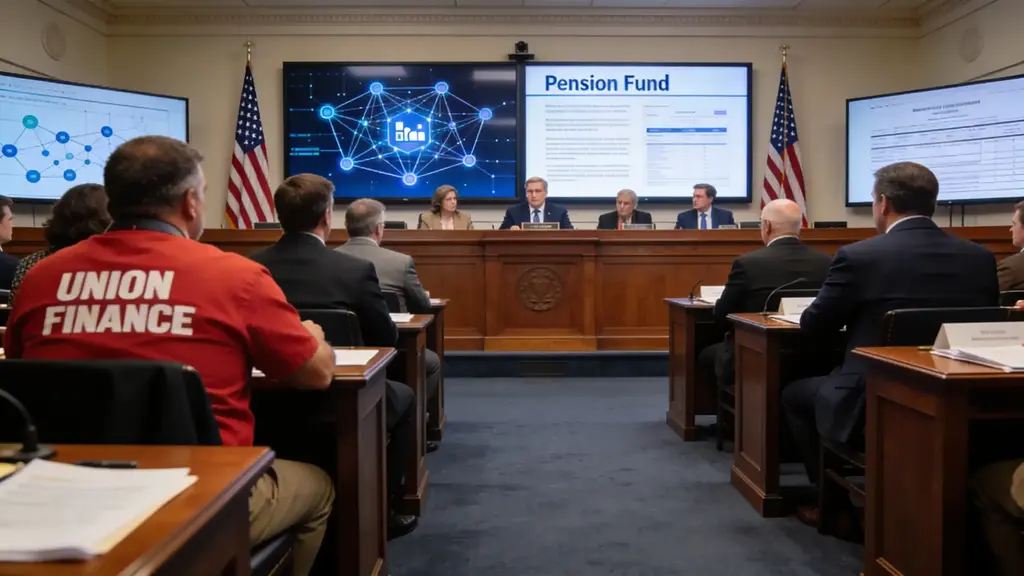


Catenaa, Wednesday, May 13, 2026- Major US labor unions urged senators to oppose pending cryptocurrency market structure legislation ahead of a key Senate Banking Committee markup scheduled tomorrow, warning the bill could expose worker retirement funds to crypto market volatility. The groups argued the proposed Clarity Act risks destabilizing pensions and retirement accounts while benefiting digital asset firms and trading platforms.
According to reports, five large labor organizations opposed the legislation, including AFL-CIO, Service Employees International Union, American Federation of Teachers, National Education Association and American Federation of State County and Municipal Employees.
Several unions reportedly sent letters to lawmakers warning that integrating digital assets into retirement systems could introduce severe financial risks for workers and public pension programs.
The labor groups argued that ordinary workers rather than crypto companies would ultimately absorb losses if volatile digital asset markets experience sharp downturns.
The opposition arrives as lawmakers prepare to debate one of the most closely watched crypto market structure bills in recent years.
The proposed legislation seeks to clarify regulatory oversight for cryptocurrencies, stablecoins and digital asset markets while expanding the legal framework surrounding blockchain based financial services.
The growing political resistance highlights the widening divide between supporters of crypto market expansion and critics concerned about financial stability and consumer protection.
Labor organizations are not the only groups raising objections. American Bankers Association also criticized updated stablecoin language within the legislation, arguing current provisions could encourage deposit migration away from traditional banks.
At the center of the dispute are rules governing payment stablecoins and whether platforms can offer rewards or yield like incentives tied to digital dollar holdings.
Crypto firms including Coinbase support revised language that permits certain activity based rewards tied to blockchain participation and payment systems.
Analysts said the legislation could become a defining moment for institutional crypto adoption because clearer federal rules may encourage broader participation from banks, asset managers and financial firms.
Michael Saylor publicly supported the Clarity Act, arguing the legislation could unlock broader digital capital, digital credit and blockchain based financial markets.
Saylor also linked the bill to future expansion of digital yield markets and increased institutional participation surrounding Bitcoin related financial products.
Meanwhile, labor unions warned lawmakers that insufficient safeguards could expose pensions and retirement systems to unstable speculative markets.
Researchers tracking crypto regulation noted that lawmakers now face pressure from multiple competing interest groups including labor unions, banks, crypto firms and financial regulators.
Analysts said the stablecoin yield debate remains one of the largest unresolved issues ahead of Thursday’s committee discussions.
The latest opposition from labor unions adds another layer of uncertainty surrounding the Senate’s effort to advance comprehensive cryptocurrency legislation.
As lawmakers weigh competing concerns involving innovation, banking stability, retirement protection and digital finance growth, the Clarity Act increasingly reflects broader political battles over the future role of crypto markets inside the US financial system.
The outcome of the Senate committee markup may shape the pace of institutional adoption and regulatory development across digital asset markets for years ahead.
The Clarity Act emerged as part of broader efforts by US lawmakers to establish clearer rules governing cryptocurrencies, stablecoins and blockchain based financial services. Crypto companies long argued that fragmented regulation and overlapping agency oversight created uncertainty limiting institutional participation in digital asset markets. Stablecoins became a central focus because lawmakers sought rules governing reserve backing, payment systems and investor protections. At the same time, critics warned that rapid integration of crypto products into traditional finance could expose consumers, banks and retirement systems to excessive risk. Labor unions historically opposed speculative financial products entering pension systems due to concerns over volatility and worker protections. The Senate Banking Committee markup now represents one of the most important steps yet in determining how the United States may regulate digital assets and blockchain finance infrastructure.




