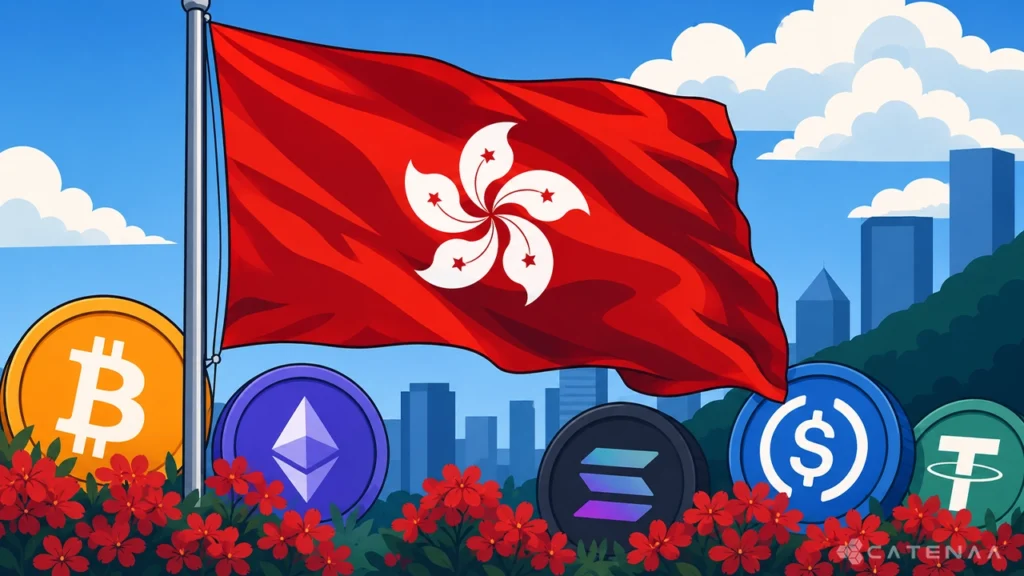


Catenaa, Wednesday, June 03, 2026- Hong Kong is rapidly expanding its digital asset ecosystem through tokenized government bonds, blockchain-based trading infrastructure and new regulatory approvals aimed at positioning the city as one of the world’s leading tokenization hubs.
Authorities said tokenized investment products in Hong Kong reached HK$10.7 billion, or roughly US$1.4 billion, in assets under management by March 2026, representing a sevenfold increase from the previous year.
The growth comes as regulators, banks and technology firms accelerate efforts to integrate blockchain infrastructure into mainstream financial markets.
Hong Kong has also issued more than US$2 billion worth of tokenized government green and infrastructure bonds while preparing additional offerings as part of a longer-term digital finance strategy.
The Securities and Futures Commission approved secondary trading of tokenized investment products on licensed crypto trading platforms in April.
The move allows investors to buy and sell tokenized money market funds and related products through regulated virtual asset exchanges rather than holding them until maturity.
Meanwhile, the Hong Kong Monetary Authority continues testing tokenized deposit systems through Project Ensemble, which explores blockchain-based interbank settlement infrastructure tied to Hong Kong’s real-time payment rails.
Officials also announced new partnerships with Cyberport, the government-backed technology hub, to expand blockchain applications linked to real-world asset tokenization.
Private-sector investment is also accelerating. Digital Asset Clearing Center DACC.HK recently secured US$10 million in funding to develop tokenized financial infrastructure.
Analysts said Hong Kong is emerging as one of the most advanced jurisdictions globally for tokenized finance integration.
The regulatory approvals could significantly improve liquidity for tokenized products by allowing secondary market trading through licensed platforms.
Supporters argue tokenization can reduce settlement times, lower operational costs and improve access to traditionally illiquid assets.
At the same time, Hong Kong’s approach intensifies competition among global financial centers seeking leadership in blockchain-based capital markets.
The strategy also positions Hong Kong as a bridge between traditional finance and regulated crypto infrastructure while mainland China continues maintaining tighter restrictions on public crypto trading.
Market analysts said Hong Kong’s focus on practical implementation distinguishes it from jurisdictions still debating broader regulatory frameworks.
Researchers noted the rapid growth in tokenized product assets remains relatively small compared with Hong Kong’s traditional financial industry but represents accelerating institutional interest.
Officials also stressed that secondary trading approval could become one of the strongest catalysts for broader adoption.
Tokenization involves representing traditional financial assets such as bonds, funds or deposits on blockchain networks.
Governments, banks and asset managers increasingly explore tokenization as a way to modernize financial settlement systems and improve market efficiency.
Hong Kong has spent recent years developing crypto licensing frameworks, stablecoin regulations and tokenized asset programs as part of broader efforts to strengthen its position as a global digital finance hub.