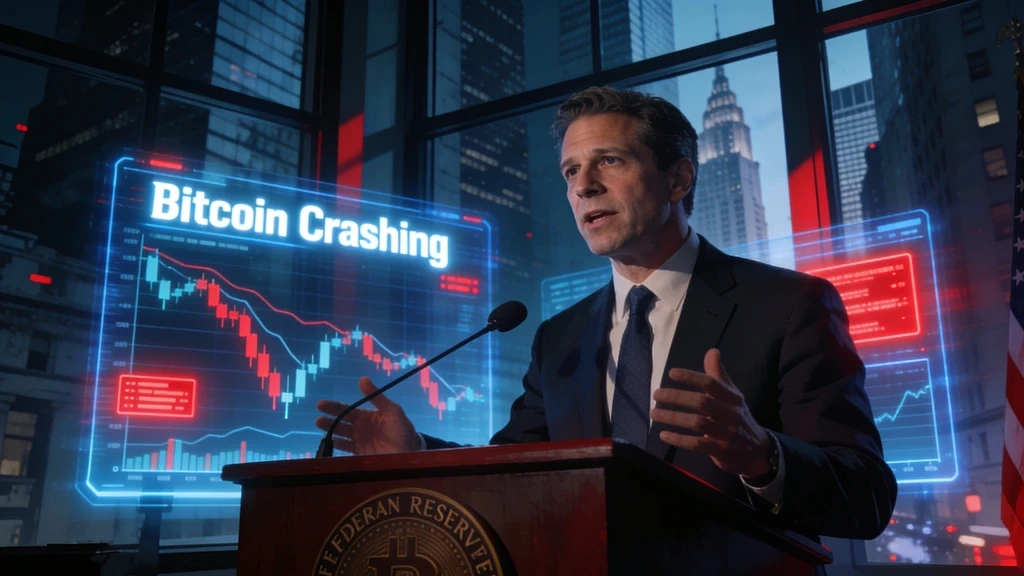


Catenaa, Thursday, June 18, 2026- Bitcoin fell below the $65,000 mark and broader cryptocurrency markets weakened after newly appointed Federal Reserve Chair Kevin Warsh delivered a notably hawkish message following his first Federal Open Market Committee meeting, reinforcing expectations that US interest rates could rise again before the end of the year.
The Federal Reserve left its benchmark interest rate unchanged at 3.50% to 3.75% during its June meeting. However, attention quickly shifted to policymakers’ projections, which showed nine officials expecting at least one rate increase before the end of 2026.
The shift caught investors off guard. Markets had largely expected the Fed to maintain a neutral stance amid signs of moderating economic activity and easing geopolitical tensions following the reported US-Iran agreement.
Instead, Warsh emphasized that inflation remains uncomfortably high. Consumer price growth stood at 4.2% in May, more than double the Fed’s long-term target of 2%.
Bitcoin retreated below $65,000 after the announcement, while Ethereum, Solana and other major digital assets also moved lower as traders reassessed expectations for monetary policy.
Warsh’s comments marked a clear departure from expectations that a new Fed leadership team might adopt a more accommodative approach.
The former Fed governor has long been viewed as one of Washington’s strongest inflation hawks. During his first press conference as chair, he indicated that restoring price stability remains the institution’s primary mission despite concerns about slowing growth.
For crypto investors, higher interest rates typically reduce appetite for risk assets by increasing yields on cash and government bonds.
That dynamic has repeatedly pressured digital assets during previous tightening cycles.
The timing is particularly significant because crypto markets were simultaneously benefiting from improving geopolitical sentiment.
News surrounding a potential US-Iran agreement had supported broader risk appetite earlier in the week. Oil prices declined as concerns about supply disruptions eased, creating conditions that normally favor higher-risk investments.
Warsh’s comments effectively offset part of that optimism.
The result is a market facing conflicting forces. On one side, falling energy prices and reduced geopolitical uncertainty support risk assets. On the other, the prospect of tighter monetary policy threatens liquidity across financial markets.
Attention now turns to the Fed’s September meeting.
If inflation remains elevated through the summer, investors increasingly believe policymakers could deliver the first rate increase of the current cycle.
While nine officials favor additional tightening, that does not yet represent a formal commitment by the committee.
Upcoming inflation reports, labor market data and consumer spending figures will likely determine whether those projections become actual policy.
Warsh’s remarks attracted additional scrutiny because of his previous involvement with the digital asset sector.
Before assuming the Fed chairmanship in May, Warsh disclosed investments in more than 30 cryptocurrency-related projects, including exposure to the Solana ecosystem. He has since pledged to divest those holdings to avoid conflicts of interest.
He also acknowledged during the press conference that digital assets have become integrated into the broader financial services system, reflecting the industry’s growing role within global finance.
Warsh assumed leadership of the Federal Reserve in May 2026 after being nominated by President Donald Trump. Markets initially debated whether the new chair would prioritize economic growth or inflation control. His first FOMC appearance appears to have answered that question. Inflation has remained above the Fed’s 2% target for five consecutive years, creating pressure on policymakers to maintain a restrictive stance despite concerns about economic momentum. For crypto markets, the Fed’s policy direction remains one of the most important drivers of liquidity, capital flows and investor risk appetite worldwide.