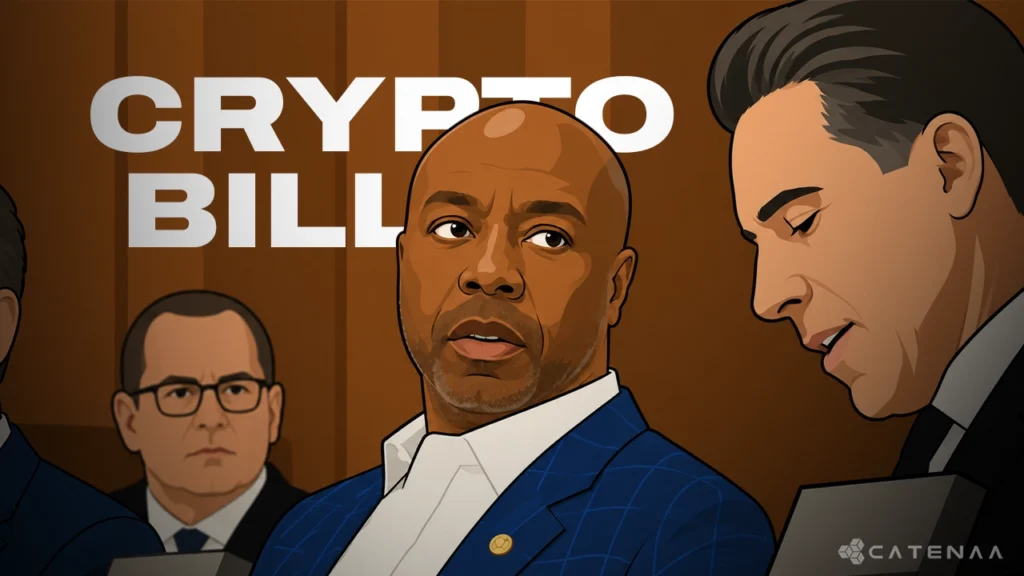


Catenaa, Thursday, May 14, 2026- The US Senate is preparing for a major vote on the crypto market structure bill known as the Clarity Act on May 14, but analysts and lawmakers warn the legislation still faces major political and regulatory hurdles before becoming law.
Investment bank TD Cowen said Monday that the upcoming Senate Banking Committee vote only shifts negotiations to the full Senate rather than signaling final approval. Disputes over stablecoin yield rules, ethics provisions tied to President Donald Trump’s family crypto businesses, anti money laundering standards and market oversight remain unresolved as lawmakers race against the August congressional recess.
The Clarity Act is one of the most closely watched crypto bills in Washington because it seeks to define how digital assets are regulated in the US.
The legislation would divide oversight authority between the Securities and Exchange Commission and the Commodity Futures Trading Commission while creating clearer rules for crypto trading platforms and token issuers.
The Senate Banking Committee scheduled the vote despite opposition from traditional banking groups and several Democratic lawmakers. Banks have raised concerns about stablecoin issuers offering yield bearing products that could compete directly with savings accounts and money market funds.
Crypto companies including Coinbase have pushed for rules allowing stablecoin yield products to expand consumer adoption and increase blockchain based financial services. The disagreement has become one of the largest policy disputes surrounding the legislation.
TD Cowen analyst Jaret Seiberg said Senate leaders may eventually merge the Banking Committee version with another version developed by the Senate Agriculture Committee before broader negotiations begin.
The bill requires at least 60 votes in the Senate, forcing bipartisan cooperation in an election year marked by growing political tension around digital assets. Democrats are demanding stricter ethics and conflict of interest provisions tied to government officials involved in crypto ventures.
Analysts said lawmakers remain concerned about Trump family involvement in crypto related businesses while Congress debates market regulations that could affect those operations. Some Democratic senators reportedly want stronger restrictions preventing senior government officials and their relatives from participating in crypto firms while in office.
Republican lawmakers remain divided over how far ethics rules should extend. Some party members support adding conflict language to strengthen bipartisan support, while others argue such measures unfairly target Trump linked ventures.
TD Cowen warned that unresolved disputes could delay the bill beyond this year despite growing industry pressure for regulatory clarity. If Democrats regain control of the House after the November midterm elections, Trump related crypto businesses could face congressional investigations, analysts noted.
Policy analysts said the Senate now faces a difficult balancing act between powerful banking interests and the rapidly growing crypto industry. Market observers believe Congress may struggle to choose between protecting traditional financial institutions and expanding crypto financial products.
Seiberg said lawmakers still face unresolved questions surrounding market manipulation standards, anti money laundering compliance and Bank Secrecy Act enforcement. Concerns over Iran linked crypto transactions have also increased pressure on lawmakers to tighten oversight.
Industry researchers said the absence of several Commodity Futures Trading Commission members could further complicate efforts to finalize market supervision rules. Some analysts believe the lack of a fully staffed regulator weakens confidence in rapid legislative approval.
Several Washington policy groups expect direct White House involvement may eventually become necessary if negotiations stall further in the Senate.
The Senate Banking Committee vote may move the crypto debate forward, but the Clarity Act still faces a difficult path through Congress. Lawmakers remain divided over ethics rules, stablecoin competition and national security concerns tied to digital assets.
The growing overlap between politics, banking and crypto markets has turned the legislation into a broader fight over financial regulation and government oversight. Industry firms continue pressing for clearer rules as institutional investment in crypto expands across US markets.
Without bipartisan agreement in the coming months, analysts warn the legislation could slip into 2027, delaying formal crypto market rules until later in the decade.
The US Congress has debated crypto market regulation for several years as digital assets expanded into mainstream finance. Regulatory uncertainty increased after the collapse of several major crypto firms in 2022, including FTX, which triggered calls for stronger consumer protections and market oversight. Since then, lawmakers have struggled to decide whether cryptocurrencies should fall mainly under securities law or commodity market rules. Stablecoins have become another major issue because they operate similarly to digital dollars while competing with parts of the banking system.
President Donald Trump’s growing ties to crypto businesses have added new political pressure to the debate during the 2026 election cycle. Large financial firms, crypto exchanges and banking lobby groups continue spending heavily in Washington as Congress works toward the first large scale federal crypto framework.




