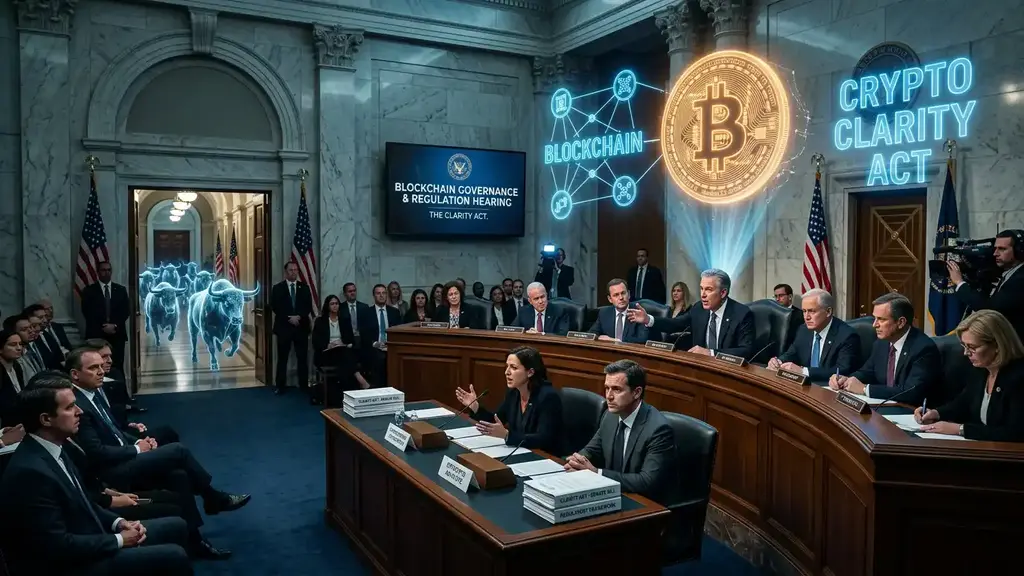


Catenaa, May 14, 2026- A landmark US cryptocurrency regulation bill cleared the Senate Banking Committee today, (Thursday) after months of tense negotiations between lawmakers, regulators, crypto firms and banking groups, moving the legislation closer to becoming the country’s first comprehensive federal framework for digital assets.
The committee voted 15-9 to advance the Senate version of the CLARITY Act, with Democratic senators Ruben Gallego and Angela Alsobrooks joining Republicans in support. The bill now heads toward a full Senate vote.
The legislation would divide oversight of digital assets between the Securities and Exchange Commission and the Commodity Futures Trading Commission while creating federal rules for crypto trading platforms, decentralized finance projects and token issuers.
The crypto industry has pushed for federal market structure legislation for years, arguing that unclear regulations and overlapping enforcement actions have slowed investment and innovation in the United States.
The House approved its own version of the legislation last year, but Senate negotiations stalled after disputes emerged over stablecoin rewards, decentralized finance protections and ethics concerns tied to President Donald Trump and his family’s crypto ventures.
Ahead of Thursday’s vote, lawmakers filed more than 100 proposed amendments involving illicit finance rules, decentralized finance oversight and restrictions on digital asset ownership by public officials.
Gallego warned during the committee session that he could still vote against the legislation on the Senate floor if stronger ethics rules are not added.
The committee vote marked one of the strongest signs yet that Congress could finally pass broad crypto legislation before the November midterm elections.
Crypto firms view the bill as critical because it could reduce regulatory uncertainty and formally recognize digital assets within the US financial system.
The legislation also includes provisions linked to the Blockchain Regulatory Certainty Act, which seeks to clarify that noncustodial software developers are not automatically considered money transmitters.
Law enforcement officials and some Democratic lawmakers argued parts of the language could weaken the government’s ability to target financial crime involving decentralized finance platforms.
A compromise amendment added language stating that developers could still face criminal charges if they intentionally help move funds tied to illegal activity.
Mason Lynaugh described the upcoming Senate floor vote as the most important crypto related vote lawmakers have ever faced.
Peter Van Valkenburgh welcomed the committee outcome, saying protections for noncustodial developers remained intact despite heavy opposition.
Meanwhile, Mark Warner joked during the hearing that after months of negotiations he had been living in “crypto purgatory.”
Democratic lawmakers have increasingly raised concerns about Trump family crypto projects, including ventures tied to World Liberty Financial.
Chris Van Hollen introduced an amendment seeking to block presidents, lawmakers and senior officials from owning or promoting digital assets while in office.
That amendment failed in a 13-11 vote.
Despite the disputes, Thursday’s bipartisan committee approval marked a major victory for the digital asset industry, which has spent heavily lobbying Congress and supporting pro-crypto candidates ahead of the 2026 election cycle.