

August 07, 2026 – The bill has cleared key committees. However, floor timing and unresolved safeguards now shape its 2026 prospects.
In Summary
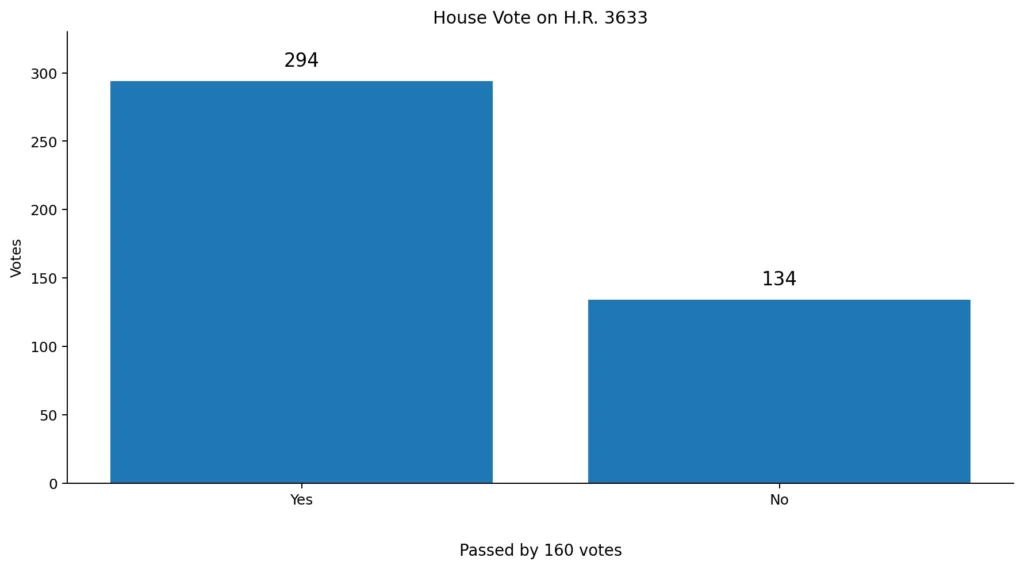
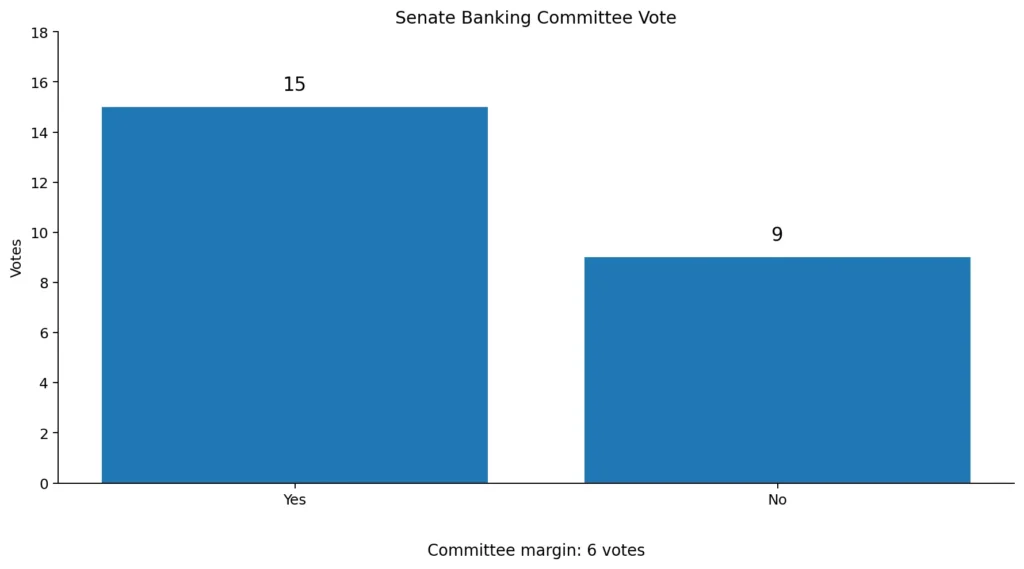
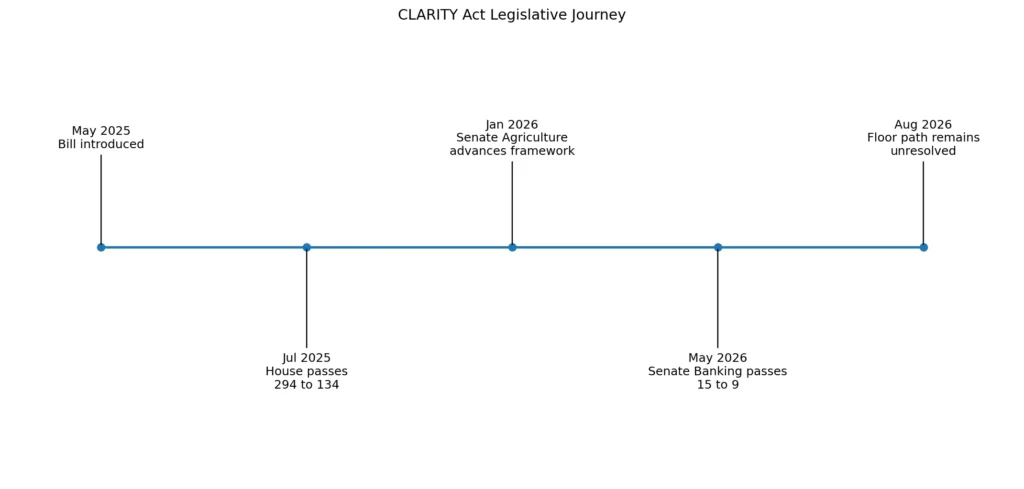
The House passed the bill 294 to 134, while Senate Banking approved it 15 to 9.
A 60-vote procedural hurdle makes bipartisan support essential.
Ethics, illicit finance, banking, and investor protections remain decisive issues.
The CLARITY Act has entered its hardest stage. Congress has moved beyond broad policy design. It now faces vote counting, calendar pressure, and unresolved safeguards.
The House approved H.R. 3633 by 294 votes to 134 in July 2025. That margin showed unusual bipartisan support for crypto legislation. The Senate Banking Committee later advanced the measure by 15 votes to 9 in May 2026. However, committee victories do not guarantee floor passage.
Why the bill matters
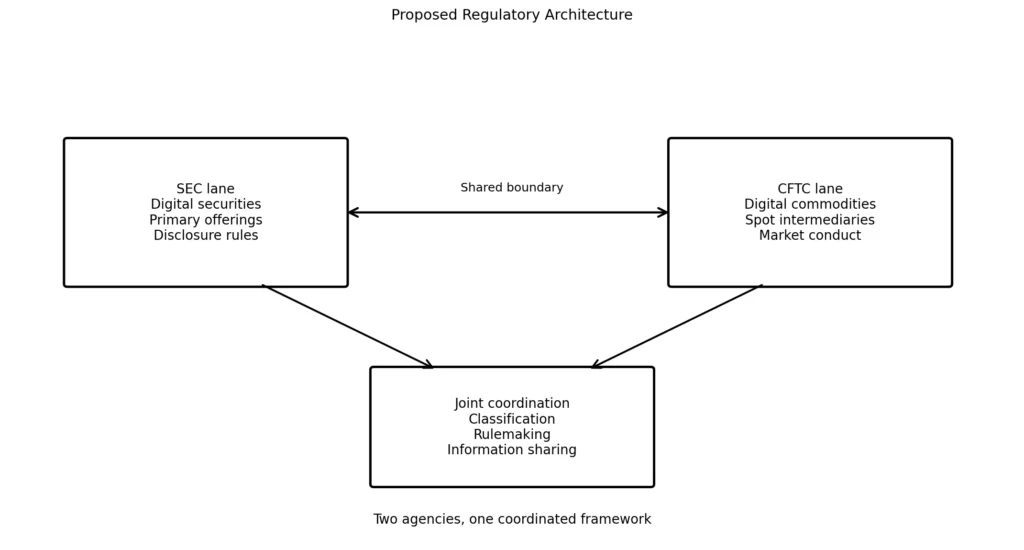
The legislation seeks a durable federal framework for digital assets. It would define clearer roles for the SEC and CFTC. It also proposes disclosure, anti-fraud, compliance, and investor protection rules.
Supporters argue that legal certainty could attract capital and infrastructure back to the United States. Clearer registration pathways may also reduce compliance disputes. Furthermore, regulated exchanges could gain stronger incentives to build domestic operations.
The market impact could extend beyond crypto companies. Banks, brokers, custodians, asset managers, and payment firms may revise their digital strategies. Therefore, the bill could shape how traditional finance enters tokenized markets.
Implementation would not happen overnight. Regulators would need rules, registration systems, staff, and coordination procedures. Firms would then map products against the new categories. Consequently, legal clarity could arrive before operational certainty. Larger institutions may adapt faster because they already maintain compliance teams. Smaller developers could benefit from clearer boundaries, but transition costs may still remain significant.
The Senate arithmetic is difficult
Senate Banking Chairman Tim Scott said on August 6 that Republican support was growing. He also urged the Senate to begin voting before lawmakers leave Washington.
Still, most major legislation needs 60 votes to overcome procedural resistance. That requirement forces supporters to secure meaningful bipartisan backing. A narrow party-line coalition would not be enough.
The committee vote offers some encouragement. Sixteen members did not oppose the measure, including one recorded absence from the 25-member panel. Yet floor politics involve more members, wider interests, and greater electoral pressure.
Timing creates another problem. Senators face competing priorities before the midterm campaign intensifies. A delayed vote would leave fewer working days for debate, amendments, and final passage.
Five disputes could decide the outcome
The largest fight concerns consumer and institutional safeguards. Senate minority staff identified five broad weaknesses in the current approach. Their concerns cover securities law, illicit finance, systemic risk, ethics, and investor protection.
Supporters reject that assessment. They say the bill strengthens disclosures and preserves anti-fraud powers. They also highlight insider controls and closer regulatory coordination. This disagreement now defines the final negotiation.
Ethics provisions may become the decisive bridge. Democrats want stronger restrictions on senior officials who profit from digital assets. Republicans need enough compromise to attract opposition votes without losing their own coalition.
Banks also remain important. Deposit competition, crypto rewards, custody rules, and payments access could affect their support. Community bank concerns may influence senators from both parties.
Three realistic paths remain
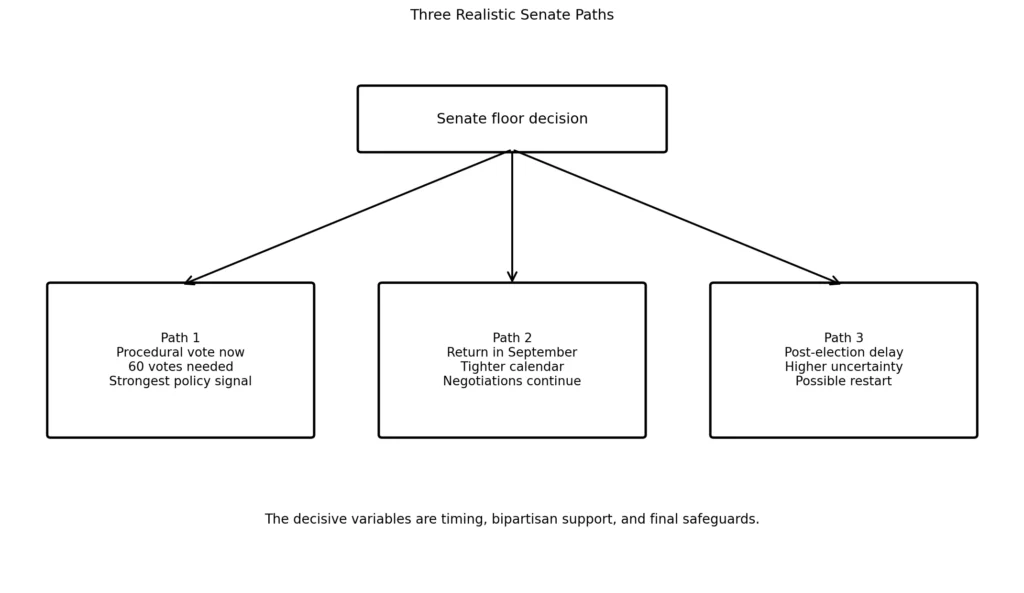
The first path is an immediate procedural vote. Success would prove that a 60-vote coalition exists. The Senate could then complete amendments and final voting after recess.
The second path is a September return. This route remains viable, but the calendar becomes tighter. Government funding and election pressures would compete for floor time.
The third path is a post-election delay. That outcome would increase political uncertainty. It could also force lawmakers to restart negotiations under a changed Congress.
For markets, the first path would offer the strongest policy signal. Exchanges and infrastructure providers could accelerate compliance planning. Token issuers might also prepare for clearer classification standards.
A September route would keep optimism alive, although volatility could rise around every procedural update. A failed vote would create the largest policy discount. Companies would continue relying on agency interpretation, court decisions, and fragmented state rules.
What investors should watch
The next signal is not another endorsement. It is a formal floor action, updated legislative text, or a public bipartisan agreement.
Investors should also track which disputed provisions change. Ethics language, illicit-finance controls, bank rewards, and state authority matter more than political slogans.
The CLARITY Act still has momentum. Yet its final hurdle is political execution, not policy ambition. The next few weeks will test whether bipartisan committee support can survive the Senate floor.




