


June 28, 2026 – The ChatGPT maker wants one national rulebook. It also wants Washington to switch off conflicting state laws.
OpenAI is now the loudest corporate voice for federal AI regulation. Moreover, the company wants Washington to switch off conflicting state laws. This push now sits at the heart of a fierce policy fight.
CEO Sam Altman argues that 50 separate state regimes slow innovation. Furthermore, he says a patchwork raises compliance costs for young startups. Therefore, OpenAI continues to lobby Congress for a single clear standard.
The case for federal AI regulation
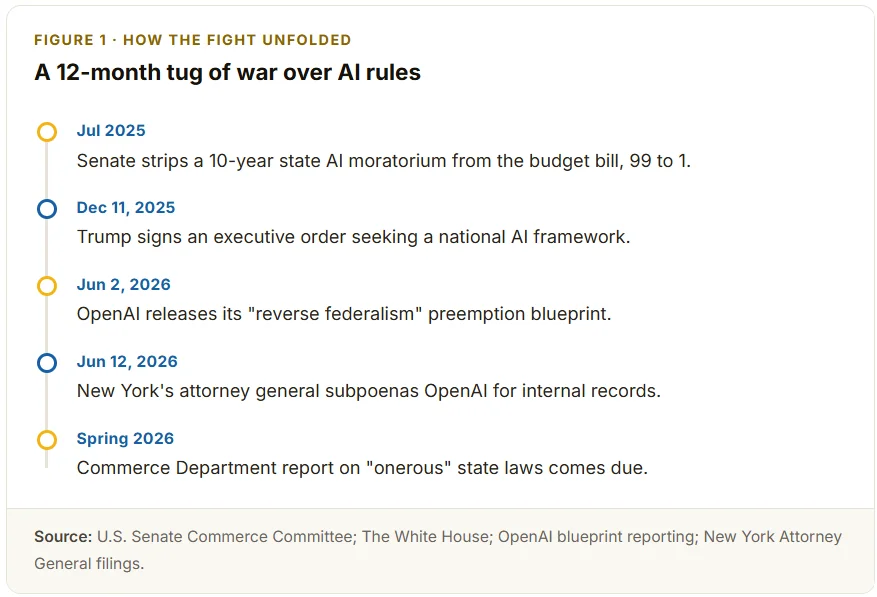
On June 2, OpenAI published a nine-page blueprint for frontier AI. The plan asks Congress to build a single federal framework. Then it would preempt state laws that govern the same safety risks.
OpenAI calls this idea “reverse federalism.” In short, states pioneer the rules first. Afterward, Washington adopts the consensus and overrides anything that diverges.
However, critics read the plan differently. They argue that the real move caps and overrides state authority. Meanwhile, the safety provisions stay largely advisory, with a written bypass.
OpenAI has chased this goal before. In a March 2025 filing, it sought liability shields and preemption. The White House made a parallel request that same spring.
Altman has also taken the case to Capitol Hill. In early June, he met leaders from both parties. His pitch stayed simple: one clear standard beat fifty.
OpenAI frames the patchwork as a drag on growth. Its policy chief warns of a maze of conflicting rules. Yet opponents doubt that fewer rules mean safer products.
Why the fight matters now
The timing makes the stakes concrete. While Washington debates limits on state power, states continue to exercise that power. New York Attorney General Letitia James subpoenaed OpenAI on June 12. Her demand sought records on advertising, user engagement, and child safety.
Consequently, the clash shows what states could lose. At present, no federal AI statute exists. As a result, nearly every active rule is a state measure.
James cast a wide net in her request. The subpoena covered privacy, minors, health data, and retention. It even probed how the models flatter their users.
The dispute reaches ordinary consumers, too. State rules currently police deepfakes and biased hiring tools. Therefore, broad preemption could quickly thin those protections.
States have not stayed quiet, either. Hundreds of AI bills are now moving through legislatures nationwide. California, Colorado, Texas, and Utah lead with the strongest frameworks.
Each state targets a different risk. California’s law pushes frontier model transparency. Colorado tackles algorithmic discrimination in hiring and lending. Texas enacted a governance act, effective January 1.

What Trump’s order changes
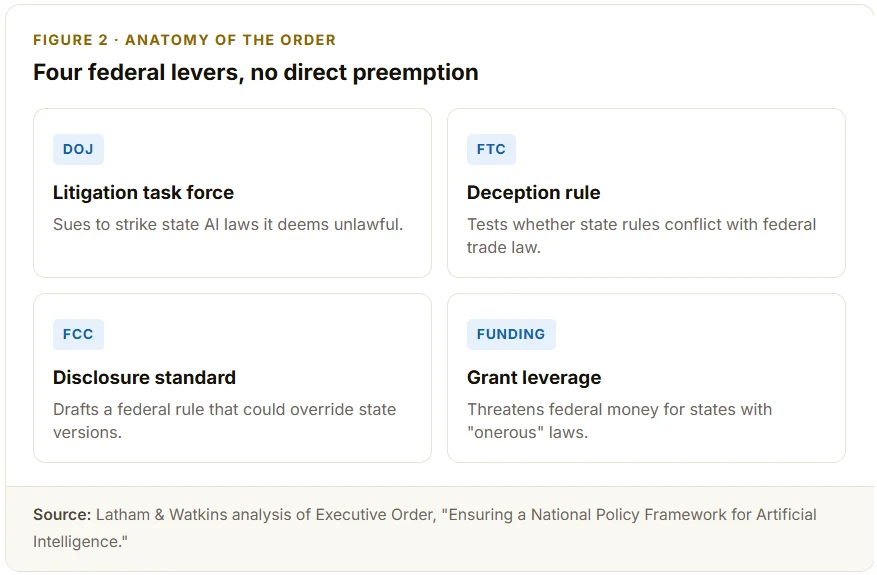
President Trump signed an executive order on December 11, 2025. The order seeks a “minimally burdensome” national framework. Notably, it does not preempt any state law on its own.
Instead, the order pulls four federal levers at once. Still, it protects some areas. For example, child safety and data center laws keep their carve-outs.
Special Advisor David Sacks helps steer the effort. Michael Kratsios leads work on a draft federal statute. Even so, the order leans on pressure rather than direct power.
Congress has resisted before
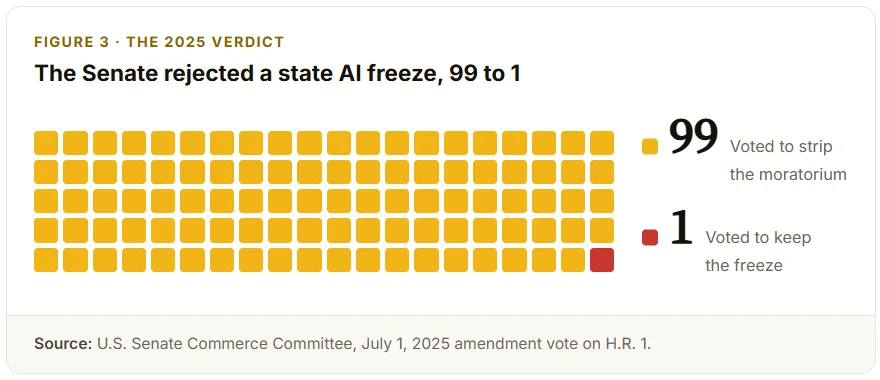
This is not OpenAI’s first attempt at preemption. Back in July 2025, the Senate faced a similar plan. Lawmakers voted 99 to 1 to strip a 10-year moratorium from the budget bill. Only Senator Thom Tillis backed the freeze.
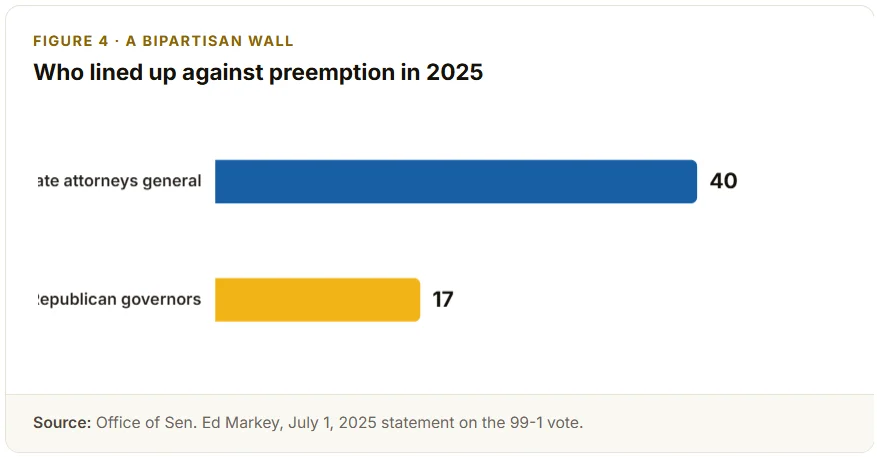
That vote crossed party lines with force. In fact, 17 Republican governors and 40 state attorneys general opposed the moratorium. Groups from the Heritage Foundation to the Center for American Progress aligned against it.
Because of that history, federal preemption faces steep odds. OpenAI itself concedes the core limit. Real preemption, the company admits, requires an act of Congress.
Legal scholars flag a deeper hurdle as well. An executive order cannot rewrite state law alone. The Tenth Amendment reserves broad powers for the states.
Republicans remain split on the strategy, too. Some conservatives call the push a form of federal overreach. Others defend it as a shield for innovation.
The funding threat also invites a legal clash. The moratorium once tied roughly $42 billion in broadband grants to state compliance. That leverage drew fire from both parties last year.
What comes next
For now, companies must continue to follow state law. State attorneys general also keep their investigative powers. Governors in California, Colorado, and New York vow to defend their statutes.
The next signals will come from federal agencies. Their FCC and FTC proceedings could reshape the legal terrain. Those decisions will likely face immediate court challenges.
The administration frames AI as a race it must win. It argues that heavy state rules could blunt that edge. Critics counter that weak rules invite real harm.
Ultimately, the outcome hinges on Congress. Until lawmakers act, the patchwork of state laws stays in place. Both developers and regulators should brace for a long, multi-front fight.




