

June 15, 2026 – Speculators have stacked record bets against the yen. Meanwhile, the Bank of Japan prepares a decision that could ripple through crypto and global markets.
Japan sits at the center of global markets this week. A single rate decision could either calm traders or unleash fresh volatility. Speculators have already placed their chips, and the stakes look unusually high.
In Summary
Net yen short positions reached about 145,800 contracts, a nine-year high.
Markets price a 94% to 96% chance of a BOJ hike to 1.0%.
A repeat of the August 2024 unwind could pressure crypto and equities.
Speculators turn sharply against the yen
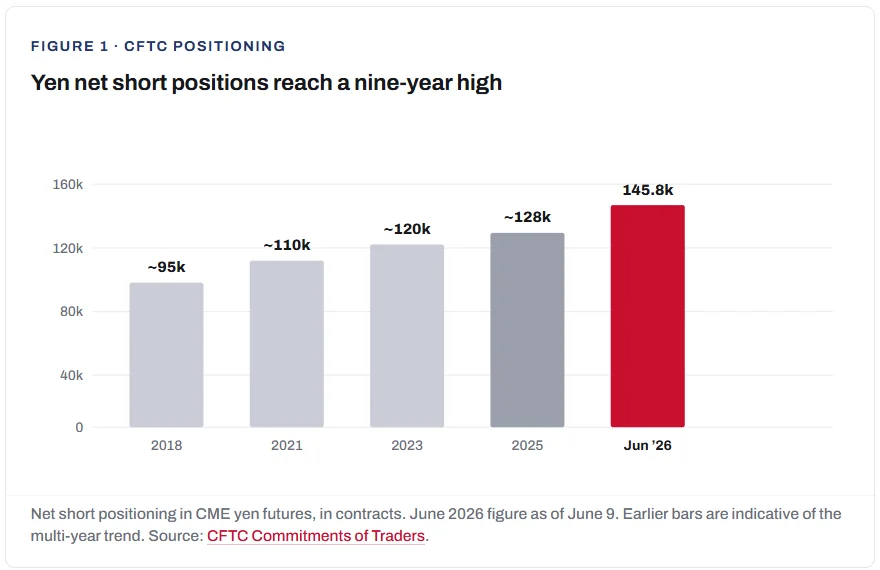
Traders are betting against the Japanese yen at a near-decade pace. Net short positions in yen futures reached roughly 145,800 contracts as of June 9. According to CFTC positioning data, that level marks a nine-year high. Moreover, the timing looks deliberate rather than random.
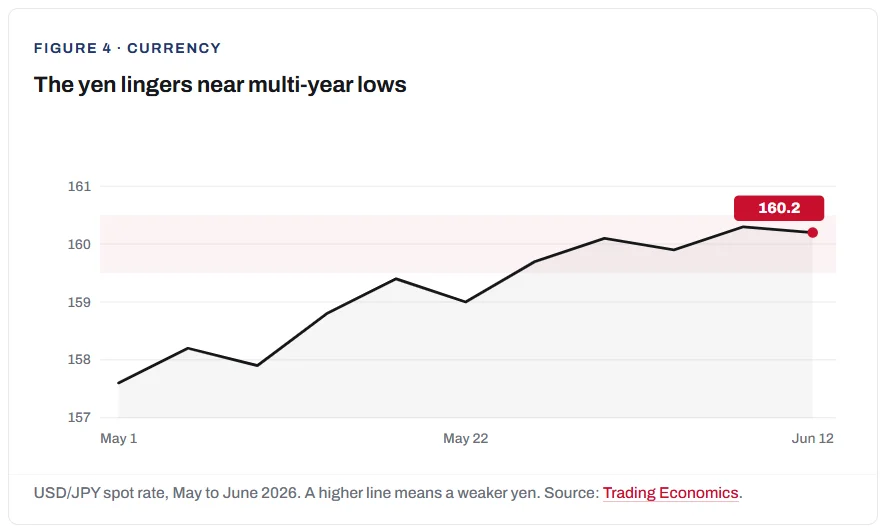
The yen has traded between 157 and 160 per dollar through May and June. On June 12, the pair sat near 160.2, its weakest level since July 2024. Therefore, pressure on Japanese policymakers continues to build by the week.
Why this BOJ meeting matters now
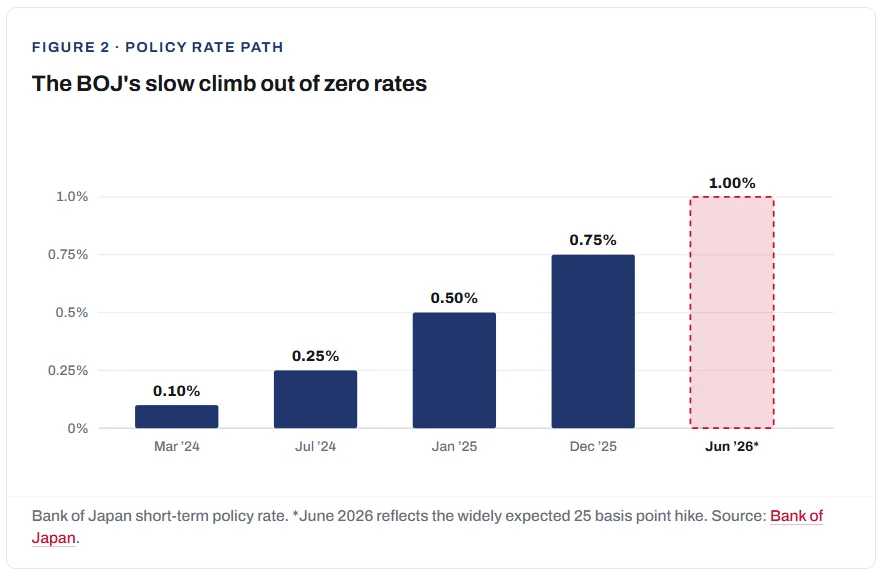
The Bank of Japan meets on June 15 and 16. Markets widely expect a 25-basis-point hike to 1.0%. Probability estimates currently range from 94% to 96%. Consequently, such a move would lift Japan’s policy rate to its highest since 1995.
Japan’s inflation backdrop supports the hawkish shift. Producer prices climbed 6.1% year over year in May. In addition, the central bank has nudged its 2026 inflation forecast toward 2.8%. These figures give policymakers clear room to keep tightening.
The carry trade, explained simply
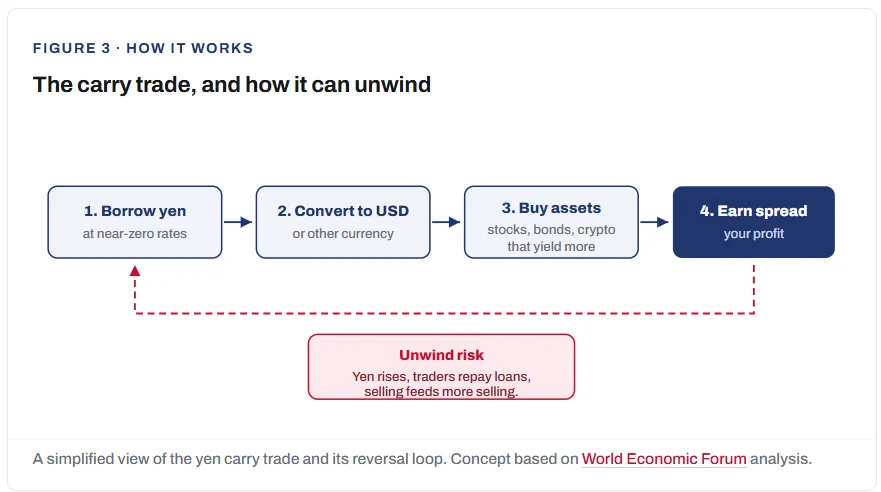
The mechanics stay refreshingly straightforward. First, investors borrow yen at very low rates. Next, they convert those yen into dollars or other currencies. Finally, they buy higher-yielding assets with the cash. Stocks, bonds, and crypto all qualify. The spread between costs and returns becomes the profit.
For over a decade, this strategy fueled global liquidity. Cheap yen funded Treasury purchases and leveraged crypto bets alike. The World Economic Forum notes how deeply these flows connect markets. However, that same engine can slam into reverse.
Japan’s intervention problem
Tokyo has not stayed passive about the weak currency. Authorities spent an estimated $34.3 billion on intervention in early May. They sold dollars directly to prop up the yen. Yet the result disappointed almost immediately.
The yen bounced briefly, then slipped back into its range. Speculators barely reacted to the effort. As a result, the record short position signals deep skepticism. In effect, the market is calling the central bank’s bluff.
This dynamic complicates life for Governor Kazuo Ueda. The bank signals firm normalization at every turn. Still, traders bet that a 1.0% rate leaves Japan far below US levels.
What it means for crypto investors
You may wonder why a Japanese meeting moves Bitcoin. The answer sits in August 2024. Back then, a partial unwind of the carry trade hammered risk assets worldwide. Crypto fell especially hard during those sessions.
The mechanism runs on math, not on mood. When the yen suddenly strengthens, carry positions become unprofitable. Traders then rush to buy yen and repay loans. That buying strengthens the yen even more. Consequently, more positions unwind, and a feedback loop forms. Liquidity drains from risk assets at speed.
The 2024 episode shows the stakes plainly. On August 5, the Nikkei 225 fell 12.4%. The S&P 500 dropped about 3% the same day. Bitcoin slid below $50,000 during the turmoil. Markets recovered quickly, yet the scars remain fresh.
A trade measured in trillions
The carry trade is not a niche strategy. Analysts estimate its total size at up to $14 trillion. For context, that figure dwarfs the entire crypto market. Therefore, even a partial unwind can move global prices. Small shifts in Japanese policy travel far and fast.
Leverage makes the trade powerful and fragile at once. Borrowed money amplifies gains during calm periods. However, it also amplifies losses when volatility spikes. In August 2024, that fragility surfaced violently. The VIX volatility index briefly jumped above 60. Such readings appear only during genuine market stress.
The base case, and the real risk
Today’s short positions look more extreme than before they unwind. Therefore, the squeeze risk has clearly grown. Even so, the base case stays calm for now.
Most likely, the BOJ hikes by 25 basis points. The market then shrugs because the move was priced in. The carry trade simply continues afterward. That outcome carries the 94% to 96% odds.
Nevertheless, surprises remain entirely possible. Suppose Ueda signals a faster path of tightening ahead. Alternatively, suppose the bank hints at rates well above 1.0%. In either case, the yen could strengthen sharply. Leveraged positions would then face heavy pressure. Capital could exit risk assets globally.
What to watch at the meeting
Several signals deserve close attention this week. First, watch the exact rate decision and the vote split. A unanimous hike would read as confident. Next, parse Ueda’s language on future moves. Hawkish hints could lift the yen quickly. By contrast, cautious wording could prolong the weak-yen trend.
Investors should also track chatter about intervention from Tokyo. Another dollar-selling round could jolt positioning fast. Finally, monitor crypto liquidity and funding rates. Thin liquidity tends to magnify any shock. Taken together, these signals will frame the risk landscape ahead.




