

August 09, 2026 – The XTB commodity expansion broadens its lineup and extends Friday access. The timing matters because commodities now drive most group trading revenue.
In Summary
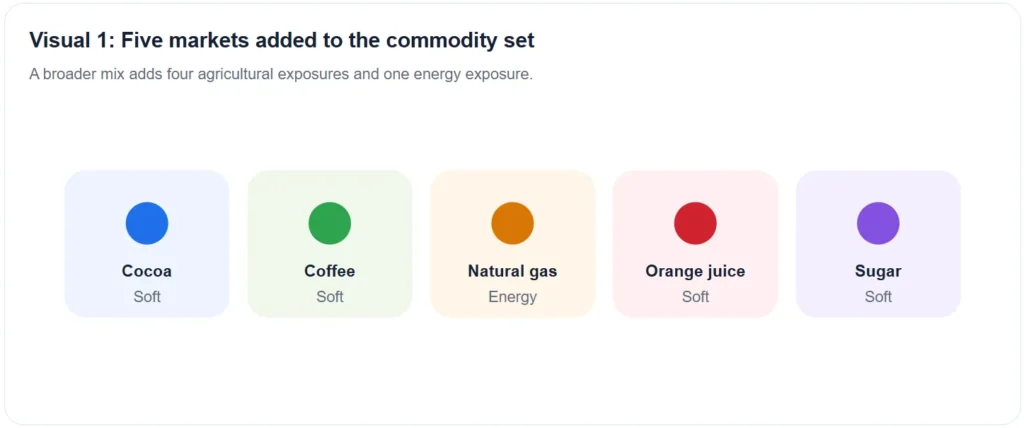
Five additional commodity CFDs widen access across cocoa, coffee, natural gas, orange juice, and sugar.
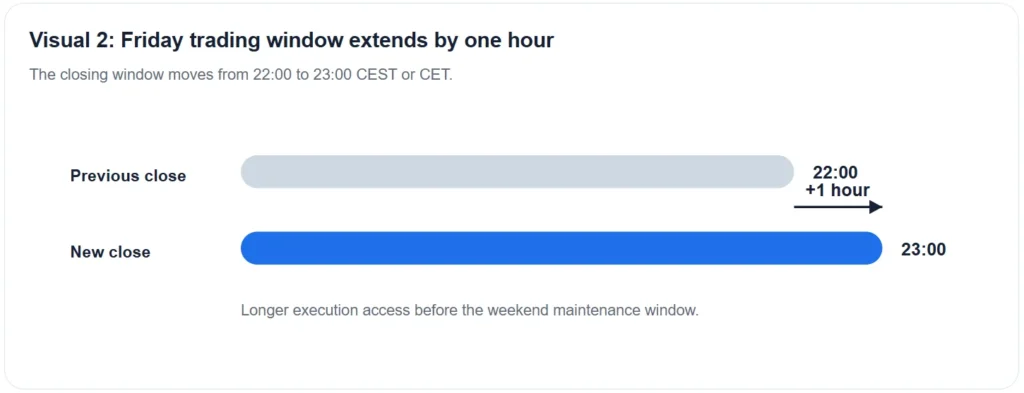
Friday trading now runs until 23:00 CEST or CET, adding one hour to the weekly closing window.
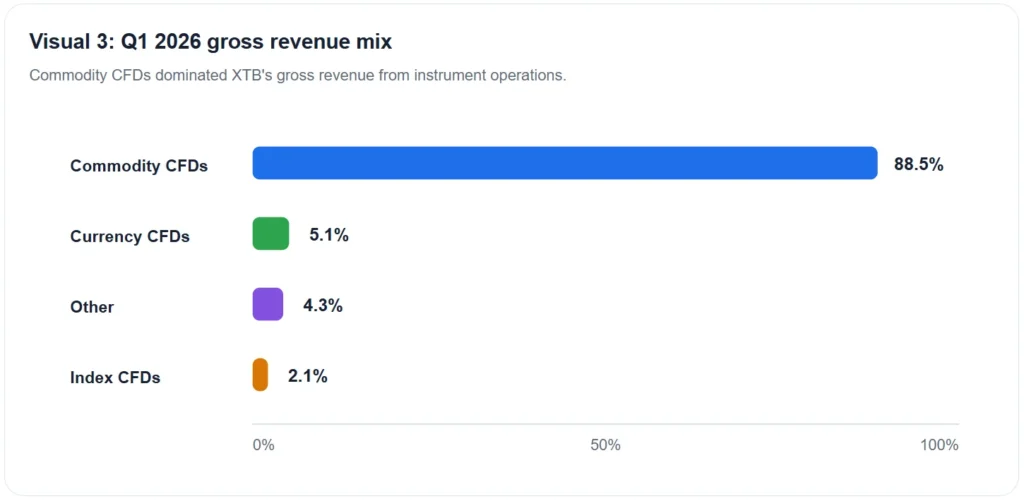
Commodities generated 88.5% of XTB Group’s gross instrument revenue in the first quarter of 2026.
Cocoa supply moved back into surplus, while coffee prices still showed sharp weather-driven volatility.
The changes strengthen XTB’s institutional pitch around breadth, execution access, and operational flexibility.
Commodity access gets more strategic
XTB Institutional is widening commodity coverage when commodity-linked trading already carries major economic importance for the group.
The institutional arm offers more than 5,000 FX and CFD instruments across six asset classes.
The latest expansion adds five commodity CFDs. They cover cocoa, coffee, European natural gas, orange juice, and sugar.
That mix matters because it broadens exposure beyond precious metals and crude oil. Soft commodities react to weather, inventories, harvests, and logistics.
However, instrument count alone does not define execution quality. Spreads, depth, latency, and reliable pricing still shape institutional trading outcomes.
Friday access gains another hour
XTB Institutional extended Friday trading until 23:00 CEST or CET from July 3, 2026.
The company said the change reduces its weekend technical maintenance window by one hour. All other trading conditions remain unchanged.
That extra hour can matter around late economic releases or abrupt commodity moves. It also gives desks more time to rebalance exposures.
Still, the extension does not remove weekend gap risk. Prices can reopen sharply after geopolitical or weather events.
Therefore, the change is mainly operational. It increases the time available for execution before markets enter the weekend.
Commodity revenue shows why expansion matters
XTB Group’s first-quarter results provide the strongest strategic context.
Commodity CFDs produced 88.5% of gross revenue from financial instrument transactions during the quarter. That compares with 29.1% one year earlier.
The group recorded PLN 1.094 billion in operating revenue during the quarter. Commodity CFDs generated PLN 965.7 million in gross transaction revenue.
Currency CFDs contributed 5.1% of the revenue mix. Index CFDs represented only 2.1%.
The shift shows how quickly revenue concentration can change when volatility moves across asset classes.
For XTB, broader commodity coverage may deepen a segment already driving profitability. For partners, it expands potential client flow across more markets.
Yet the same numbers underline concentration risk. A quieter commodity cycle could reduce revenue contribution sharply in later quarters.
Cocoa fundamentals have changed
Cocoa offers a useful example of why institutions value more commodity choice.
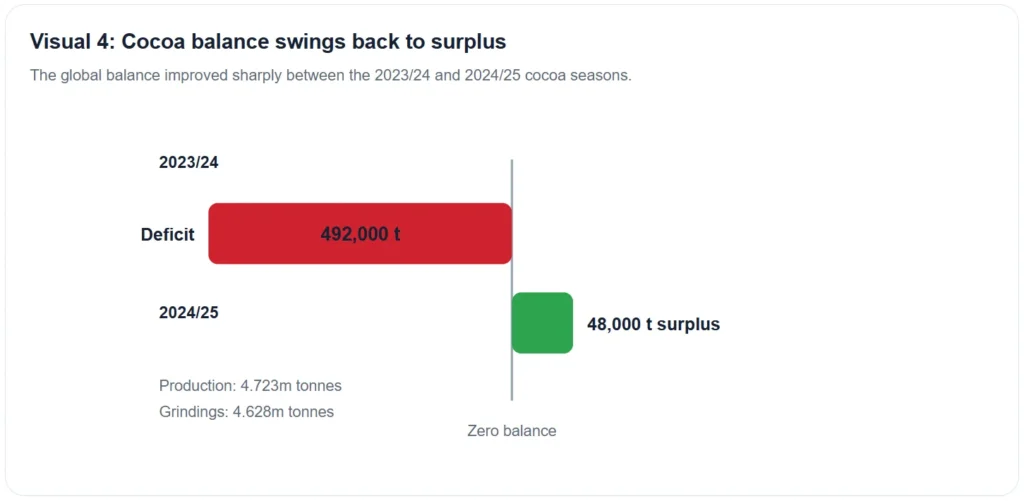
Global cocoa production reached 4.723 million tonnes for the 2024/25 season. That was 8.3% higher than the prior season.
Meanwhile, grindings fell 3.8% to 4.628 million tonnes. The market consequently shifted to a 48,000-tonne surplus.
One season earlier, the deficit reached 492,000 tonnes. That swing highlights how quickly commodity fundamentals can reset.
For brokers, such shifts create both hedging demand and speculative interest. They also increase the value of consistent liquidity during volatile periods.
Coffee remains highly weather-sensitive
Coffee shows a different risk profile.
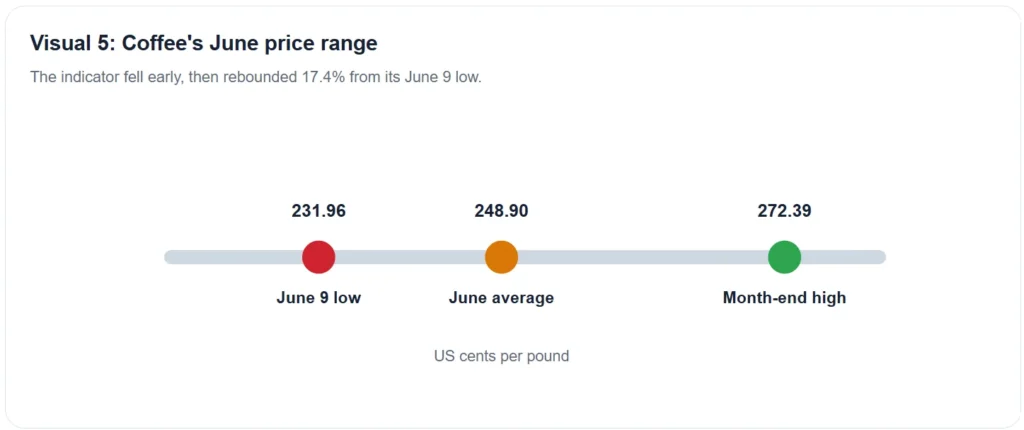
The global coffee indicator averaged 248.90 US cents per pound in June 2026. It fell 2.8% from May.
However, the monthly path was far from calm. Prices dropped to 231.96 cents on June 9.
They then rebounded 17.4% to 272.39 cents by month-end. Weather concerns and slower Brazilian harvesting supported the recovery.
Global green bean exports also fell 4.1% year-on-year in May. The decline added pressure to already sensitive supply expectations.
This type of price movement can attract institutional flow. It can also magnify execution risk when liquidity thins.
What it means for institutional trading
XTB is pairing broader commodity coverage with a longer Friday execution window. That combination targets two practical institutional needs.
First, clients gain more underlying markets through one liquidity relationship. Second, they gain more time to manage positions before weekends.
The strategic logic is clear because commodities already dominate XTB’s recent revenue mix.
Still, the commercial outcome will depend on spreads, depth, execution reliability, and sustained client demand.
For institutional partners, those metrics matter more than headline instrument counts. The new products become valuable only when liquidity remains usable during stress.