

August 06, 2026 – Wells Fargo is moving blockchain from a treasury experiment into a client product. The rollout could reshape corporate liquidity management.
In Summary
Wells Fargo will start with select corporate clients and USD-to-GBP transactions this fall.
The service promises round-the-clock settlement, programmable payments, and familiar bank protections.
Adoption will depend on pricing, interoperability, compliance controls, and measurable treasury savings.
A controlled bridge into on-chain money
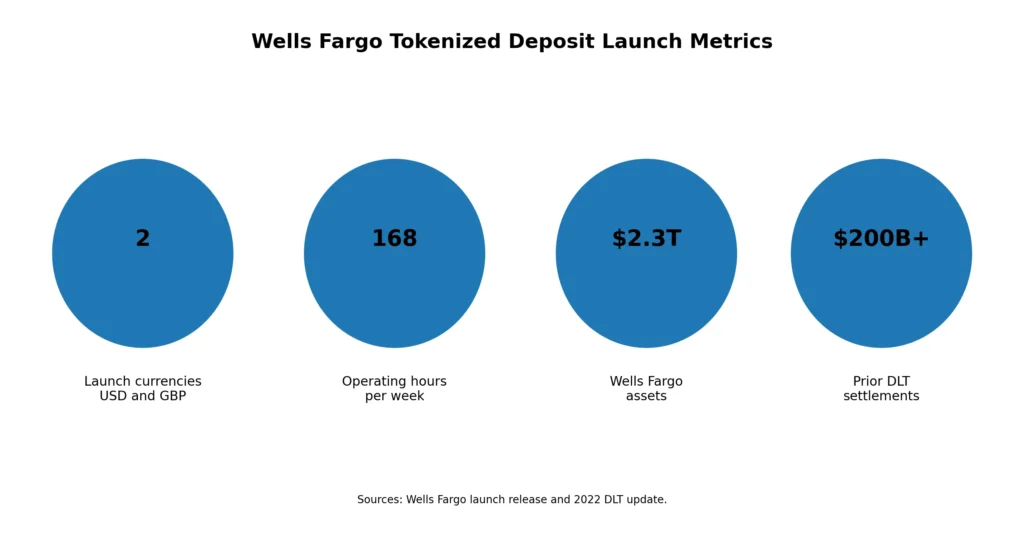
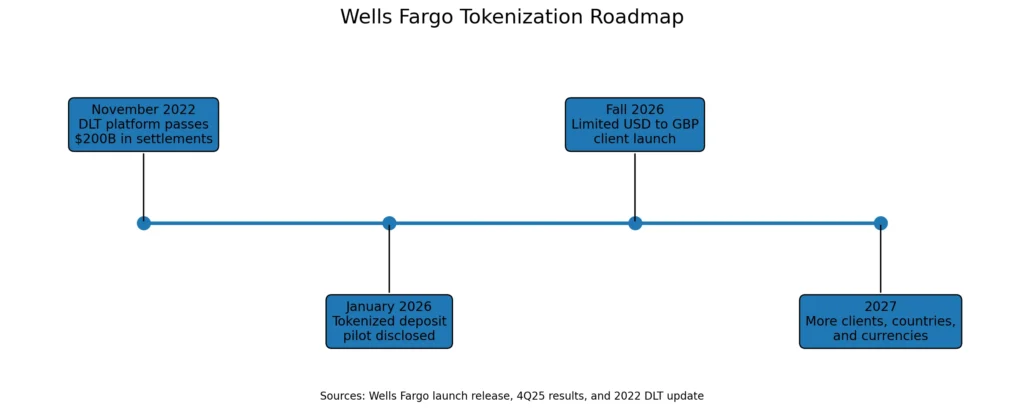
Wells Fargo plans to introduce tokenized deposits for corporate and commercial clients during fall 2026. The initial service will support limited USD-to-GBP transactions.
The bank says clients can move, program, and settle funds throughout the year. Payments will remain inside its regulated banking infrastructure.
That distinction matters. A tokenized deposit represents commercial bank money on a blockchain. It does not create a separate privately issued currency.
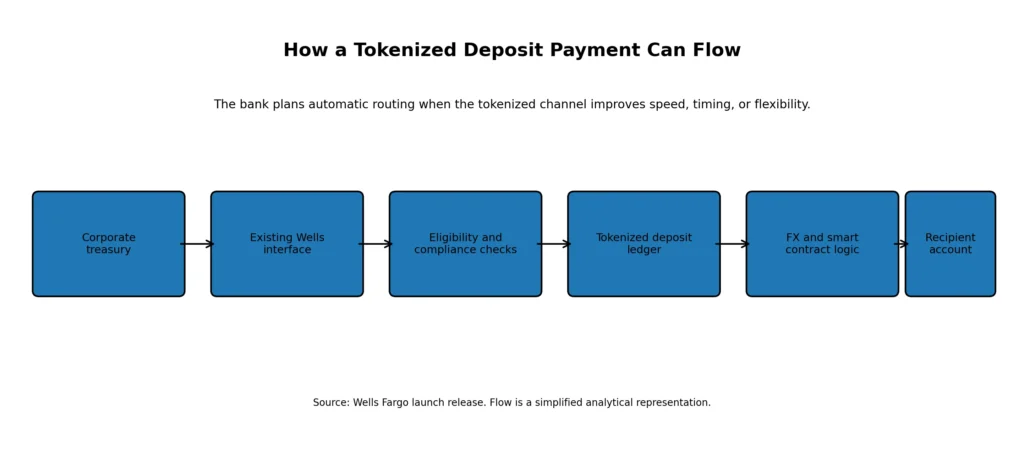
The product will integrate with existing banking services. Wells Fargo plans to route eligible payments through the tokenized channel automatically.
Therefore, corporate users may receive blockchain benefits without managing external wallets. They may also avoid unfamiliar crypto interfaces and custody arrangements.
The launch follows an earlier commitment. Wells Fargo listed a tokenized deposit pilot among its 2026 commercial banking investments in January.
Why USD and GBP form a practical test
The first corridor connects two major financial centres and widely used currencies. It also gives the bank a focused operating environment.
Cross-border payments often span different time zones, cut-off periods, and holiday calendars. Those gaps can delay funding and reconciliation.
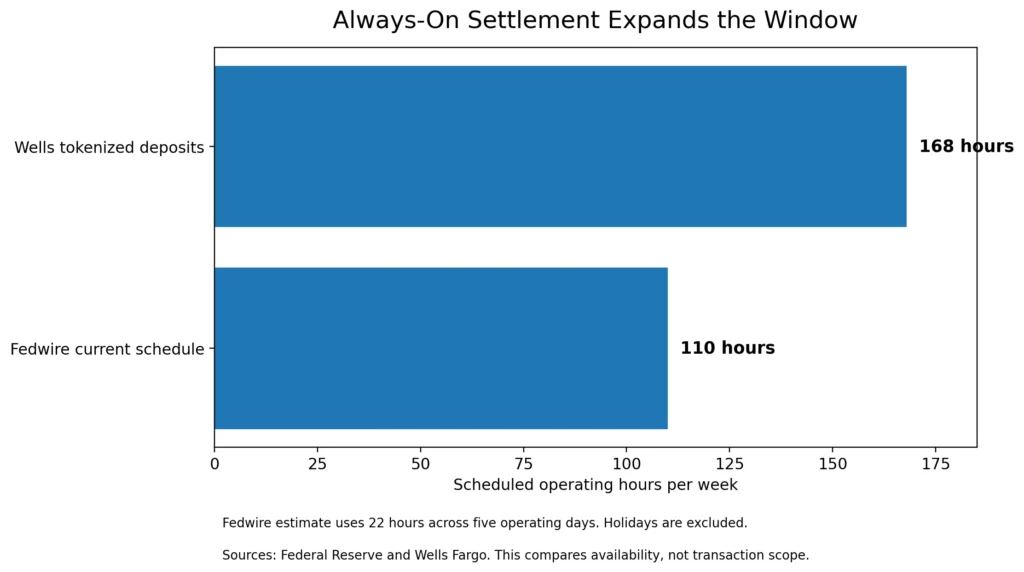
Wells Fargo promises 24/7/365 availability. That equals 168 operating hours during a standard week.
By comparison, Fedwire currently operates Monday through Friday. Its scheduled operating window covers 22 hours on each operating day.
That produces about 110 scheduled hours weekly, before holidays. The comparison does not measure transaction speed or total service scope.
Instead, it highlights the liquidity value of continuous availability. A multinational could fund a subsidiary without waiting for Monday morning.
Programmable payments could add another advantage. Smart contracts may release funds after predefined conditions are satisfied.
For example, payment could follow delivery confirmation, compliance approval, or an agreed treasury threshold. Automation may reduce manual processing and exceptions.
The strategic prize is corporate liquidity
The launch targets a valuable part of banking. Corporate operating deposits support client relationships, payment revenue, lending, and foreign exchange activity.
Wells Fargo has approximately $2.3 trillion in assets. Even a limited tokenized product can gain relevance through that distribution network.
The bank also has prior blockchain experience. A bilateral foreign-exchange platform had settled more than $200 billion by November 2022.
That system supported five currencies after adding offshore yuan. Therefore, the new product builds on tested institutional infrastructure rather than pure experimentation.
Still, tokenized deposits will not replace every payment rail. Existing systems already offer speed, reach, or established legal processes.
The strongest use cases may involve weekend liquidity, cross-border treasury transfers, and conditional settlement. These areas combine timing pressure with reconciliation costs.
Technology is not the only challenge
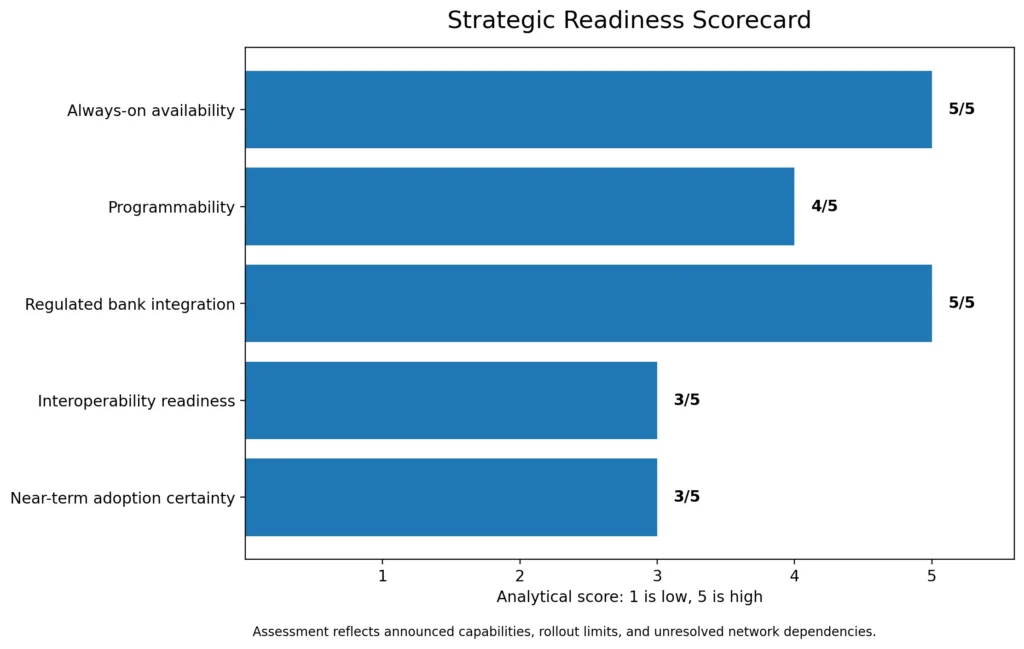
Interoperability remains the central strategic risk. A proprietary blockchain creates value inside one bank, but corporate treasuries operate across many institutions.
Wells Fargo says its platform can support future inter-chain connectivity. However, practical value will depend on common standards and reliable network bridges.
Compliance also becomes continuous. Sanctions screening, fraud controls, transaction monitoring, and data governance must operate beyond traditional business hours.
Operational resilience will matter equally. Always-on settlement leaves less downtime for maintenance and creates new incident-response demands.
The Bank for International Settlements argues that tokenization can combine messaging, reconciliation, and asset transfer. However, it also highlights governance and fragmentation challenges.
Economics will decide adoption. Treasurers will compare implementation costs against lower delays, fewer exceptions, and better liquidity use.
What markets should watch next
The 2027 expansion will provide the clearest demand signal. Investors should watch added currencies, eligible clients, transaction volumes, and external network connections.
Pricing will also matter. Banks must show that tokenized settlement reduces total treasury costs, not merely processing time.
Successful adoption could strengthen bank deposits as programmable digital money. It may also reduce corporate reliance on non-bank settlement tokens.
However, the fall launch remains a controlled first step. The decisive test will be whether clients move recurring, high-value activity onto the platform.
If that happens, Wells Fargo will have advanced blockchain beyond experimentation. It will have embedded the technology into everyday commercial banking.