

June 19, 2026 – A 14-point memorandum pauses a four-month war. Oil slid below $78, while global equities rallied on the news.
In Summary
The US and Iran signed a 14-point memorandum to pause their four-month war.
The Strait of Hormuz reopens, easing a route for one-fifth of global oil.
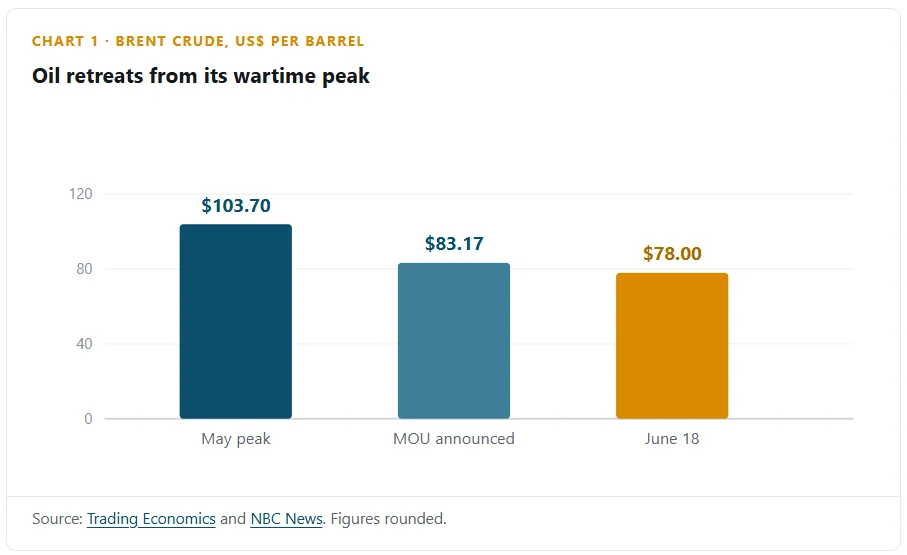
Brent crude fell below $78, its lowest level since early March.
Stocks rallied, yet analysts warn the inflation shock has not faded.
The United States and Iran have signed a memorandum of understanding. The deal aims to end a war that ran for nearly four months. Presidents Donald Trump and Masoud Pezeshkian both backed the 14-point text. Markets reacted within hours. Oil prices fell sharply, while equities climbed across the globe. Nevertheless, doubts about a lasting peace clearly remain.
What the agreement actually covers
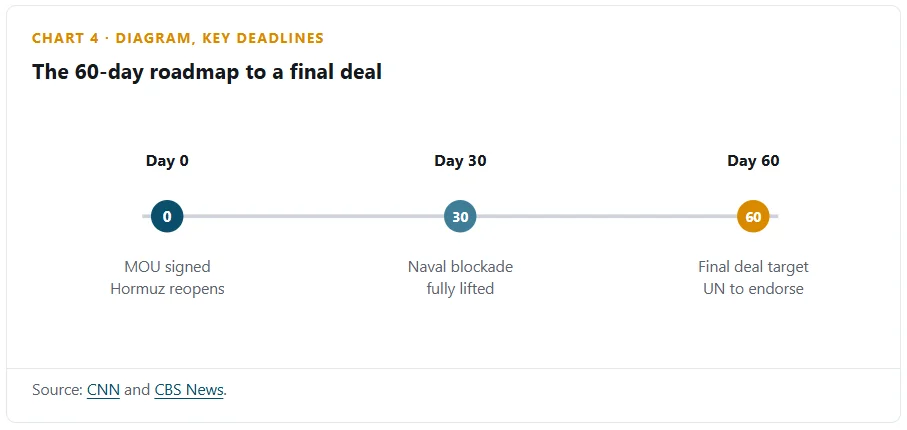
The pact promises an immediate halt to military operations on all fronts. It also extends that pledge to Lebanon, a key flashpoint in the conflict. Moreover, both sides committed to 60 days of talks toward a final deal. The Strait of Hormuz will reopen to commercial vessels. This narrow waterway carries roughly 20% of the world’s daily oil supply. In addition, the US agreed to lift its naval blockade within 30 days.
Crucially, this document is not a peace treaty. Instead, it sets a framework for harder negotiations ahead. A final agreement would then need a binding UN Security Council resolution. Iran again reaffirmed that it will not build nuclear weapons. However, the text leaves uranium down-blending to future technical discussions. Therefore, the thorniest questions stay open for now.
How the war reshaped global energy flows
The conflict began in late February 2026. It soon became the largest oil supply disruption on record. Shipping through Hormuz fell to a near standstill for months. Before the war, the strait handled about a fifth of global crude. Asia felt the deepest pain from the squeeze. China, India, Japan and South Korea lean heavily on Gulf oil. Consequently, fuel shortages spread across many import-dependent economies.
Prices reflected that stress for much of the spring. Brent climbed above $100 per barrel during the worst clashes. At its peak, daily output was sharply below normal. The latest deal aims to reverse that damage. Still, restoring full flows will test logistics and trust alike.
Markets cheer the news, but stay cautious
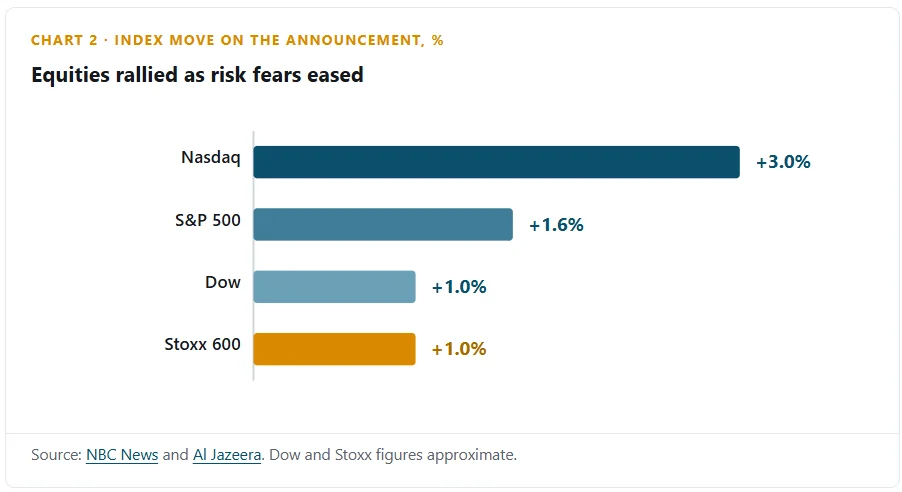
Traders welcomed the speed with which both sides signed the deal. Consequently, risk appetite returned across major stock indices. On the announcement, the S&P 500 rose 1.6% and the Nasdaq jumped 3%. Europe’s Stoxx 600 touched a fresh record high. Asian markets soon followed, with gains in Japan, South Korea and Taiwan.
Oil told the clearest story of relief. Brent crude fell below $78 per barrel on Thursday. That move marked its lowest level since early March. Furthermore, prices have now fallen about 38% from their April peak. Still, the rally rested more on sentiment than on physical supply. One IG analyst noted that the relief looked “largely priced in”. As a result, further upside may prove limited.
The money behind the framework
The agreement carries unusually large financial promises. The US and regional partners pledged a reconstruction plan worth at least $300 billion. Additionally, Washington agreed to release frozen Iranian assets. Reports place those funds near $100 billion in value. The Treasury will also issue waivers for Iranian crude exports.
Therefore, previously sanctioned barrels could soon return to global markets. Such a return would add fresh supply at a delicate moment. Iran still holds hundreds of pounds of highly enriched uranium. The deal pushes that sensitive issue into the 60-day window. Officials framed sanctions relief as a reward for compliance. In short, good behavior now drives Tehran’s economic upside.

Why energy prices may not keep falling
Analysts urge caution despite the broad optimism. ING warned that much cheaper energy looks “highly questionable”. The bank also said the “inflation genie is out of the bottle.” Physical supply, moreover, still lags market sentiment. More than 500 vessels still wait to exit the Gulf. Mine clearing and tanker safety also remain unresolved.
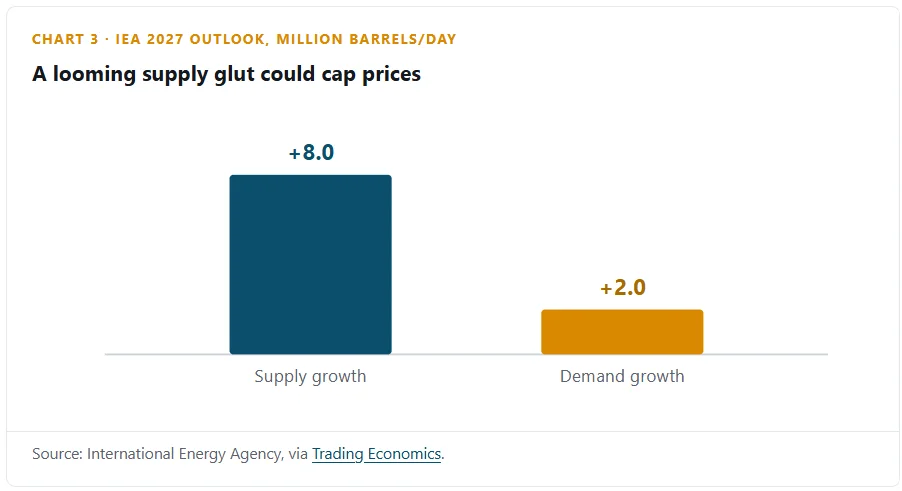
Inventories tell a similar story of tightness. Meanwhile, the IEA flagged a possible glut by 2027. It projects supply growth of 8 million barrels per day. By contrast, demand may rise by only 2 million. That gap could eventually pull prices lower. However, the rebound in Iranian output may take months. Damaged refineries and pipelines complicate any quick recovery.
What investors should watch next
The 60-day clock now shapes the macro outlook. First, traders will track actual tanker traffic through the Strait of Hormuz. Second, markets will watch the formal signing in Switzerland. Third, nuclear talks could still unravel the fragile truce. Trump even warned that bombing might resume if Iran misbehaves.
For now, the deal has clearly bought some time. Yet the inflation shock still lingers in everyday prices. US retail gasoline averages about $4.07 per gallon. That figure stands roughly 36% above its pre-war level. Central banks therefore face a tricky balancing act. Lower oil could ease headline inflation over time. Even so, the road back to pre-war normality looks long.