

August 20, 2026 – A sharp retreat in long-term U.S. yields gave global markets temporary relief on August 19. The trigger was a larger Treasury liquidity program. However, persistent inflation and higher oil prices still limit how far the rally can extend.
In Summary
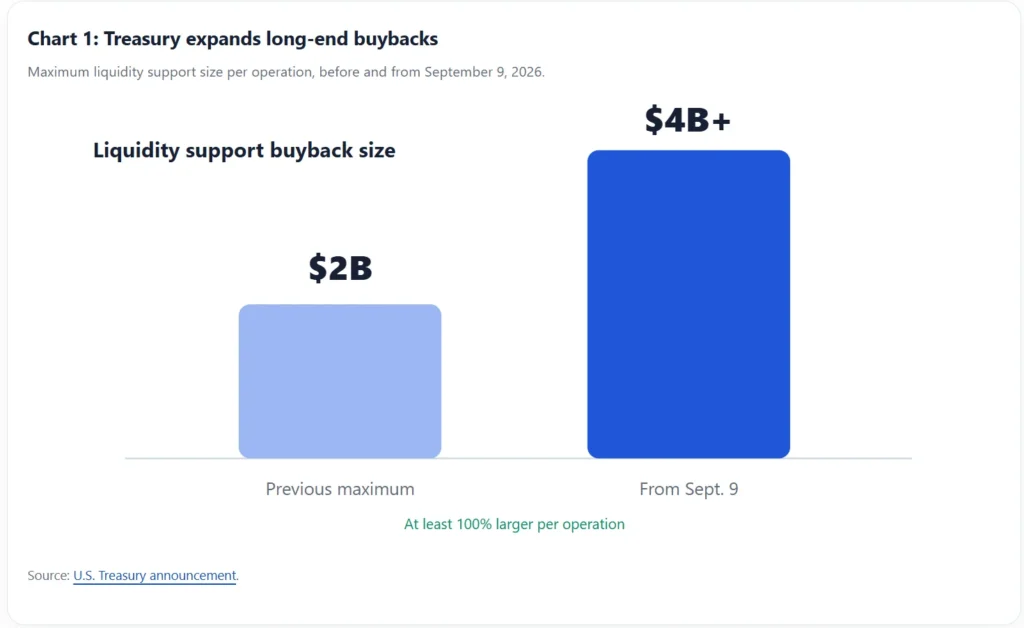
Treasury will at least double long-end liquidity support buybacks from $2 billion to $4 billion per operation.
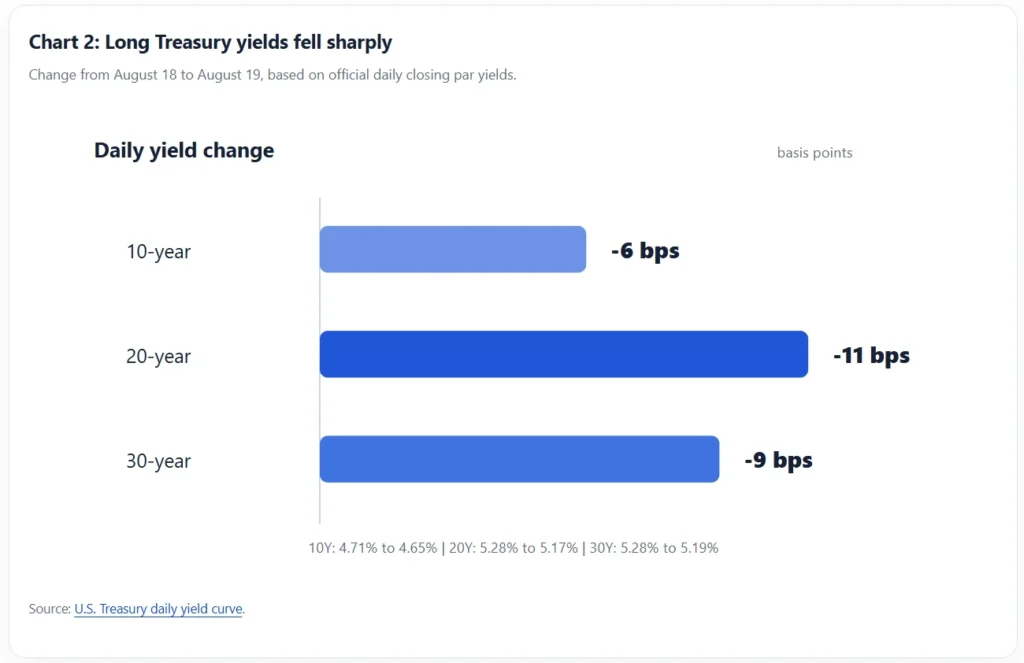
Official closing rates show the 20-year Treasury yield fell 11 basis points on August 19.
Fed minutes remain hawkish, while July consumer inflation stayed above the central bank’s 2% goal.
Treasury bond buybacks reset the long end
The U.S. Treasury announced a major adjustment to its liquidity support program on August 19. It will increase long-end buyback operations to at least $4 billion each. The previous maximum was $2 billion per operation. The new sizes begin on September 9.
Markets reacted quickly because long-duration debt had faced heavy selling pressure. Official Treasury data show the 10-year yield closed at 4.65% on August 19. It stood at 4.71% one day earlier. Therefore, the benchmark yield fell six basis points.
The reaction was stronger further along the curve. The 20-year yield dropped from 5.28% to 5.17%. That represented an 11-basis-point decline. Meanwhile, the 30-year yield moved from 5.28% to 5.19%. That was a nine-basis-point fall.
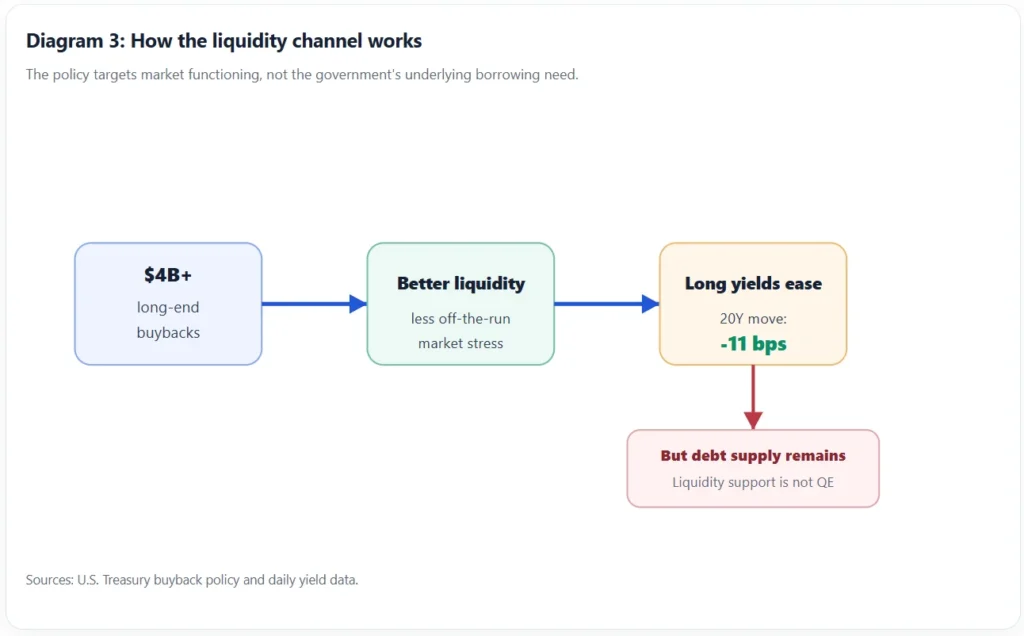
Treasury bond buybacks can improve trading conditions in older, less-liquid securities. They can also reduce temporary liquidity premiums. However, they do not erase the government’s financing requirement. Treasury still funds itself through taxes, cash balances, and new debt issuance.
That distinction matters for investors. The program addresses market functioning more directly than fiscal sustainability. Therefore, lower yields may not persist if inflation or issuance concerns intensify again.
The Fed keeps pressure on risk assets
The bond rally also collided with a hawkish Federal Reserve message. July meeting minutes showed several policymakers favored a 25-basis-point rate increase. Many participants also expected tightening if inflation failed to decline.
The committee still held its target range at 3.50% to 3.75%. The decision passed by a 9-to-3 vote. Three members preferred an immediate quarter-point increase.
That split shows why Treasury bond buybacks cannot fully remove rate volatility. Fiscal liquidity support can calm market plumbing. Monetary policy still controls the short-rate anchor and broader demand conditions.
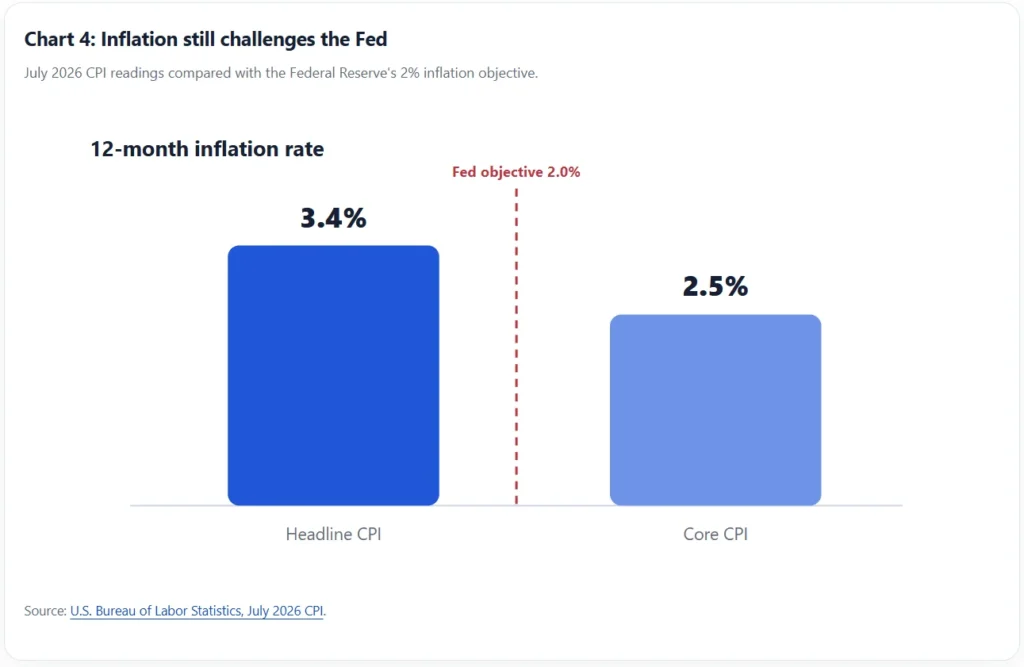
Inflation data support that caution. July consumer prices rose 3.4% from one year earlier. Core inflation, excluding food and energy, increased by 2.5%. Both readings remain above the Fed’s 2% objective.
Oil adds another inflation risk
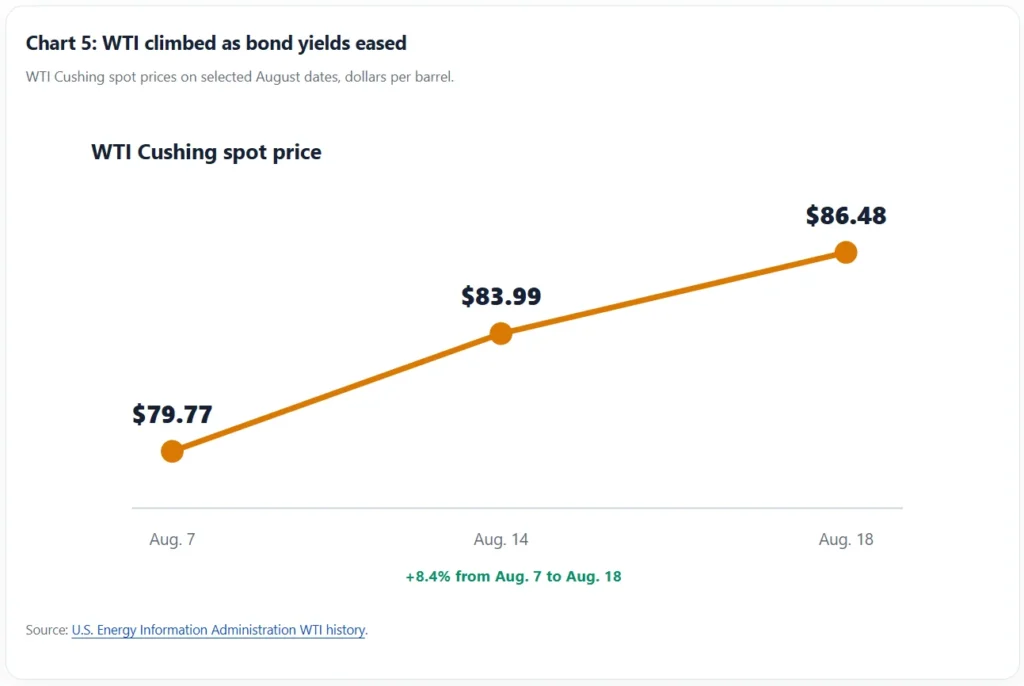
Energy prices remain another threat to the bond rally. Official U.S. energy data show WTI crude closed at $79.77 on August 7. It reached $83.99 by August 14. WTI then rose to $86.48 on August 18.
That move equals an 8.4% increase in eleven days. Higher oil can raise transport, manufacturing, and household energy costs. It can also slow the expected disinflation.
Therefore, falling long yields and rising oil create an unusual policy mix. Markets are receiving technical liquidity relief while inflation risks remain visible.
Why global investors should care
Long-term Treasury yields influence financing costs far beyond the U.S. government. They affect mortgages, corporate bonds, equity valuations, and emerging-market funding. A sustained decline can loosen global financial conditions.
Equity markets also remain sensitive to the discount-rate channel. Lower long yields can support higher valuation multiples, especially for growth companies. However, that benefit weakens if inflation forces tighter Fed policy. Credit spreads could also widen if sovereign volatility returns. Currency markets may remain volatile too.
However, the latest move looks more technical than structural. Treasury bond buybacks directly target liquidity in long-dated securities. They do not resolve debt supply, inflation, or geopolitical energy risks.
For investors, the next test begins on September 9. Execution quality will show whether larger operations create lasting depth in the long end. The 20-year and 30-year sectors deserve particular attention.
The Federal Reserve’s September meeting is another major catalyst. Inflation trends will shape whether policymakers revive the tightening debate. Oil prices may influence that discussion as well.
Treasury bond buybacks have reduced immediate stress. Yet the market still faces a three-way contest between liquidity, inflation, and debt supply. That balance will decide whether August’s yield relief becomes a durable trend.




