

July 16, 2026 – A Wall Street bank and a tokenization platform team up to move public share sales onto blockchain rails, pushing tokenized IPOs from theory toward practice.

In Summary
Cantor and Securitize will let public companies run IPOs and follow-on sales onchain.
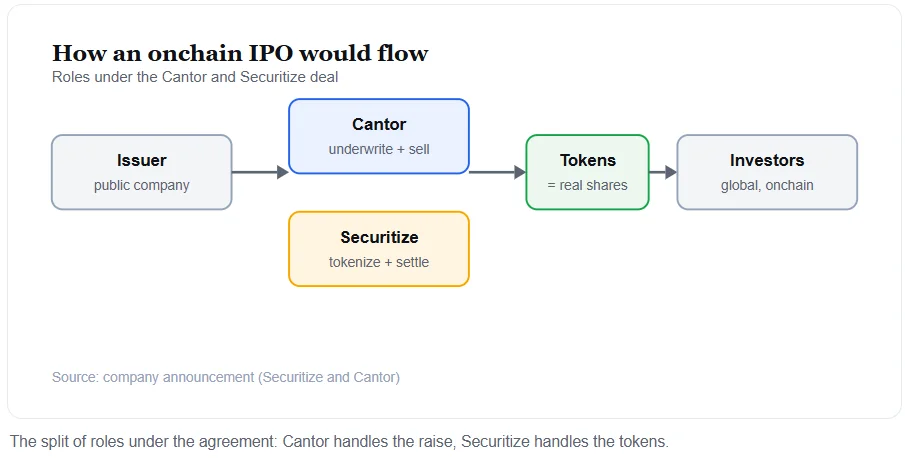
Securitize supplies the tokenization tech; Cantor supplies underwriting and distribution.
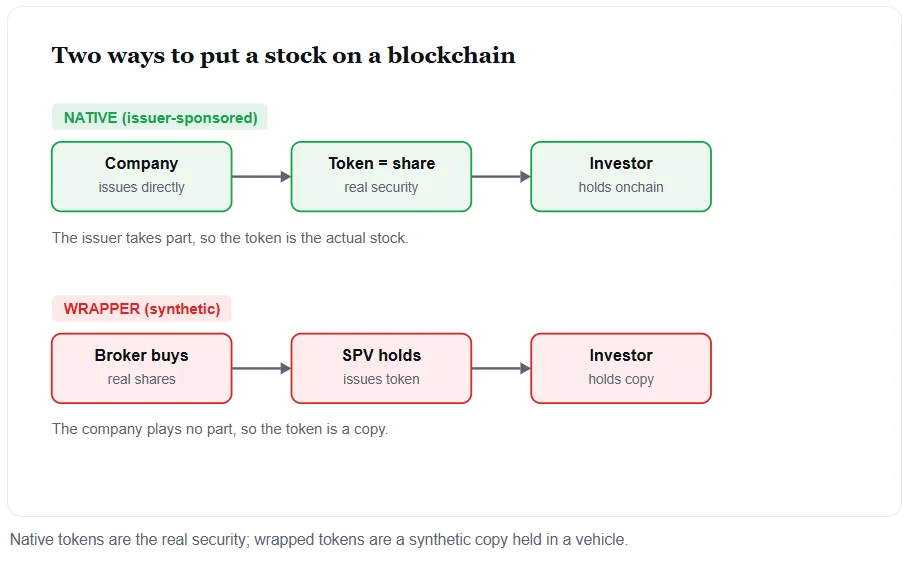
The token is the actual share, not a synthetic wrapper held in a vehicle.
No tokenized IPO has priced yet, so the model still needs a first live deal.
Tokenized IPOs took a big step this week. Cantor Fitzgerald and Securitize struck a deal on Wednesday. Together, they want to sell public shares on a blockchain. The plan covers both new and follow-on stock sales. Securitize now trades on the NYSE as SECZ. Cantor, meanwhile, is a top name in stock deals. In fact, the two firms already share close ties.
“Tokenization is becoming part of mainstream capital markets.”
-Pascal Bandelier, Co-CEO and Global Head of Equities, Cantor
Inside the deal
Both sides split the work clearly. Cantor brings its stock desks and trading reach. Securitize brings the tech to issue tokenized shares. Its licensed broker arm runs the sale and handoff. So issuers still follow normal public-offering rules. Founded in 1945, Cantor now spans about 60 offices. Securitize listed on July 2 through a merger with a Cantor shell. That deal raised close to 400 million dollars. Carlos Domingo, the chief of Securitize, put it plainly. Firms should not pick between markets and blockchain, he said. Pascal Bandelier, Cantor’s equities co-chief, agreed. He said tokens are now part of the mainstream. Also, he noted that Cantor ranked first in American IPOs last year.
Native tokens, not wrappers
The model matters, so the gap is worth a look. Many tokenized stocks use a wrapper today. A firm buys shares, holds them, then mints tokens. But the real company plays no part in that. Securitize takes a fresh path instead. Its token is the actual share, not a copy. So the firm joins the sale from day one. This gives boards direct control of their tokens. Also, it keeps owner records in line with the law. By comparison, wrapped tokens copy stocks with no firm input.
A market finding real scale
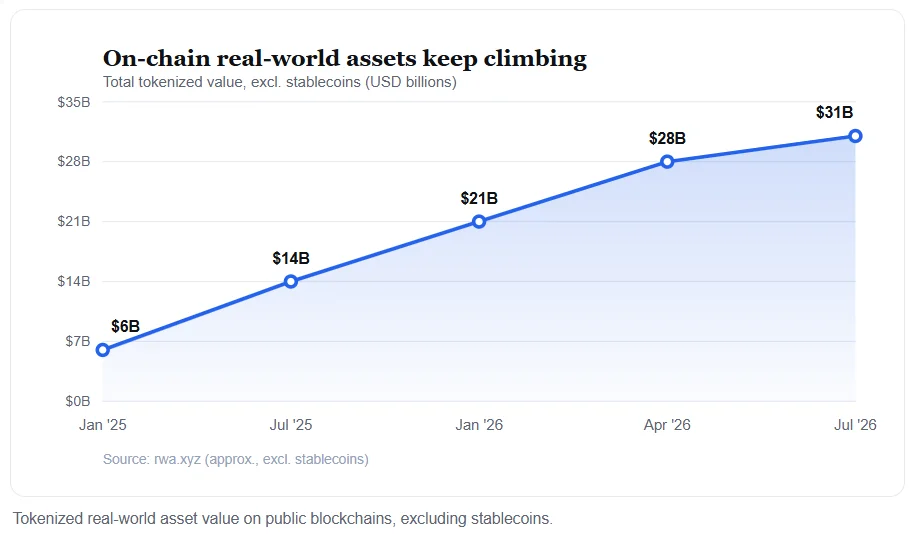
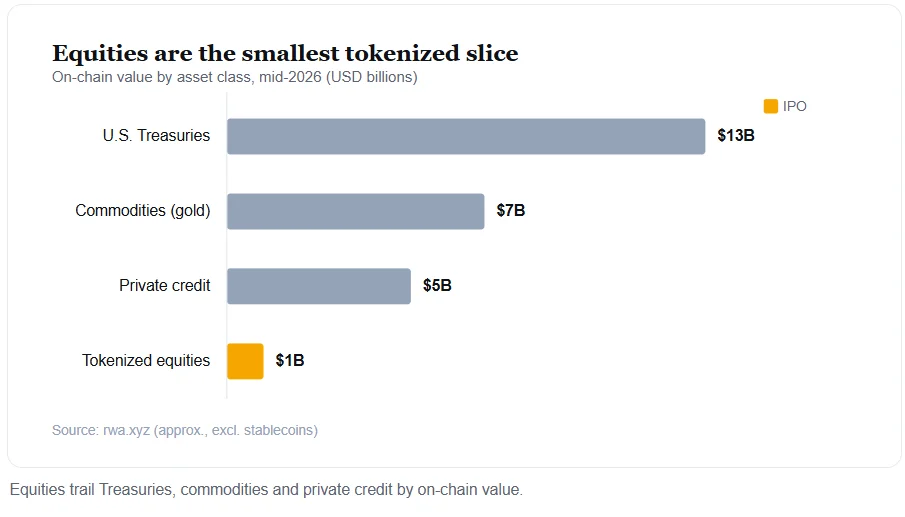
Tokens no longer look like a fringe test. On-chain real assets hit about 31 billion dollars by July 2026. That total is up more than 400 percent since early 2025. Notably, nearly a million holders now own these tokens. Meanwhile, Ethereum hosts most of that value. Bonds lead by far, above 13 billion dollars. Gold-backed tokens add roughly 7 billion more. Private loans make up much of the rest. Yet tokenized stocks are the smallest slice, near 1 billion. In short, the share-sale chance is still wide open. Securitize already runs more than 5 billion dollars in tokens. Its partners include Apollo, BlackRock, KKR and VanEck. Most of that work has been funded, not new shares. Taking an IPO onchain is a much harder job.
Why the setup appeals
Blockchain rails can shrink the wait to get shares. Normal stock trades still settle in a day or two. Token trades, by contrast, can settle in minutes. Plus, the tokens update owner records on their own. Costs can also fall as manual steps drop away. Sellers reach a global pool of onchain buyers too. For these reasons, big players now back the shift. On the same day, a major clearinghouse executed its first live token trades.
What comes next
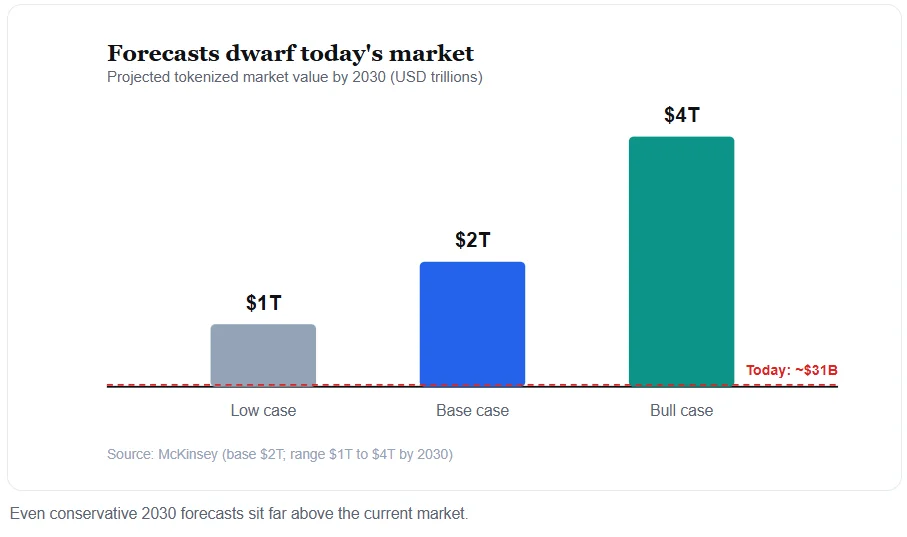
Momentum across the field keeps building fast. Analysts see a far bigger prize ahead. One common forecast puts the token market near 2 trillion dollars by 2030. Upbeat cases push that figure even higher. Still, many questions stay open for now. No firm has yet priced a deal this new way. For now, tokenized IPOs remain more promise than practice. So the near-term test looks quite simple. An issuer must pick these rails for a real sale. Until then, the deal reads as a bold bet on onchain finance.