

June 17, 2026 – The all-stock SpaceX Cursor deal hands Elon Musk a fast-growing AI coding product and a direct line to millions of developers.

SpaceX has agreed to buy Anysphere, the startup behind AI coding tool Cursor. The all-stock SpaceX Cursor deal values Anysphere at $60 billion. Both companies signed the merger agreement on June 16, 2026.
The purchase arrives days after SpaceX completed a record Nasdaq debut. Therefore, Elon Musk’s company now holds fresh public stock to fund deals. Moreover, the move pushes SpaceX deeper into enterprise AI software.
In Summary
SpaceX will acquire Anysphere, the maker of Cursor, for $60 billion in stock.
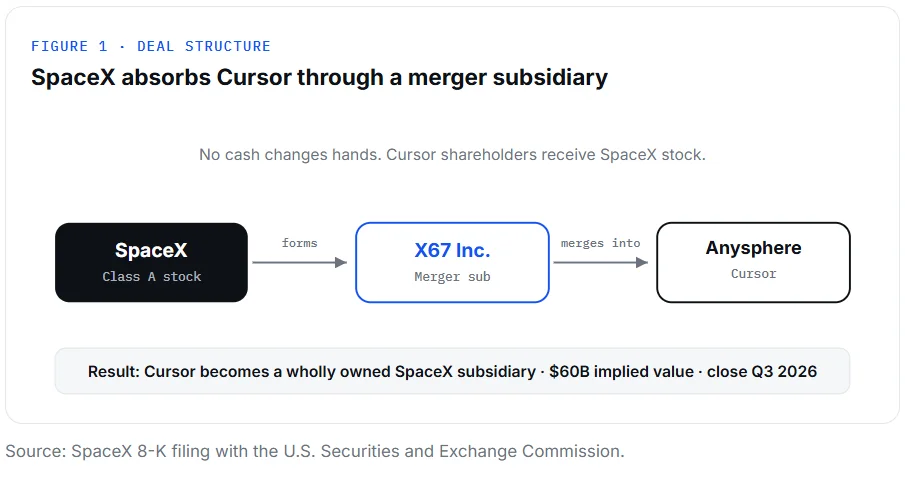
A SpaceX unit, X67 Inc., merges into Anysphere, making Cursor a wholly owned subsidiary.
The deal should close in Q3 2026, although regulators must approve it first.
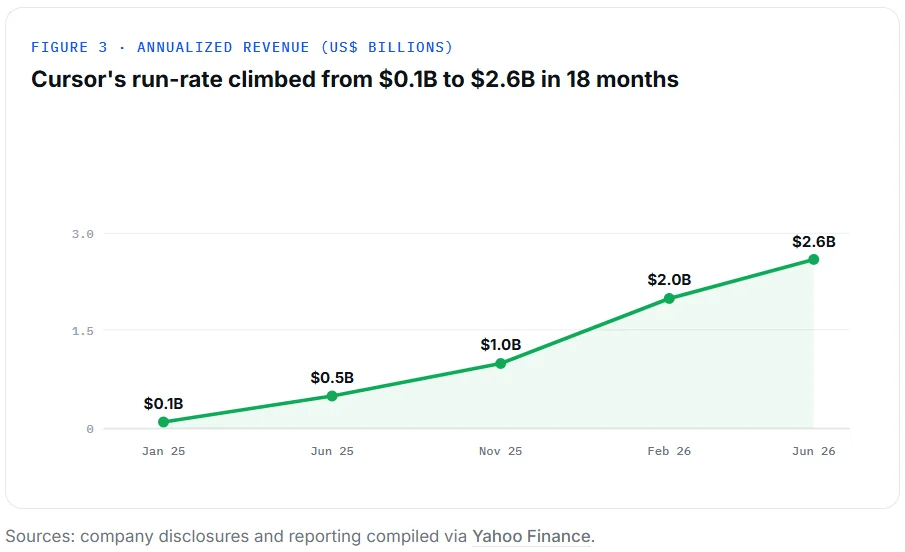
Cursor reached roughly $2.6 billion in annualized revenue by mid-2026.
How the all-stock deal is structured
The agreement uses SpaceX stock rather than cash. At closing, every Cursor share converts into SpaceX Class A common stock. A SpaceX subsidiary, X67 Inc., will merge into Anysphere. Consequently, Cursor becomes a wholly owned subsidiary of SpaceX.
The exchange ratio depends on SpaceX’s share price near closing. Specifically, it uses a seven-day volume-weighted average before the deal completes. SpaceX expects the merger to close in the third quarter of 2026. However, antitrust regulators must first clear the deal.
A record IPO created the firepower
SpaceX listed on Nasdaq only days before this deal. The debut raised between $75 billion and $85.7 billion. Moreover, it valued the company above $2 trillion. Analysts called it the biggest listing in history.
That fresh stock became a convenient acquisition currency. SpaceX had already flagged this path in April 2026. Back then, the company secured an option over Cursor. The option allowed either a $60 billion purchase or a $10 billion partnership.
Musk’s team ultimately chose the larger commitment. Therefore, SpaceX now bets heavily on developer-focused AI.
Why SpaceX wants Cursor
SpaceX absorbed xAI, its artificial intelligence arm, back in February 2026. That unit runs the Grok chatbot and the Colossus supercomputer cluster. Cursor now gives SpaceX direct distribution to millions of professional developers. In addition, it supplies a steady stream of real coding data.
The startup also helped popularize so-called vibe coding. In that workflow, AI tools generate software with little human input. Consequently, demand for coding assistants has surged across large enterprises.
Both teams have reportedly trained a shared model for months. Furthermore, that model should ship inside Cursor and Grok soon. Musk wants xAI to challenge rivals such as OpenAI, Anthropic, and Google. As a result, a developer-facing product fills an obvious strategic gap.
Cursor’s record-breaking ascent
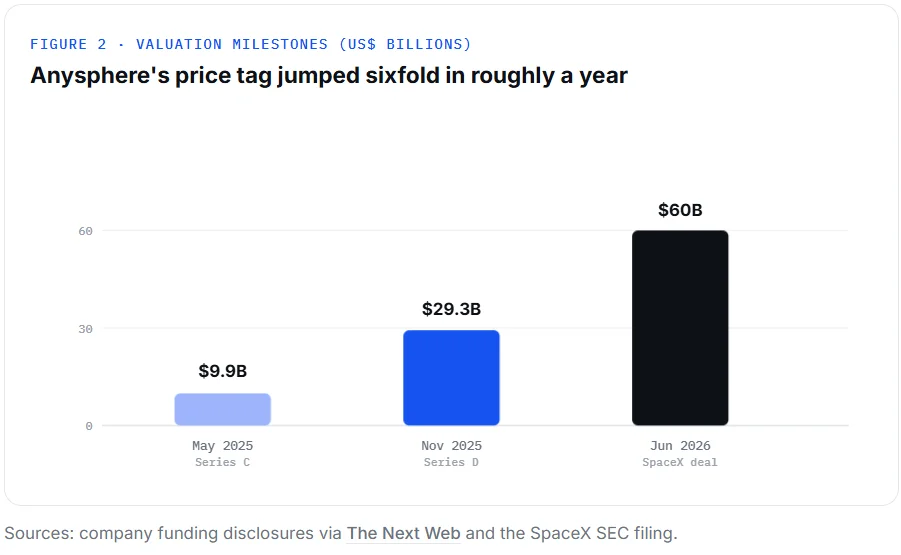
Four MIT students founded Cursor in 2022. Since then, its valuation has climbed at a stunning pace. The company raised a Series C in 2025 near a $9.9 billion valuation. By November 2025, a $2.3 billion Series D lifted that figure to $29.3 billion.
Revenue growth explains the investor enthusiasm. Cursor reported $100 million in annualized revenue in January 2025. By June 2025, that number reached $500 million. The company then crossed $1 billion by November 2025. Meanwhile, annualized revenue roughly doubled to $2 billion by February 2026.
By mid-2026, Cursor generated about $2.6 billion in annualized revenue. Few software firms have scaled that quickly. Notably, enterprise customers drove most of the recent surge.
AI coding also ranks among the first profitable AI categories. Companies already pay for tools that save engineering time. Consequently, the segment has attracted intense competition and fresh capital.
The risks: regulators and break fees
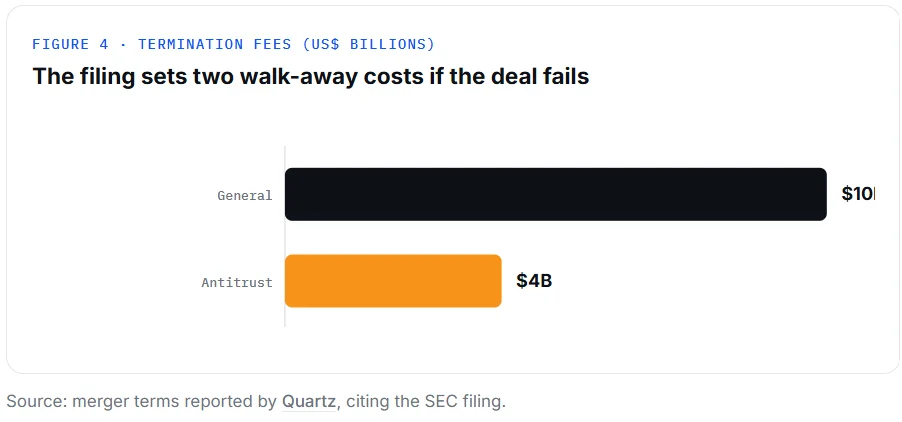
Large deals rarely close without scrutiny. Notably, this merger carries unusually large termination fees. SpaceX would owe a $10 billion break fee in certain scenarios. That fee falls to $4 billion if antitrust regulators block the deal.
Stock deals also create timing risk for shareholders. Because closing sits months away, SpaceX’s share price could swing widely. A lower price would require issuing more shares and diluting existing owners. Conversely, a higher price would reduce that dilution.
What happens next
The companies labeled the announcement a developing story. For now, both sides await regulatory clearance. Microsoft reportedly considered a Cursor purchase earlier, but never bid. Cursor also rejected two separate approaches from OpenAI.
SpaceX clearly outbid that interest with its $60 billion offer. If approved, the deal would reshape the AI coding market. Investors will watch the closing timeline and SpaceX’s stock closely. Until then, the exact exchange ratio remains unset.
The combined group plans to ship a jointly trained model soon. That model should reach both Cursor and Grok users. For SpaceX, distribution to developers now looks like the real prize.




