

June 20, 2026 – SpaceX raised a record $75 billion last week. Now Elon Musk wants $20 billion more, this time from bond investors.
In Summary
SpaceX is preparing its first investment-grade bond sale of at least $20 billion.
Proceeds will refinance a $20 billion bridge loan that matures in September 2027.
The raise follows a record $75 billion IPO that valued SpaceX near $1.8 trillion.
Aggressive spending on AI data centres drives the urgent need for fresh capital.
Back to the markets within days
SpaceX is moving fast. Bankers plan to call investors as early as next week about a new bond, according to Reuters. The deal would total at least $20 billion. It would also mark the Company’s first investment-grade dollar bond.
Moreover, the timing stands out. SpaceX priced its IPO at $135 a share on June 11. That sale raised $75 billion. Therefore, it became the largest listing ever recorded. For comparison, Saudi Aramco raised only $29.4 billion in 2019.
The debut briefly lifted SpaceX above a $2 trillion valuation. In addition, it turned Musk into the world’s first trillionaire. Within a week, the company returned to the debt markets rather than the equity markets.
What the bond will fund
The headline number hides a simple purpose. Most proceeds will refinance an existing loan. That bridge facility totals $20 billion and matures in September 2027.
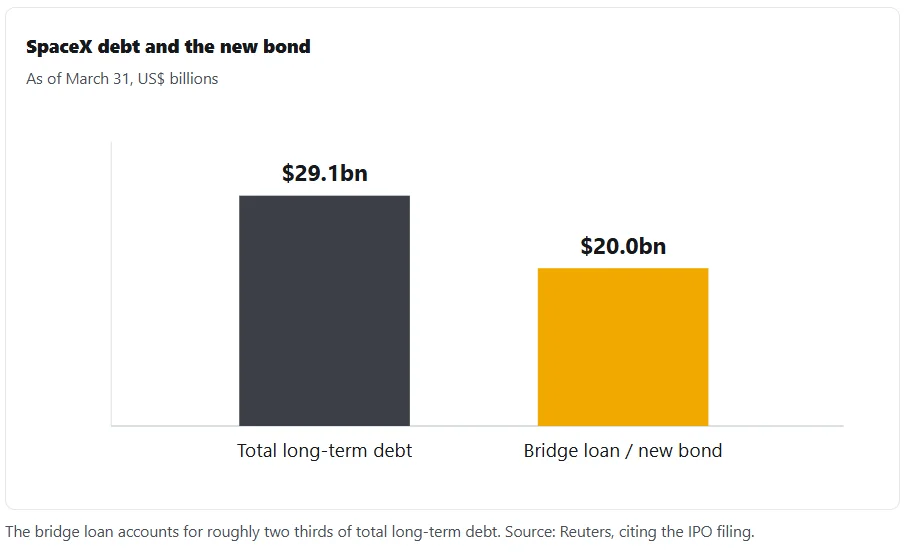
SpaceX took out the loan after buying Musk’s AI startup, xAI, in February. Notably, the facility makes up most of the Company’s $29.1 billion in long-term debt. Five banks arranged it: Bank of America, Citigroup, JPMorgan, Goldman Sachs and Morgan Stanley. The same lenders will run the new bond.
The AI spending problem
The refinancing looks routine. However, the scale of SpaceX’s ambitions does not. The company is pouring money into AI infrastructure. That spending covers data centres, power and computing hardware.
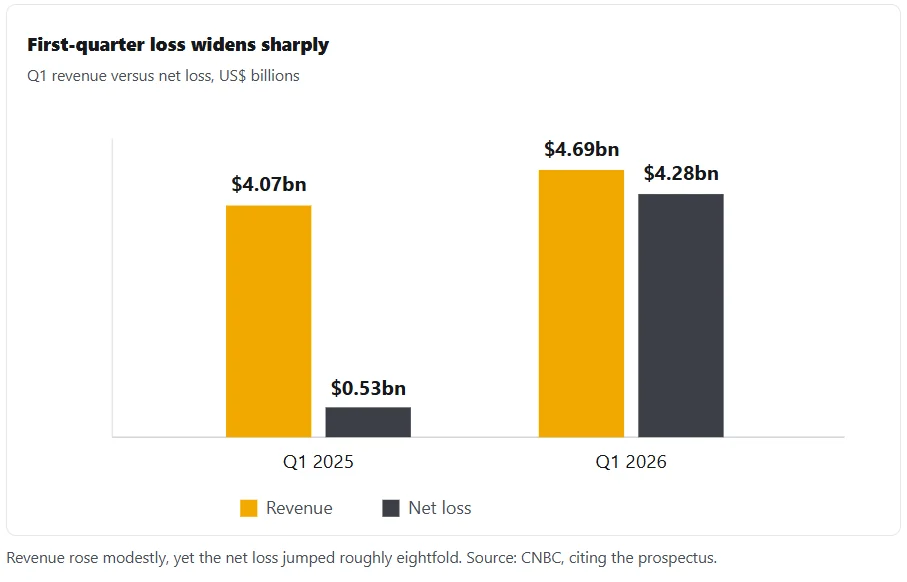
This expansion is not yet profitable. SpaceX posted a $4.28 billion net loss in the first quarter of 2026. Revenue reached $4.69 billion over the same period. A year earlier, the loss was only $528 million.
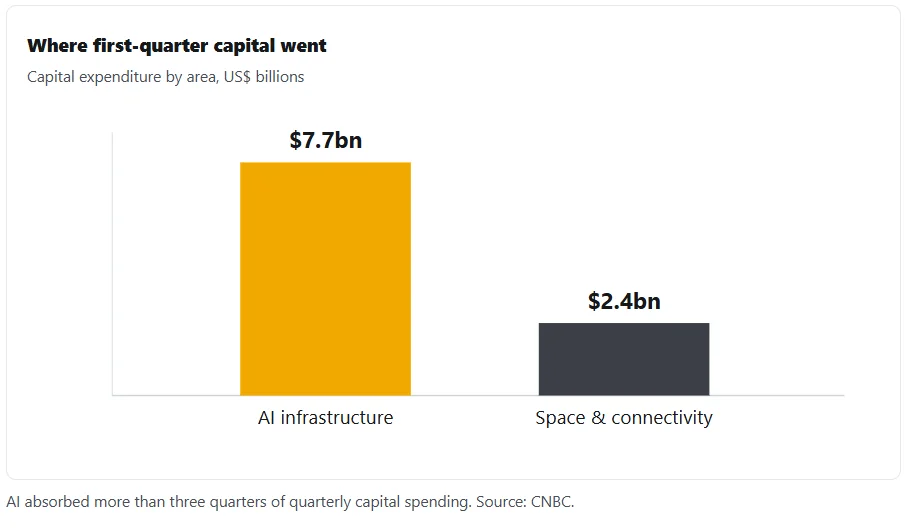
Capital spending tells a similar story. Quarterly capex hit $10.1 billion. Of that total, $7.7 billion went straight to AI. The rest funded space and connectivity work.
A cheaper way to borrow
SpaceX wants lower borrowing costs. Investment-grade ratings help it get there. Moody’s, Fitch and S&P each rated the company investment-grade.
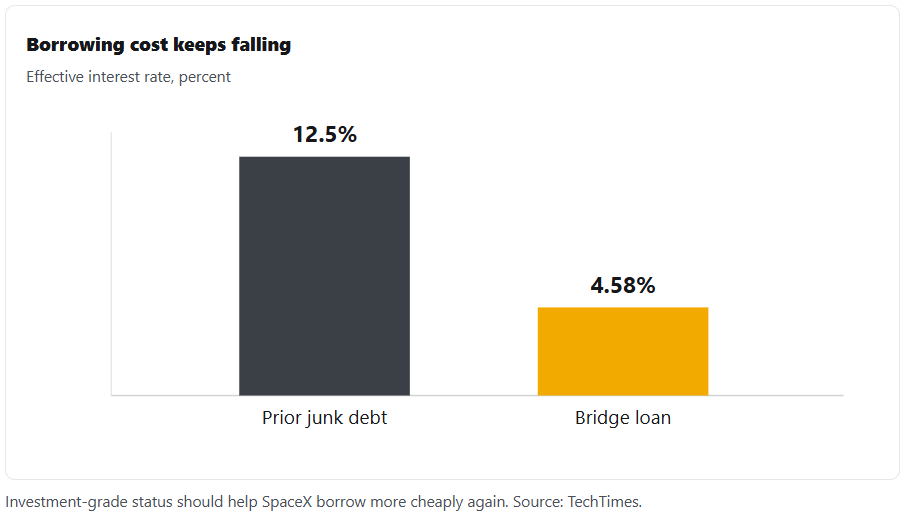
The bridge loan already cut costs once. It replaced roughly $17.5 billion in junk debt priced as high as 12.5%. By the end of March, the bridge rate had fallen to 4.58%. A public bond could push that figure lower still.
A rocky market debut
The market reaction was not all cheers. SPCX shares fell soon after the IPO. The stock dropped nearly 5% on Wednesday. Then it slid as much as 10% on Thursday.
Together, those two sessions wiped out roughly $620 billion in value. Consequently, investors now weigh one key question. Can such a valuation hold against this much AI spending?
A familiar Musk playbook
This sequence is not new for Musk. He often raises equity first, then debt. He has leaned on loans before to build and buy companies. His 2022 Twitter deal, for instance, added about $12.5 billion in borrowings.
Still, this bond looks far stronger than that Twitter debt. It carries investment-grade ratings and a clear refinancing purpose. SpaceX also runs real businesses in rockets and satellites. That mix gives underwriters an easier story to sell.
What it signals
The speed of this raise reveals something important. AI infrastructure demands enormous capital. A record $75 billion IPO was not enough on its own. As a result, SpaceX now needs debt as well.
For investors everywhere, the deal offers a useful signal. The AI buildout costs far more than headline valuations suggest. Watching that capital intensity may matter more than tracking the share price.




