

June 27, 2026 – A fresh tanker strike briefly lifted crude this week. Yet easing Gulf shipping keeps the pressure on energy shares.
In Summary
A projectile hit a cargo ship near Oman on June 26, reviving Strait of Hormuz fears.
Brent crude jumped about 4% on the news, yet it quickly surrendered most of those gains.
Exxon and Chevron each trade up roughly 22% in 2026, though their momentum is now cooling.
A new U.S. license lets global buyers purchase Iranian crude directly in dollars.
Citi expects Brent to be in the $60-$65 range within a year as Gulf shipping normalizes.
Oil stocks are losing their wartime shine. A brief tanker scare on June 26 reminded markets how fragile Gulf peace remains. Even so, crude quickly resumed its slide. Wall Street now treats the conflict as a fading risk. The retreat squeezes the energy shares that led the market all year.
A fragile calm cracks again
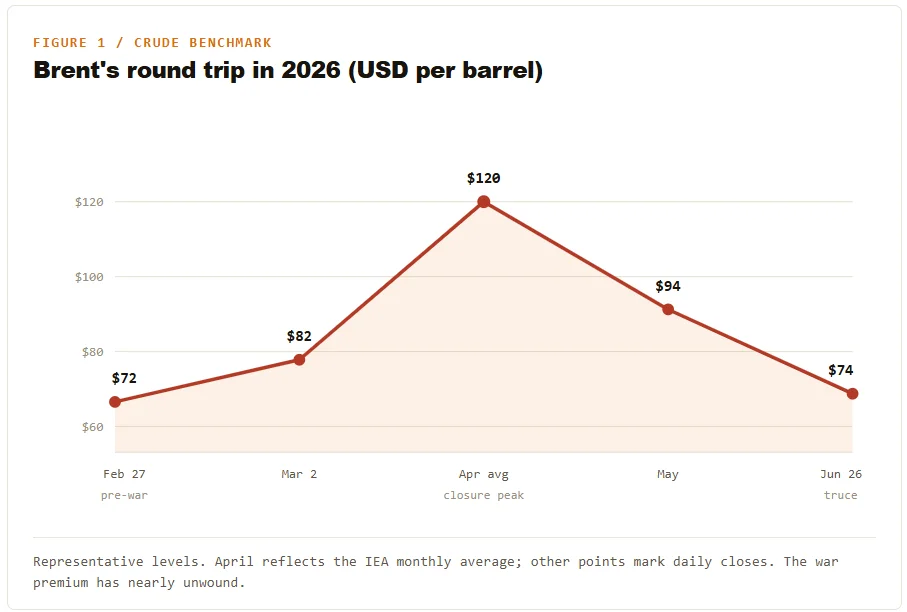
On June 26, a cargo vessel reported a projectile strike near the Omani coast. The United Kingdom Maritime Trade Operations centre confirmed damage to the ship’s bridge. Fortunately, no crew members suffered injuries. Still, the attack rattled traders who closely watch the Strait of Hormuz. Brent crude promptly rose as much as 4%. However, that rally faded within hours. By Friday, Brent traded near $73.85 a barrel, according to Al Jazeera. Iran’s maritime authority then issued another warning to shippers. It said vessels on unapproved routes lose any guarantee of safe passage. Traders weighed that threat carefully. Even so, prices held far below their wartime peaks. Markets had braced for a far worse outcome. That deeper shock simply never arrived.
Why the Strait still matters
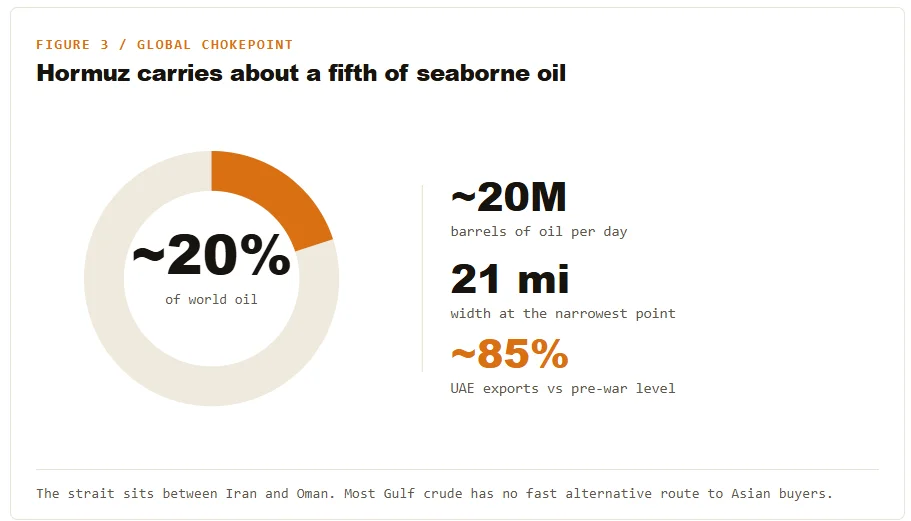
This chokepoint carries roughly a fifth of the world’s seaborne oil each day. Therefore, any violence there can move markets within minutes. The waterway spans just 21 miles at its narrowest point. About 20 million barrels of crude cross it daily. No quick alternative route exists for most Gulf exporters. Asia depends on these flows most heavily. In 2024, about 84% of crude through the strait went to Asian buyers. China, India, Japan, and South Korea took the bulk. Prices first surged after heavy strikes on Iran in late February. The strait then closed to most traffic within days. Supply fear gripped the market almost overnight. Brent spiked about 13% in early March alone. Yet this week’s reaction proved both brief and shallow. Clearly, traders now doubt that Iran can choke the route for long.
The war premium drains from energy shares
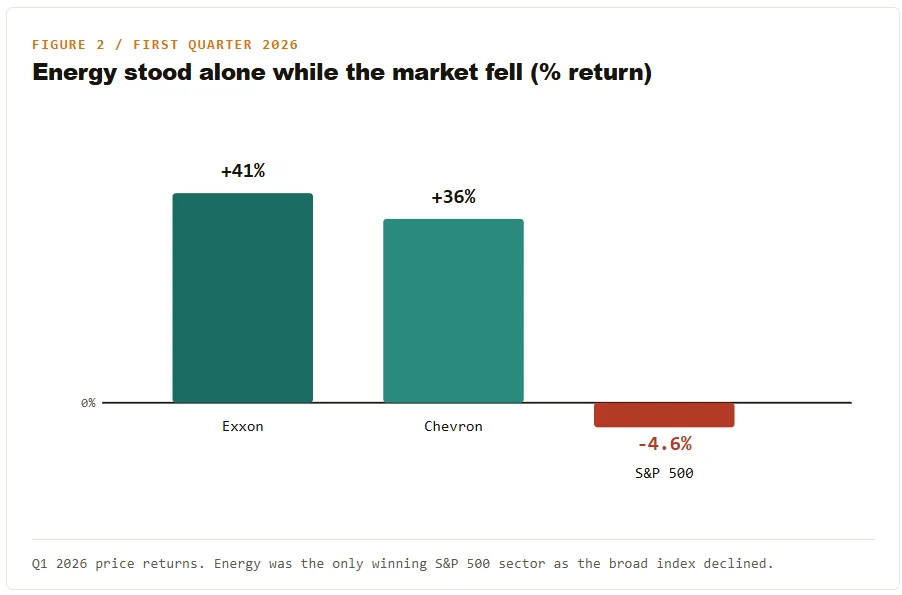
For most of 2026, oil stocks rode a powerful war premium. Exxon and Chevron each climbed about 22% this year, Fortune reported. Moreover, both giants touched record highs in late March. Exxon’s market value now tops $600 billion. Chevron sits above $370 billion. The sector funds tell the same story. Exxon and Chevron together fill nearly 40% of the main energy ETF. So their swings shaped the whole group’s returns. The first quarter showed the pattern vividly. Energy led every S&P 500 sector during that stretch. The broader index, by contrast, fell 4.6%. Exxon alone gained 41% in the period. Chevron added 36% beside it. Brent, meanwhile, averaged about $120 a barrel in April. That surge reflected fear rather than stronger fundamentals. Consequently, the premium shrinks as the Strait reopens. When crude cools, these shares usually cool with it.
A policy shift speeds the unwind
Washington intensified the pressure on June 22. The Treasury issued a sweeping measure called General License X, per TheStreet. This 60-day order lets buyers worldwide purchase Iranian crude without a volume cap. Furthermore, it allows direct payment to Tehran in U.S. dollars. Brent then dropped more than 3.5% in a single session. Prices now sit close to their pre-war level, near $72. That gap measures how much fear has drained away. The license expires on August 21. As a result, traders expect more barrels to reach buyers soon. China, in particular, remains Iran’s largest customer. Even so, many banks and insurers still shun Iranian cargoes. Their caution could slow the flow despite the new rules.
Tankers move, and supply fears ease
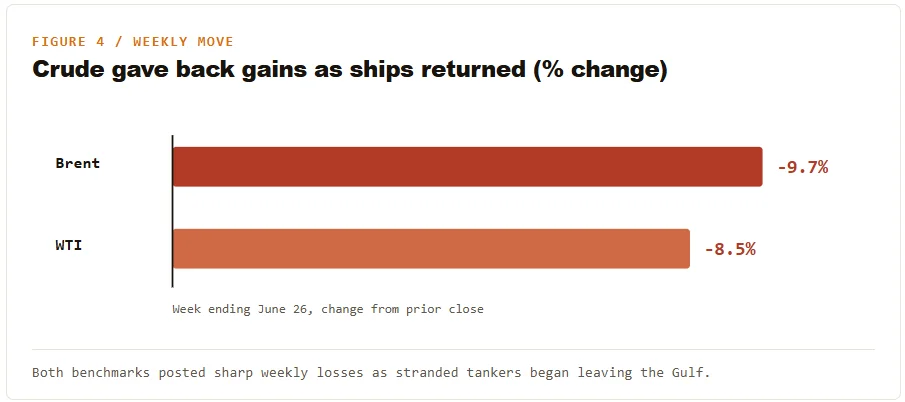
Shipping data now points to a steady recovery. More than 20 tankers carrying about 35 million barrels have cleared the strait since the truce, CNBC reported. Those vessels had idled for more than three months. Hundreds more ships still wait outside the Gulf to load. Saudi Aramco also resumed loading at its Ras Tanura terminal. Meanwhile, UAE exports rebounded to nearly 85% of pre-war levels, The National reported. Both benchmarks tumbled across the week. Brent fell almost 10% from the prior close. WTI lost roughly 8.5% beside it. Plainly, supply worries are loosening their grip on prices.
Where oil and stocks head next
Most analysts now lean toward further declines. Citi expects Brent to be between $60 and $65 within 12 months. The bank treats broad de-escalation as its base case. Additionally, it urges investors to fade any summer rally. Other banks share that cautious view. They cite record U.S. exports and the release of strategic reserves. Both factors keep global markets better supplied. Gulf producers also want calm restored. Lower prices still beat a straight shot for them. Real risks still remain, however. The June 26 strike shows how fast violence can flare. Should talks collapse before August 21, the war premium could snap back quickly. For now, though, calmer shipping favors softer prices and steadier energy shares.
What it means for investors
Energy bulls face a clear turning point. The easy, war-driven gains look largely spent. Instead, core fundamentals now carry more weight. Exxon leans on cheap Permian output and heavy buybacks. Chevron leans on its long dividend record. Volatility, meanwhile, looks set to persist. Each fresh headline can still swing crude by several dollars. Investors should therefore track three signals closely. First, watch tanker traffic through the strait. Next, follow the pace of the talks with Iran. Finally, mark the August 21 license deadline. A permanent settlement would likely cap any rebound. A breakdown, by contrast, would reward the cautious. Together, these forces will steer the next move in oil stocks.