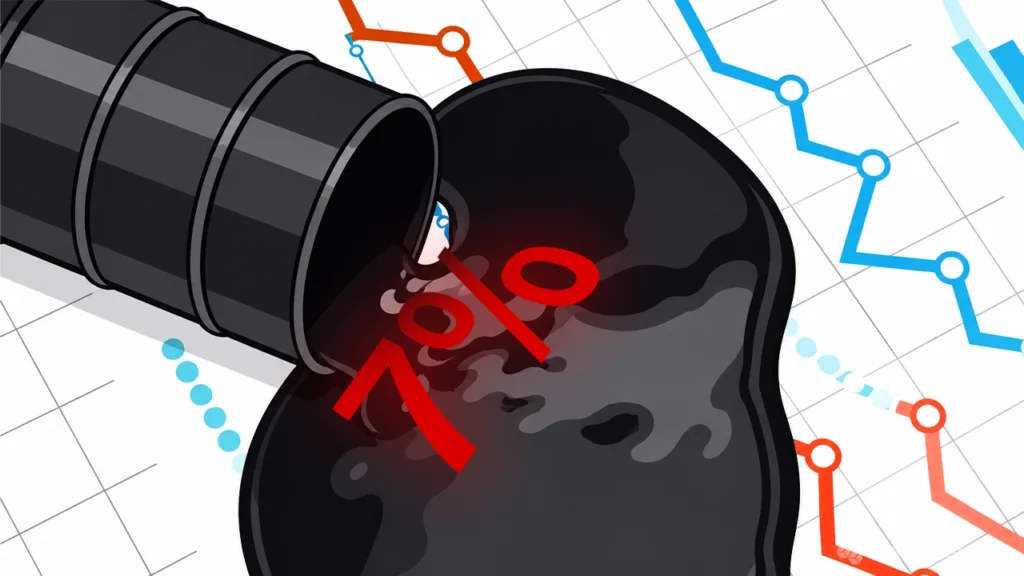


May 26, 2026 – Global equities surged, and crude oil tumbled sharply on optimism over US-Iran nuclear negotiations. However, analysts warn that the fragile diplomatic progress could reverse quickly.
In Summary
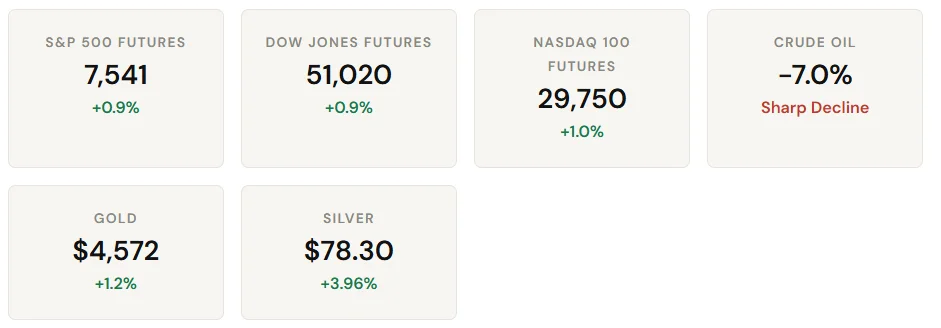
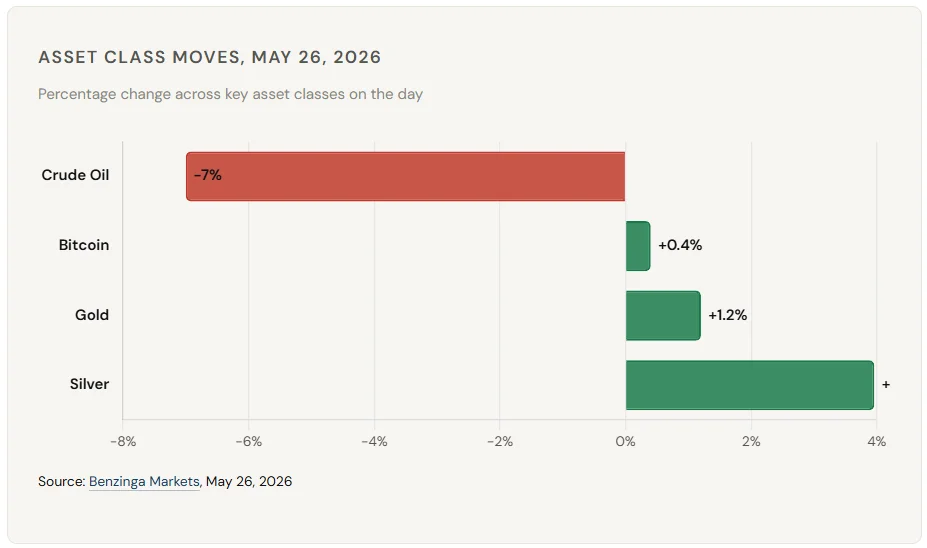
Crude oil plunged over 7% on hopes of a US-Iran nuclear deal that could reopen the Strait of Hormuz.
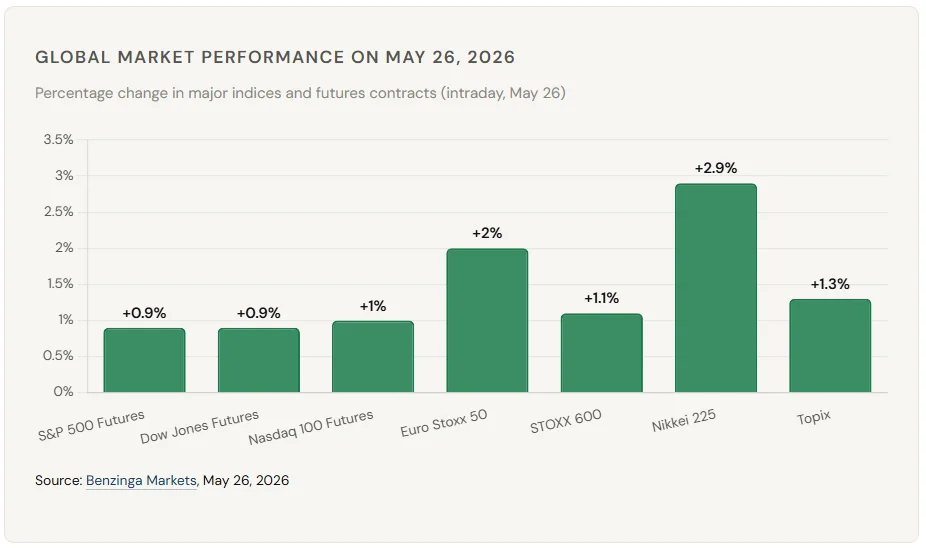
S&P 500 futures climbed 0.9% to 7,541. Nasdaq 100 futures gained 1.0% to 29,750.
Japan’s Nikkei 225 hit a record close of 65,158, rising 2.9% overnight.
European bourses reached four-month highs, with the Euro Stoxx 50 jumping 2.0%.
Gold gained 1.2% to $4,572 per ounce. Silver surged 3.96% to $78.30 per ounce.
Diplomatic talks stalled, however, over Iran’s nuclear enrichment and sanctions language.
US equity markets stayed closed on Monday for Memorial Day. Nevertheless, global risk assets rallied hard. Futures contracts on all three major US indexes surged, while oil tumbled more than 7% on fresh diplomatic signals from Washington.
The driving catalyst was clear. President Donald Trump posted on Truth Social on Monday morning, stating that US-Iran negotiations were “proceeding nicely.” Furthermore, he signalled that only a strong agreement or no deal was acceptable.
“Negotiations with the Islamic Republic of Iran are proceeding nicely. It will only be a Great Deal for all or, no Deal at all.”
-President Donald Trump, Truth Social, May 26, 2026
Traders quickly priced in a reopening of the Strait of Hormuz. That waterway carries roughly 20% of global oil trade, according to the US Energy Information Administration. Therefore, any deal would add significant supply to an already-sensitive market.
European and Asian Markets Surge
European equities ripped to four-month highs. The Euro Stoxx 50 jumped 2.0% to 6,139. Additionally, the pan-European STOXX 600 added 1.1% to reach 632. Both indexes fully reclaimed their pre-Iran war levels.
Asian markets moved even more decisively. Japan’s Nikkei 225 surged 2.9% to a fresh record close of 65,158. Concurrently, the broader Topix index gained 1.3% to 3,943. Lower crude prices fuelled bets on cooling inflation across the region.
Oil Collapses on Supply Hopes
Oil’s move was the most dramatic story of the session. Crude contracts dropped more than 7%, erasing weeks of geopolitical risk premium. However, the move carried significant caveats.
The Wall Street Journal reported that talks stalled on Monday. Key sticking points included language around Iran’s nuclear programme and the scope of sanctions relief. Moreover, separate reports indicated that Tehran would only release highly enriched uranium with guarantees from China. Therefore, the deal remains far from certain.
Bond Markets and the Federal Reserve
US Treasuries did not trade on Monday due to the public holiday. However, Friday’s closing yields remained an important context. The 10-year note settled at 4.56%, marking its third consecutive day of decline. Furthermore, the 2-year note closed at 4.13% and the 30-year bond at 5.07%.
Rate-hike expectations softened noticeably following the oil drop. Traders, however, remain partially positioned for a 25-basis-point Federal Reserve move by year-end. The FOMC minutes previously flagged persistent inflation concerns as a key risk.
Dollar Index and Crypto
The US dollar index slipped to near 99. It pulled back from six-week highs as the inflation-hedge trade unwound. Meanwhile, Bitcoin held above $77,000, adding a modest 0.4% on the session.
What Analysts Are Watching
The market reaction was swift. Nevertheless, seasoned analysts urge caution. Oil’s 7% single-day drop reflects hope, not confirmed supply. Critically, the Strait of Hormuz remains closed until an agreement is formally signed and implemented.
Gold’s simultaneous 1.2% gain was notable. Typically, gold falls when risk appetite rises. However, persistent uncertainty over the deal’s durability kept safe-haven demand elevated. Silver’s sharper 3.96% gain reflected both safe-haven and industrial demand expectations.
Furthermore, equity markets are priced in a scenario that may not fully materialise. Investors should watch for any reversal in crude if talks collapse. In that case, the risk of inflation and supply shocks would return quickly.
The Bigger Picture
This session underscored how geopolitical headlines can drive extraordinary market moves. A single presidential post moved crude oil by 7% and pushed Asian equities to record highs. That sensitivity reveals how tightly global markets remain tied to Middle East energy flows.
Consequently, investors face a binary outcome. A completed deal would likely push oil prices below $60 per barrel, ease global inflation, and extend the equity rally. Conversely, a breakdown in talks could spike crude back above pre-move levels and reignite inflation fears.
For now, markets are choosing optimism. However, the next 48 to 72 hours of diplomatic signals will be decisive.




