

May 22, 2026 – Tema’s space fund hit $1.27 billion in AUM in just 37 trading days. SpaceX’s $1.75 trillion IPO filing is driving the surge.
In Summary
Tema’s NASA ETF crossed $1.27 billion in AUM after just 37 trading days.
The fund is now the largest space-focused ETF in the United States.
SpaceX filed its S-1 IPO at a target valuation of $1.75 trillion.
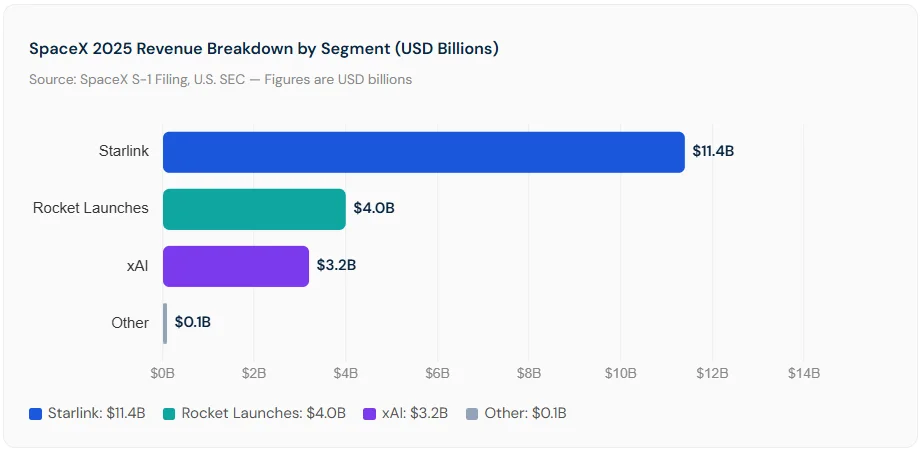
Starlink generated $11.4 billion, or 61% of SpaceX’s 2025 revenue.
SpaceX shares could begin trading on Nasdaq as early as June 12, 2026.
Space investing crossed a defining milestone this week. Tema Asset Management’s Space Innovators ETF (NYSE: NASA) surpassed $1 billion in assets under management, according to the fund’s issuer. The fund reached this landmark in just 37 trading days. However, this surge was no accident. SpaceX’s long-awaited IPO filing has ignited investor excitement across global markets. Furthermore, the fund’s targeted focus on the modern space economy set it apart from older peers.

A Record-Breaking Rise
Tema Asset Management launched the Space Innovators ETF on March 31, 2026. Seed capital on day one stood at just $1 million. Today, the fund holds approximately $1.27 billion in assets. Consequently, NASA now ranks as the largest space-focused ETF in the United States.
It is also the second-fastest thematic ETF to cross the $1 billion mark. Additionally, it places among the five fastest active equity ETFs to reach that level. This achievement spans a competitive universe of more than 1,700 active ETF products.
The fund targets companies shaping the modern space economy. Its portfolio includes launch systems, satellite infrastructure, communications networks, and space-enabled technologies. SpaceX exposure remains the single biggest draw for investors seeking private-market access.
SpaceX’s IPO: The Catalyst
SpaceX filed its S-1 registration statement on May 20, 2026. The company plans to list on Nasdaq under the ticker SPCX. According to Reuters, the roadshow is expected to begin on June 4. Pricing could follow on June 11. Shares may begin trading as early as June 12.
SpaceX aims to raise approximately $75 billion in the offering. The target valuation sits near $1.75 trillion. If achieved, this would make it the largest IPO in market history by amount raised. Morgan Stanley, Goldman Sachs, Bank of America, Citigroup, and JPMorgan serve as lead bookrunners. Sixteen additional banks participate across retail, institutional, and international channels.
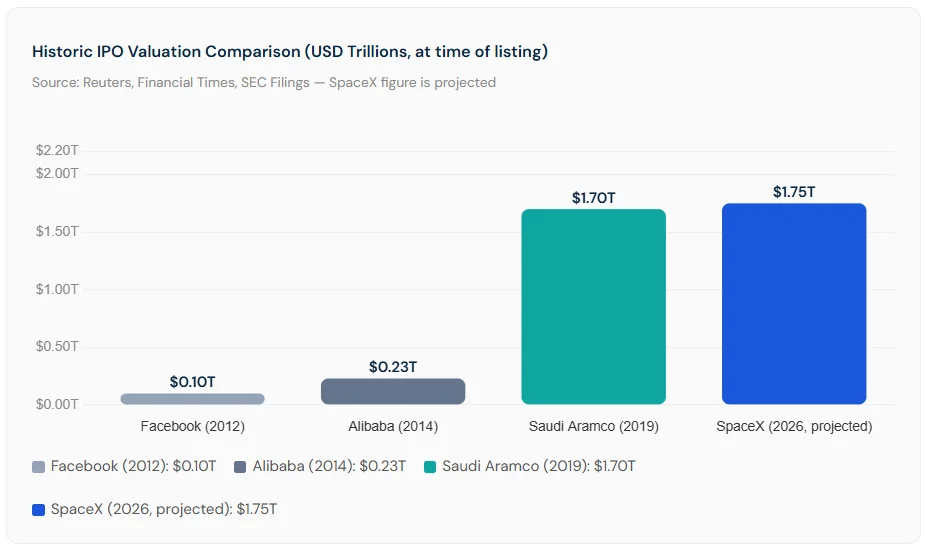
If SpaceX’s $1.75 trillion valuation holds at listing, it would surpass Saudi Aramco’s $1.7 trillion debut in 2019 as the highest IPO valuation ever recorded.
SpaceX’s 2025 Financials
SpaceX’s S-1 filing with the SEC gives investors their first detailed financial picture. The company generated $18.7 billion in total revenue in 2025. However, it also posted a net loss of $4.9 billion for the year.
Starlink drives the bulk of revenue. The satellite internet division earned $11.4 billion in 2025 alone. That represents 61% of SpaceX’s total annual revenue. SpaceX’s rocket-launch unit contributed $4 billion. The xAI segment added $3.2 billion to the top line.
Government contracts also play a significant role in SpaceX’s business model. NASA awarded SpaceX $2.6 billion under its Commercial Crew Transportation Capability contract to carry astronauts to the International Space Station. The U.S. Space Force also has approximately $5.9 billion for 28 missions. That contract covers roughly 60% of projected missions in its designated lane.
Starlink’s subscriber base continues to expand rapidly. As of July 2025, the service counted more than 6 million global customers. It added 2.7 million new users in the preceding 12 months alone. Therefore, Starlink’s growth trajectory remains the most compelling financial narrative in the IPO.
Historic IPO Valuations: Context Matters
SpaceX’s $1.75 trillion target is remarkable in historical context. Major market listings over the past decade pale in comparison. The chart below shows how SpaceX’s projected valuation compares with history’s largest IPOs.
Why the NASA ETF Stands Out
Traditional space ETFs struggled to attract broad investor interest for years. However, NASA differentiates itself through active management and targeted holdings. Older funds, such as the Procure Space ETF (UFO) and the ARK Space and Defence ETF (ARKX), rely more heavily on passive or broad index exposure. Therefore, NASA’s private-market access to SpaceX delivers a unique competitive advantage.
Furthermore, the fund’s rapid growth reflects a broader 2026 investing trend. Thematic ETFs focused on AI, defence technology, and frontier innovation are regaining strong momentum. Space is no longer a niche bet. It is becoming a mainstream allocation in portfolios.
What Investors Should Watch
The SpaceX IPO represents a defining test for space-sector investing. Retail investors can now gain exposure to space through a publicly listed ETF. Previously, access to SpaceX was limited to accredited investors and specialist private-market funds. Moreover, a successful IPO could directly accelerate further capital flows into the NASA ETF.
Nevertheless, risk remains real. SpaceX reported a $4.9 billion net loss despite strong revenue growth. Heavy capital spending on rocket infrastructure and satellite deployment continues to weigh on profit margins. Additionally, the fund’s performance is closely tied to the outcome of a single company’s IPO. Investors should carefully weigh the sector’s growth potential against these financial realities.
The Bottom Line
The NASA ETF’s rise to $1.27 billion in AUM signals a structural shift in investor sentiment. Space is moving from speculative hype to mainstream portfolio allocation at speed. However, SpaceX’s IPO will serve as the ultimate stress test for that conviction. If the $1.75 trillion valuation holds at debut, as reported by Reuters and Yahoo Finance, it could reshape the space-investing narrative for a generation.




