

July 09, 2026 – The exchange has chosen Lithuania as the venue for its bid, following the same route that Revolut used to become a licensed EU bank.

In Summary
Kraken is seeking a full European banking license, with Lithuania as its chosen base.
The move copies Revolut, which turned a 2018 Lithuanian specialised licence into a full EU bank.
A charter would add insured deposits, lending, and direct payment rails on top of MiCA permissions.
The bid follows a Fed master account in March and Dubai approval in May, all ahead of a planned US listing.
Kraken wants a full banking license in Europe, according to reports on Monday. The crypto exchange has picked Lithuania as the base for its bid, per a person close to the plans. If the bid succeeds, Kraken would be the first crypto exchange to hold such a charter. The firm declined to comment. Meanwhile, the Bank of Lithuania said its licensing work stays private.
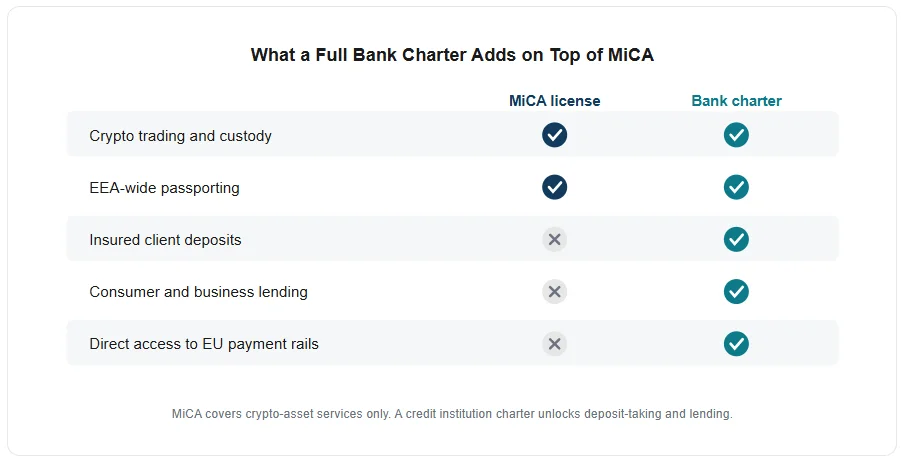
The prize is large. Right now, crypto platforms in Europe work under the MiCA rulebook. That regime covers trading, custody, and broker services. However, it stops short of core banking powers. A bank charter would allow Kraken to hold insured deposits, lend money, and plug directly into EU payment rails.
Why Lithuania Leads the Race
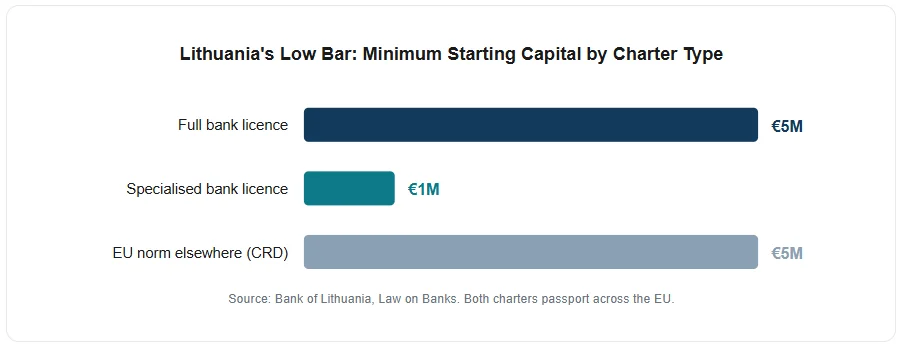
Lithuania has become Europe’s favorite side door into licensed banking. The country offers two types of charters under its banking law. A full bank needs 5 million euros in starting capital. In contrast, a specialised bank needs just 1 million euros, the lowest bar in the EU. Both charters carry passport rights across the whole EU market.
The specialised model does carry limits. Holders cannot offer investment services such as brokerage or fund management. Even so, they can take deposits and lend across the EU. For many fintech firms, that trade-off works well at the start.
The playbook has a famous graduate. Revolut gained a specialised bank licence there in December 2018. The European Central Bank signed off on the deal at the local watchdog’s request. Three years later, Revolut moved up to a full licence. It now serves the whole bloc from Vilnius. Consequently, Kraken would walk a proven path rather than an untested one.
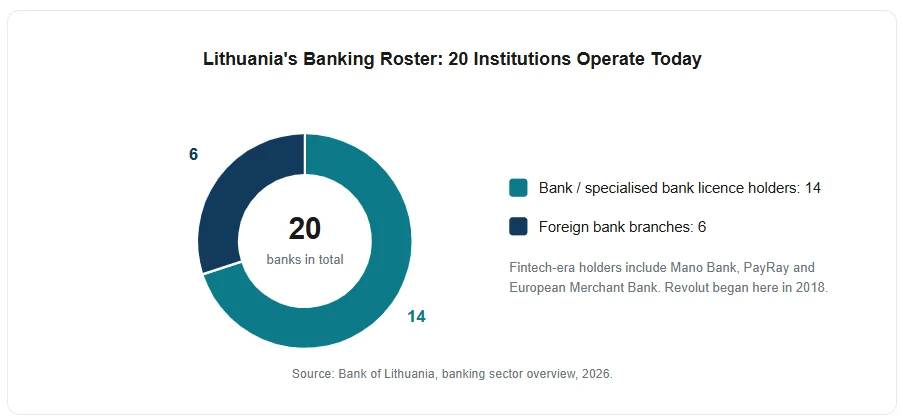
Today, 14 banks hold a bank or specialised bank licence in Lithuania. Six more firms run as branches of foreign banks. Fintech names such as Mano Bank, PayRay, and European Merchant Bank sit in that group. For Kraken, that mix signals a watchdog at ease with digital-first firms.
What a Bank Charter Would Change
The logic is simple. Exchanges earn most of their money from trading fees, which swing with each cycle. Banks, by contrast, earn steady income from deposits, loans, and payments. Therefore, a charter would smooth Kraken’s revenue ahead of its planned US listing.
The timing fits the firm’s wider arc. Kraken has run its exchange since 2011 and serves millions of clients worldwide. Also, steady bank-style income tends to earn richer valuations from stock investors than trading fees do.
There is a defensive angle too. Crypto firms have long leaned on partner banks for cash rails. Those ties can snap fast when markets turn. Direct bank status removes that single point of failure. Furthermore, it deepens the moat around Kraken’s big-client business, where settlement speed matters most.
Kraken Banking License Push Spans Three Continents
The EU bid extends a clear global pattern. In March 2026, Kraken Financial became the first digital asset bank with a Federal Reserve master account. The Wyoming-chartered arm now settles straight on Fedwire, with no middlemen. Additionally, it runs on a full-reserve basis. Liquid assets cover at least 100 percent of client cash at all times.
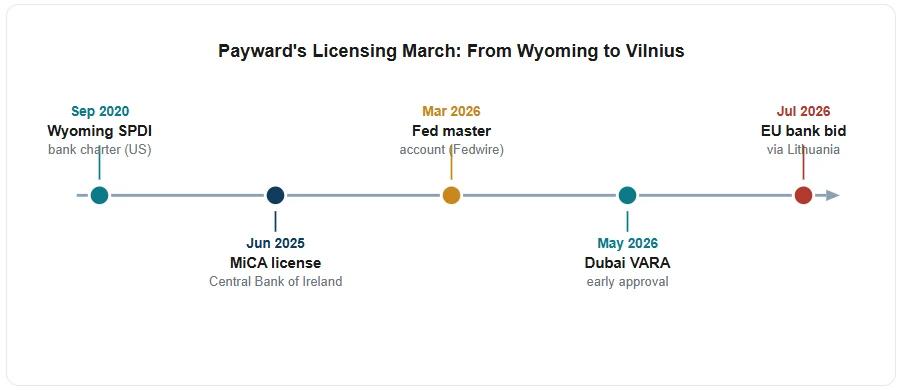
Two months later, the push reached the Gulf. Payward, Kraken’s parent, won early approval from Dubai’s virtual asset watchdog in May 2026. That permit covers broker-dealer, investment, and management work. Moreover, it revives the firm’s Middle East footprint, with dirham funding due later this year.
Europe supplied the base layer first. Kraken secured its MiCA license from the Central Bank of Ireland in June 2025. The permit opened regulated crypto services across all 30 EEA states. As a result, a Lithuanian charter would stack banking powers on top of crypto ones.
Co-CEO Arjun Sethi framed the plan at the Money20/20 Europe event. He wants the firm to gather licenses over the next decade. The route runs “either through buying an existing business, or going de novo” in each region, he said. In short, Kraken wants the pipes, not just market access.
What Comes Next
The vetting process will test that goal. EU bank filings often take a year or more. Reviewers will probe capital plans, controls, money-laundering checks, and owner fitness. Notably, the European Central Bank makes the final call on any Lithuanian bank licence, not the local watchdog alone.
Rival moves add urgency. Other platforms have chased nearby permits across Europe in recent months. Similarly, old-line banks keep pushing into crypto custody and tokenized assets. The wall between exchanges and banks is crumbling from both sides.
Still, the prize justifies the grind. A full charter would let Kraken offer accounts, cards, loans, and crypto trades under one roof. That combo stays rare anywhere in the world. For now, the file sits with reviewers in Vilnius and Frankfurt. Either way, their ruling will shape how far crypto firms can push into banking.