


July 27, 2026 – A ten-market-dollar payment service could turn always-on settlement into a practical treasury and working-capital tool.
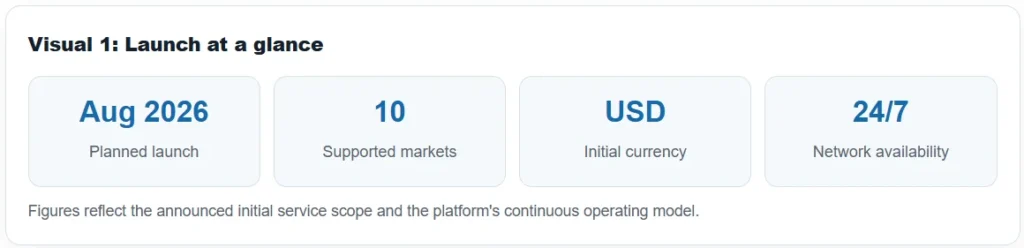
KB Kookmin will introduce KB Kookmin Kinexys payments for trade clients in August 2026. The launch plan moves institutional blockchain from pilots into daily corporate banking. It also targets a stubborn problem: international payments often slow when banking hours, time zones, and intermediaries collide.
In Summary
USD transfers will initially cover ten countries.
Domestic branches and the Singapore branch will provide access.
Kinexys reports more than $4 trillion in cumulative volume.
Execution data will determine the service’s real treasury value.
What the new service changes
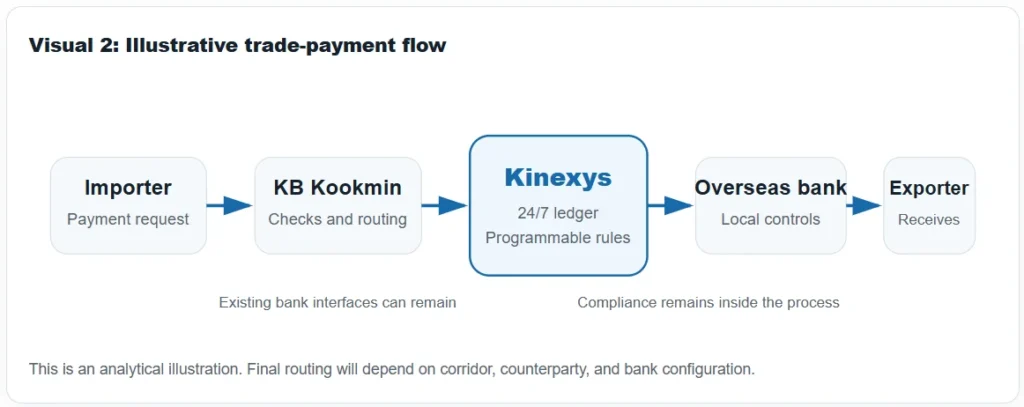
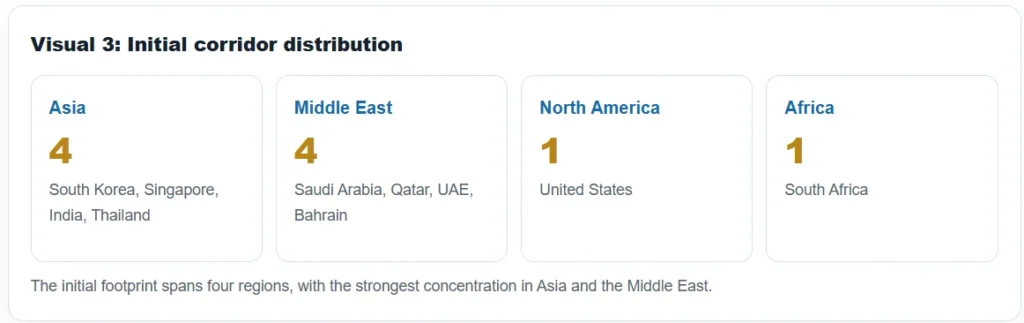
The launch plan covers ten markets across Asia, the Middle East, Africa, and North America. They include South Korea, the United States, Singapore, Saudi Arabia, India, Thailand, Qatar, the UAE, Bahrain, and South Africa. Importers and exporters will keep familiar banking channels while the settlement layer uses JPMorgan’s permissioned Kinexys network.
That design matters. Many corporate treasury teams cannot replace enterprise systems quickly. Therefore, integration with existing workflows could reduce adoption friction. Kinexys supports programmable payments, tokenized bank money, and near-real-time settlement across approved participants.
The service will first focus on dollar payments. This limits currency complexity during the initial rollout. However, it also places the network inside the world’s main trade settlement currency. Successful usage could support more corridors, currencies, and automated treasury rules.
Why speed can improve working capital
Cross-border payments still face cut-off times and mismatched holidays. A payment initiated late in Seoul may wait for another market to open. That delay can leave an exporter awaiting cash and an importer uncertain about final settlement.
KB Kookmin Kinexys payments could compress that waiting period. The platform can operate continuously and trigger payments through predefined conditions. Faster confirmation may improve cash forecasting, reduce idle balances, and support tighter liquidity buffers.
Trade teams may also gain cleaner reconciliation. A shared transaction record can reduce status inquiries across banks and counterparties. Consequently, staff can spend less time tracing payments and more time managing exceptions. That operational benefit may matter as much as headline speed.
However, blockchain does not remove every delay. Banks must still complete sanctions screening, anti-money laundering checks, and transaction monitoring. Beneficiary institutions must also support the relevant corridor. Foreign exchange execution may follow separate operating rules.
The scale is meaningful, but context matters
JPMorgan reports more than $4 trillion in cumulative Kinexys activity. Average daily volume exceeds $7 billion. Those figures show that the network has moved beyond a small technical experiment.
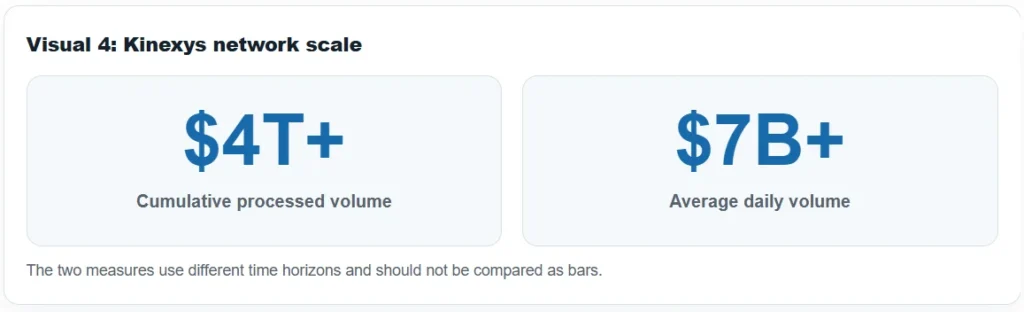
Still, the totals do not reveal KB Kookmin’s expected payment volume. They also do not measure customer savings or settlement-time reductions. Therefore, the August launch should be judged through disclosed transaction counts, processing times, failure rates, and pricing.
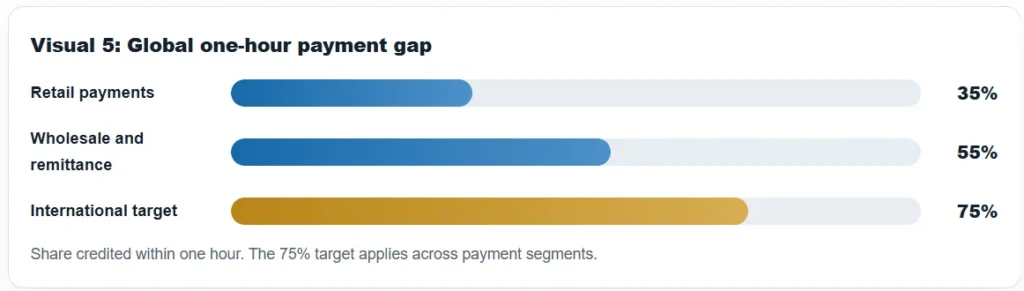
Global benchmarks show why such evidence matters. BIS research found that only 35% of retail cross-border payments reached recipients within one hour. The comparable figure was 55% for wholesale and remittance payments. The international target is 75%.
A wider digital-money strategy
The trade service follows KB Kookmin’s participation in a Korean deposit-token payment infrastructure project. That initiative aims to shorten merchant settlement from one to three days toward immediate settlement. Together, both projects suggest a strategy built around regulated digital bank money.
This approach differs from public cryptocurrency payments. Kinexys is permissioned, and approved institutions operate inside a controlled banking framework. Customers gain blockchain-based speed without taking direct exposure to volatile cryptoassets.
Furthermore, the system complements established payment rails instead of demanding their immediate replacement. SWIFT, APIs, and bank interfaces can connect users with blockchain deposit accounts. This hybrid model may prove more practical for large companies.
What businesses should watch next
Corporate users should examine five issues before shifting meaningful volume. Pricing must beat or justify existing correspondent routes. Cut-off improvements must remain consistent across corridors. Payment finality needs clear legal treatment. Treasury systems require reliable reconciliation data. Finally, operational support must cover exceptions outside Korean business hours.
The strategic opportunity is clear. KB Kookmin Kinexys payments can turn always-on settlement into a working-capital tool. Yet adoption will depend on execution, transparency, and network reach. August will mark the launch. The following months will reveal whether faster infrastructure produces measurable treasury value.