


June 22, 2026 – The prediction market leader has opened early talks with banks. Its numbers now point straight toward the public markets.
In Summary
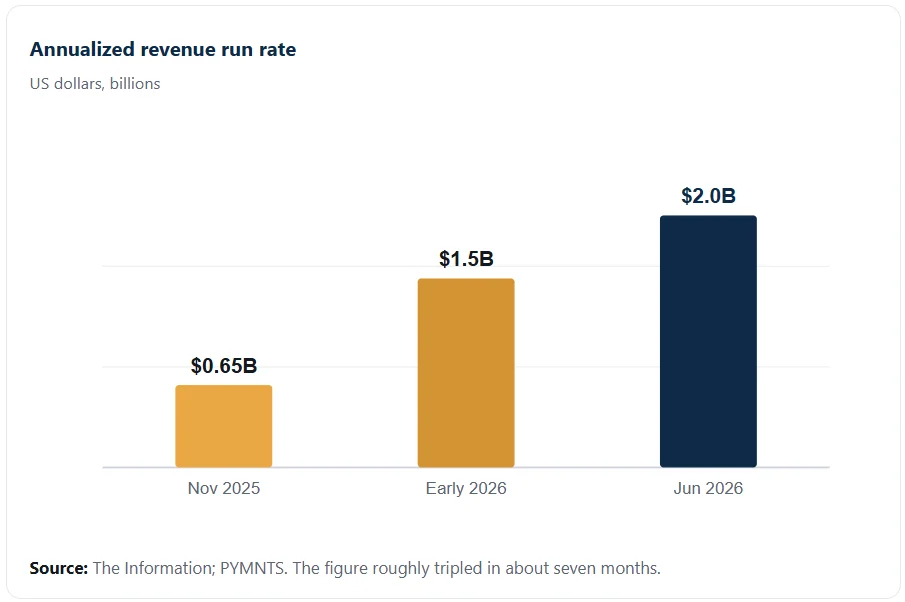
Kalshi’s annualized revenue reached $2 billion, roughly triple its November 2025 level.
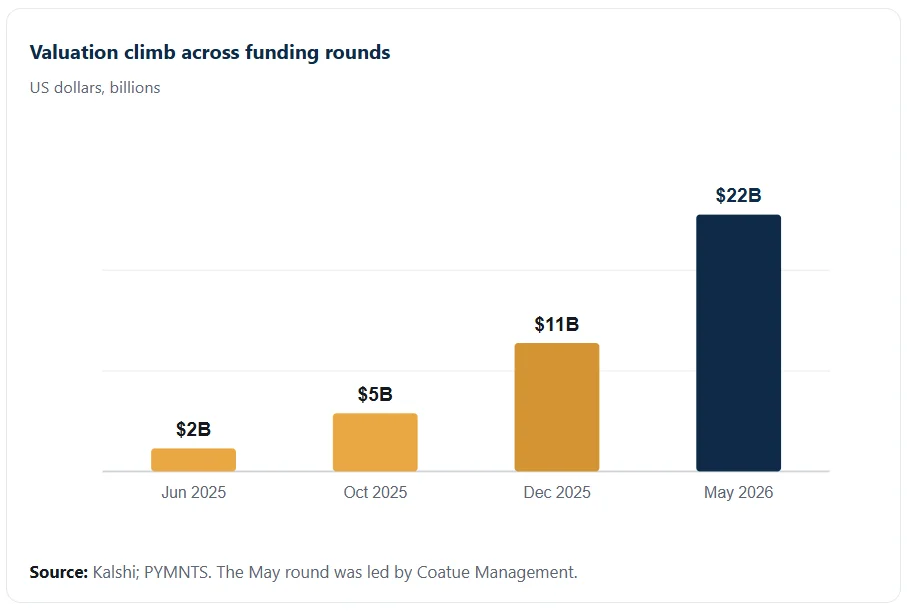
A $1 billion Series F valued the company at $22 billion in May 2026.
Sports contracts drove the surge, yet they also create serious legal risk.
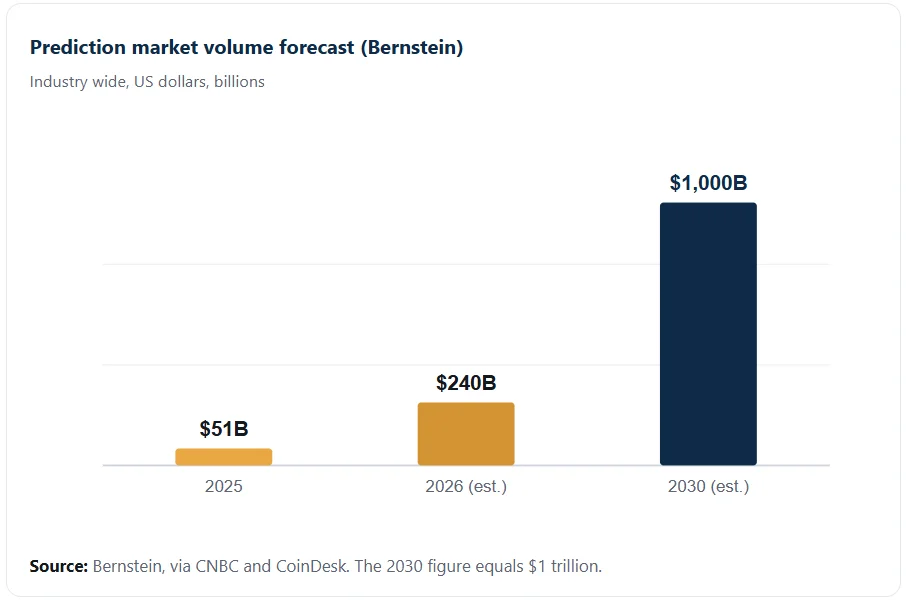
Bernstein expects industry volume to reach $1 trillion by 2030.
Prediction market Kalshi is moving closer to Wall Street. The company has tripled its annualized revenue to $2 billion since November. As a result, its executives have opened early, informal talks with investment banks. A Kalshi IPO now looks like a question of timing rather than likelihood.
The Information first reported the milestone on June 18. Outlets including PYMNTS and CNBC later echoed the core figures. Kalshi itself declined to comment on the report.
Revenue triples in seven months
Kalshi’s growth has been steep and fast. Annualized revenue sat near $650 million last November. By June 2026, that figure had reached $2 billion. Therefore, the run rate roughly tripled in about seven months.
Strong sports trading powered the jump. NBA playoff and World Cup contracts pulled in fresh retail traders. Many of them had never touched event contracts before.
Valuation climbs to $22 billion
Investors have rewarded that momentum quickly. Kalshi raised $1 billion in a Series F round in May. The round valued the company at $22 billion. Notably, that number doubled, surpassing the $11 billion mark from December.
The valuation history clearly shows the pace. Kalshi was worth $2 billion in June 2025. It then passed $5 billion and $11 billion before reaching $22 billion. In short, the price climbed roughly elevenfold in under a year.
Sports trading fuels the surge
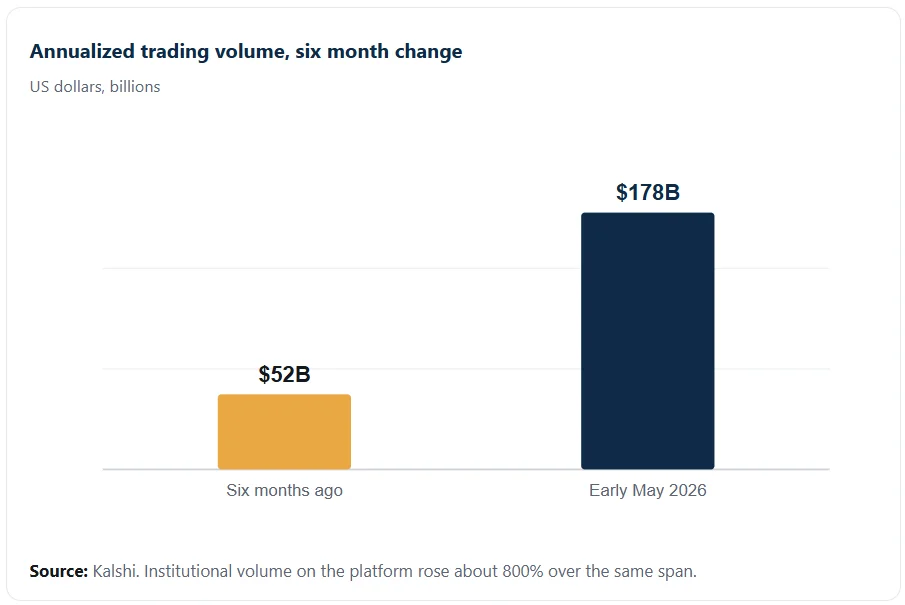
Trading volume tells the same story. Annualized volume grew from $52 billion to $178 billion in six months. Meanwhile, institutional trading volume jumped about 800%.
Monthly activity also set records. May volume reached $16.81 billion, up from $14.81 billion in April. However, this mix creates a clear dependency. Some estimates put sports at up to 90% of revenue.
The industry could reach $1 trillion
Kalshi’s rise mirrors a wider boom. Bernstein expects prediction market volume to hit $1 trillion by 2030. Industry volumes reached just $51 billion in 2025. They are on track for about $240 billion this year.
That pace implies roughly 80% annual growth through the decade. Furthermore, analysts expect the contract mix to shift. Sports lead today, but economics and politics should grow.
Regulation remains the main risk
Still, the IPO story carries real danger. More than a dozen states have challenged Kalshi’s sports contracts. Kentucky sued the company in June over alleged unlicensed betting.
Kalshi argues that federal rules preempt state gambling laws. The CFTC oversees its event contracts directly. Moreover, a New Jersey court sided with Kalshi in April. Nevertheless, the dispute may eventually reach the Supreme Court.
The stakes are high for investors. An adverse ruling could erase most of Kalshi’s revenue. As a result, regulation will shape the IPO math.
What the timeline looks like
For now, the talks remain at an early stage. Kalshi is unlikely to list before late 2027 or 2028. Additionally, the company wants its bank advisers to integrate with the platform.
That approach would turn the IPO process into a sales channel. Kalshi already commands more than 90% of US prediction market activity. Consequently, a listing would give public investors a rare pure play on the sector.
Kalshi declined to comment on the report. Even so, its numbers point firmly toward the public markets.




