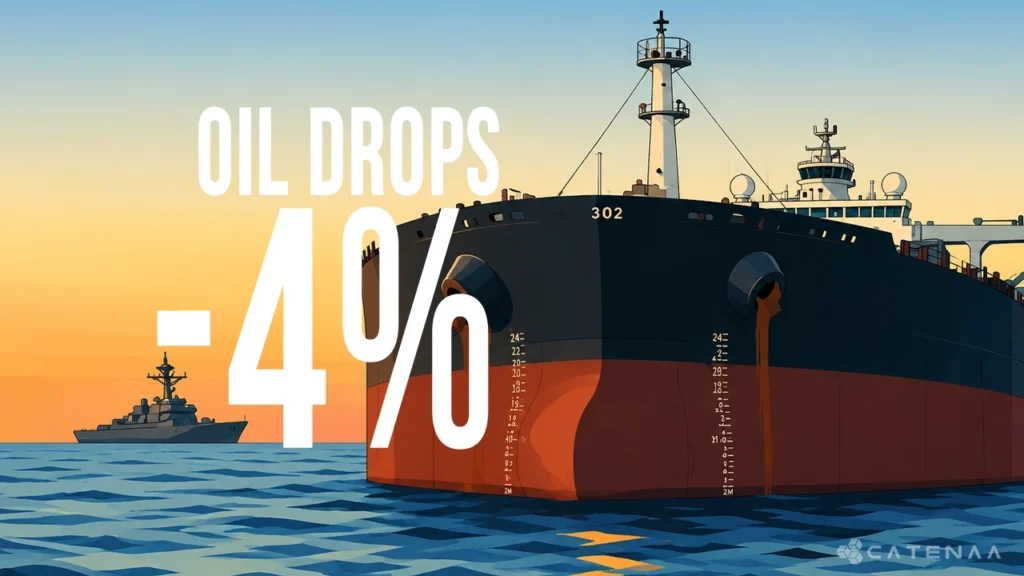


June 16, 2026 – A preliminary truce reopens the world’s most vital oil chokepoint. Energy markets cheered the news within hours.
In Summary
The United States and Iran agreed to halt their war and reopen the Strait of Hormuz.
Brent crude fell about 4% on Monday, its lowest level since March.
The strait normally carries roughly 20 million barrels of oil each day.
Both sides plan to sign a formal memorandum in Switzerland on Friday.
A breakthrough after months of war
Iran and the United States have agreed to stop fighting. The framework also reopens the Strait of Hormuz. Pakistani Prime Minister Shehbaz Sharif brokered the deal. He announced the agreement early on Monday, local time. Shortly afterward, President Donald Trump confirmed the truce online.
“The Deal with the Islamic Republic of Iran is now complete,” Trump wrote on Truth Social. Moreover, he ordered an immediate end to the US naval blockade of Iranian ports. According to the CBC, both sides will sign a formal memorandum in Switzerland on Friday. The pact also covers Lebanon, where the fighting had spread. Officials say the war has killed thousands since February.
Oil markets react within hours
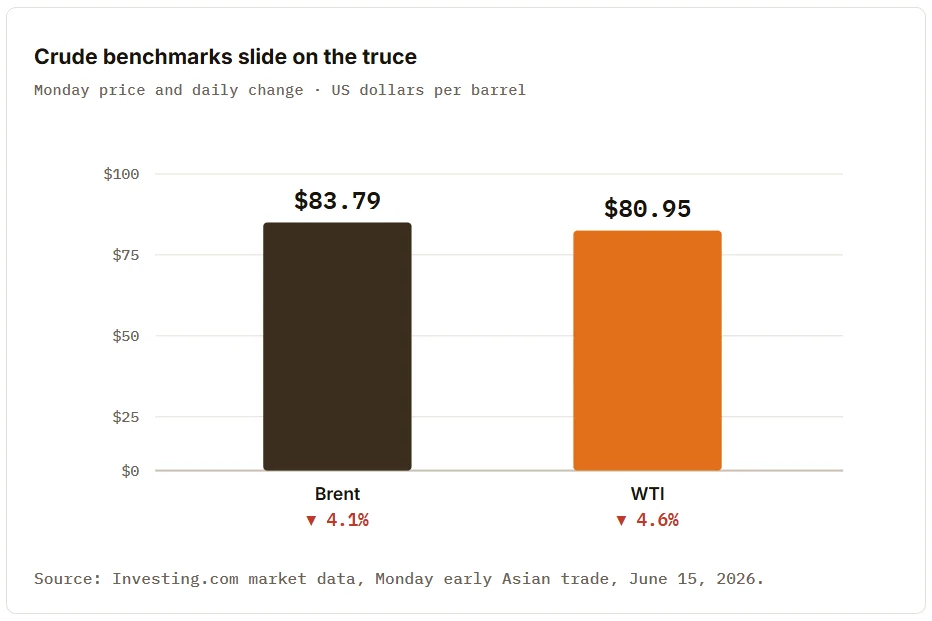
Traders moved fast once the news broke. Consequently, crude prices tumbled across early Asian trading. Brent crude futures fell about 4.1% to $83.79 a barrel. West Texas Intermediate, meanwhile, slid 4.6% to $80.95. Both benchmarks touched their lowest levels since March, Investing.com reported. Asian equity markets, by contrast, rallied on the relief.
Analysts welcomed the calm, yet they urged caution. Trump struck a more triumphant tone in his own post.
Ships of the World, start your engines. Let the oil flow!·
-US President Donald Trump, Truth Social
The drop also unwinds a long wartime premium. Prices had stayed elevated for months during the blockade. Cheaper crude now points toward lower fuel costs ahead. Softer energy bills could ease global inflation too.
Why the Strait of Hormuz matters so much
The Strait of Hormuz lies between Iran and Oman. It ranks as the planet’s most critical oil chokepoint. In 2025, about 20 million barrels of oil flowed through it daily, according to the International Energy Agency. That figure equals nearly one-fifth of global petroleum consumption. Furthermore, no alternative sea route can fully replace it.
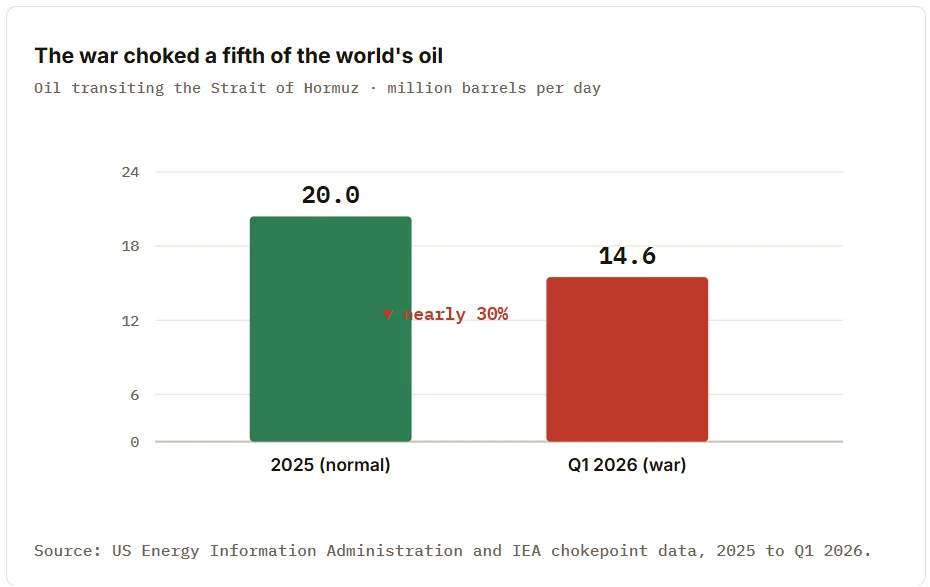
The war strangled these flows for months. In the first quarter of 2026, transit fell almost 30% year over year. Volumes sank to 14.6 million barrels a day, the EIA reported. As a result, global energy costs climbed sharply through spring. At the crisis peak, roughly 90% of normal traffic diverted away.
Pipelines offer only a partial escape. Saudi Arabia’s East-West line can carry about 7 million barrels a day. The UAE also operates a second bypass route to Fujairah. Together, however, they cannot match the strait’s full volume.
Who depends on the waterway?
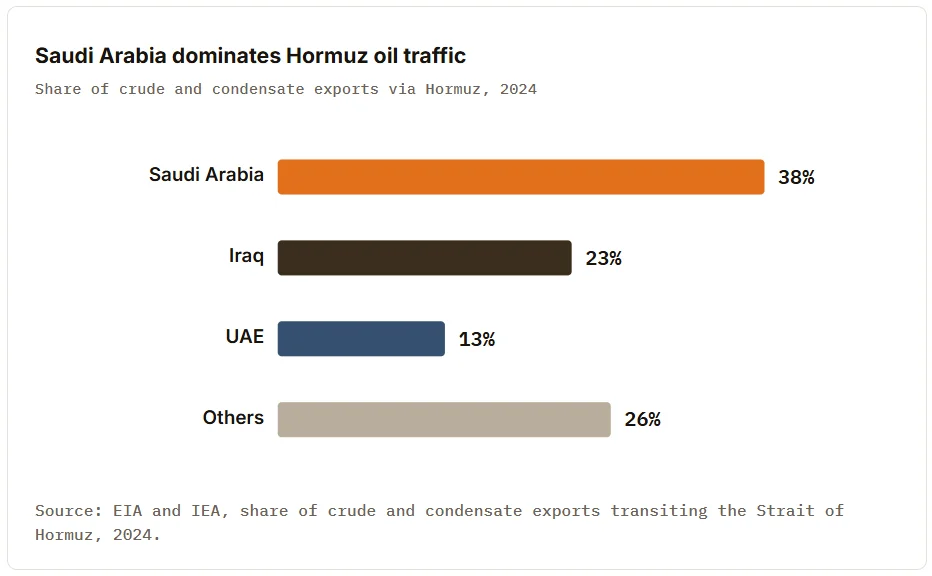
Several Gulf exporters lean heavily on Hormuz. Saudi Arabia ships the largest share through the passage. It moved roughly 38% of crude exports in 2024. Iraq followed with nearly 23%, while the UAE handled about 13%.
Asia consumes most of these barrels. China, India, Japan, and South Korea lead the buyers. China and India together took 44% of crude exports in 2025. The United States, by contrast, depends on Hormuz far less. It imports only about 2% of its petroleum through the strait.
The economic toll of the blockade
The shutdown rippled far beyond the Gulf. Shipping insurers raised premiums sharply across the region. Refiners then hunted for costlier crude from distant suppliers. Inflation fears, in turn, spread through importing economies. Many Asian nations also faced immediate supply pressure. Reopening the strait should slowly reverse those strains.
From strikes to settlement
The conflict erupted in February 2026. Joint US-Israeli air strikes hit Iranian targets first. Iran then retaliated, effectively closing the strait. Afterward, oil prices spiked, and tankers rerouted en masse.
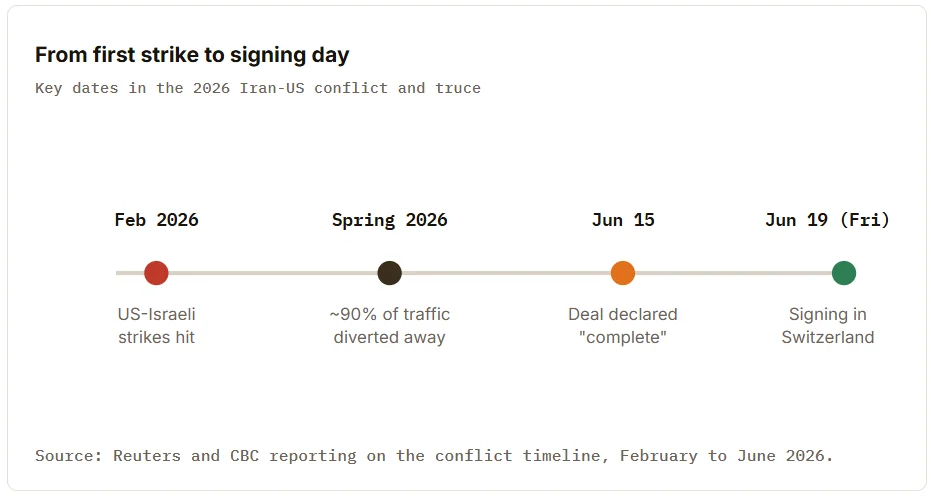
Diplomacy gradually gained ground through Pakistan’s mediation. Eventually, both governments agreed to a 60-day ceasefire. Negotiators will use that period to draft a fuller treaty. The current text, therefore, remains a framework rather than a final deal.
What still hangs in the balance
The agreement leaves the hardest questions open. Notably, Iran’s nuclear program stays unresolved. The two sides deferred talks on enriched uranium stockpiles. Sanctions relief also awaits detailed negotiation. EU foreign policy chief Kaja Kallas called the pact a “potential breakthrough”. Nevertheless, she stressed that the next phase will prove decisive. Reuters reported that the precise terms stay unclear for now. Some critics in Washington argue Trump conceded too much.
The road ahead for energy markets
Investors will closely track Friday’s signing in Switzerland. Tanker traffic, meanwhile, may take weeks to fully recover. Therefore, analysts expect a gradual normalization rather than an instant one. Buyers may also rebuild depleted reserves once shipping resumes. That restocking could keep prices firm despite the truce. Still, the broader direction has clearly turned toward stability. For energy consumers worldwide, that shift offers timely relief.