

June 24, 2026 – Treasury’s General License X lets Tehran sell crude in dollars again, and traders are already pricing in extra supply.
In Summary
OFAC issued General License X on June 22, valid through Aug. 21, 2026.
Iran can sell crude in US dollars for the first time in over 40 years.
The waiver could free about 67 million stranded barrels worth $8B to $9B.
WTI and Brent both fell roughly 3% right after the announcement.
A final peace deal must still clear a tight 60-day negotiating window.
A decades-old wall around Iranian oil just cracked open. On June 22, the United States granted Iran a temporary license to pump and sell crude again. The decision marks a sharp turn in the fragile US-Iran peace process. It also reshapes the outlook for global energy prices this summer. Energy traders and diplomats now watch the next 60 days closely.
A sudden reopening of Iran’s oil tap
Washington has reopened a door that stayed shut for decades. The US Treasury’s Office of Foreign Assets Control issued General License X. The order authorizes the production, sale, and delivery of Iranian crude through Aug. 21, 2026. Therefore, Iran now holds a 60-day legal window to move oil freely.
The waiver follows a memorandum of understanding signed last week. President Donald Trump signed it at the Palace of Versailles. President Masoud Pezeshkian signed the document separately. Moreover, the framework aims to end the US-Israeli war with Iran that began on Feb. 28.
This relief from Iran oil sanctions is temporary, yet its reach is broad. For the first time in over four decades, Tehran can sell crude in US dollars. In addition, the license clears banks, insurers, and shippers that sanctions once blocked. It even reopens the door to US crude imports, a trade that collapsed in the 1990s.
Why the dollar clause matters most
Dollar access changes the math for Tehran. Previously, Iran relied on a shadow fleet and alternative currencies to evade sanctions. Now foreign buyers can pay Iranian banks directly. As a result, billions in trapped revenue could finally flow home.
Treasury Secretary Scott Bessent linked the move to talks in Switzerland. He said Iran committed to free transit through the Strait of Hormuz. Furthermore, Tehran agreed to readmit International Atomic Energy Agency inspectors.
Still, US officials framed the relief as conditional. Vice President JD Vance argued that Washington holds “all the cards.” He insisted Iran would gain little until it changed its behavior. Trump added that any oil profits should fund American farm goods, not weapons.
The numbers behind the windfall
The financial stakes are large. This license could unlock about 67 million barrels of crude stranded in the Gulf. A former Treasury official valued that inventory at $8 billion to $9 billion. Consequently, the cash injection would lift Iran’s battered economy.
The relief also covers petrochemicals and refined fuels. Vessels and firms once blocked by sanctions can now trade legally. In effect, the order switches on Iran’s entire export chain at once. That breadth explains why analysts call it the biggest oil relief in years.
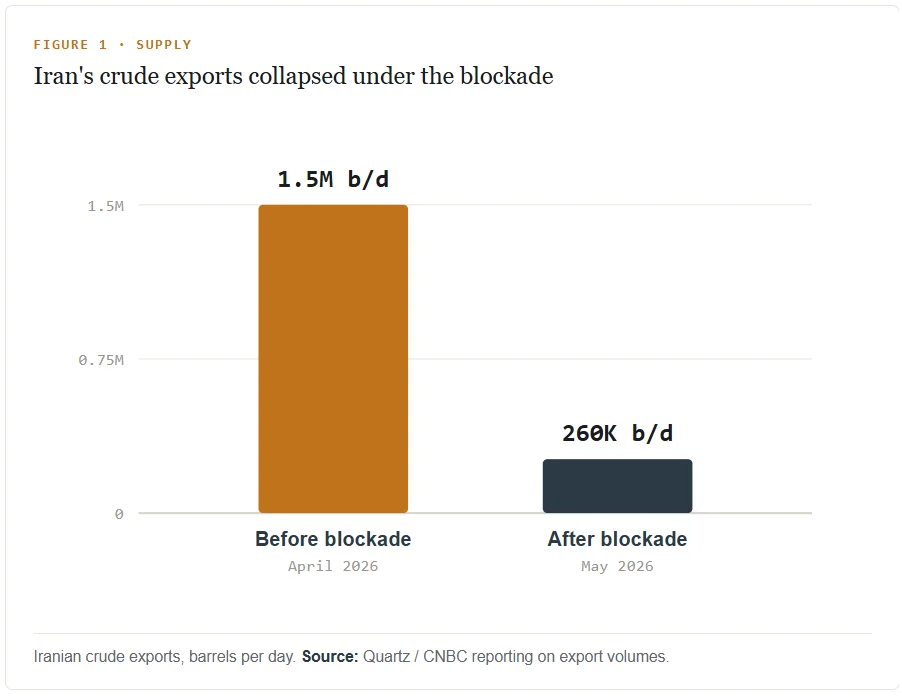
Iran’s export slump shows how far output had fallen. Before the US naval blockade in April, the country shipped above 1.5 million barrels per day. By May, that figure cratered to roughly 260,000 barrels per day. However, exports have ticked higher in recent weeks.
Hormuz holds the global stakes
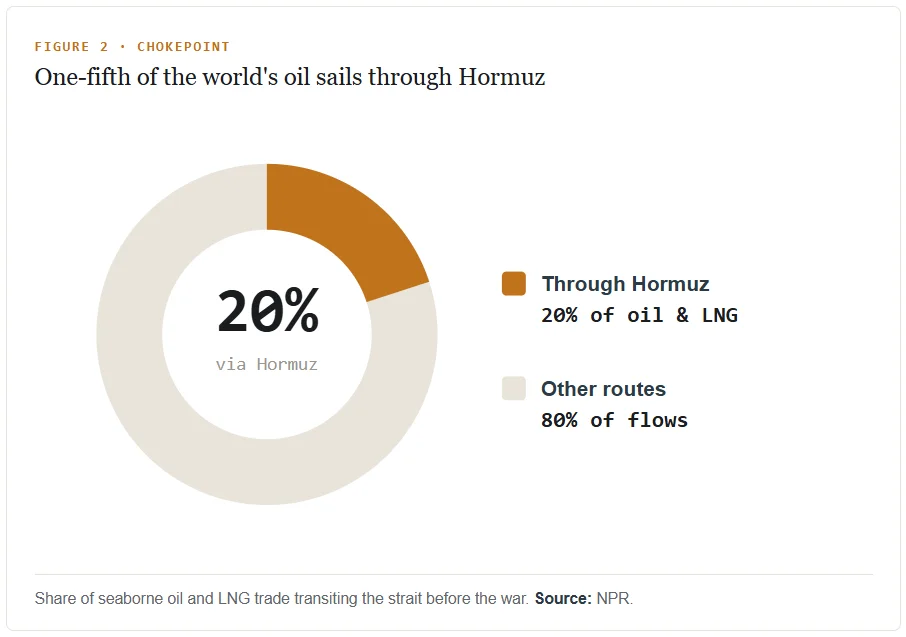
The Strait of Hormuz sits at the heart of this story. Before the war, about 20% of the world’s oil and liquefied natural gas passed through it. Tankers carry that crude toward Asia and Europe each day. Therefore, any disruption there ripples across world markets within hours. Under the deal, Iran agreed to allow safe passage with no charge for 60 days. Still, its military recently threatened to close the route again over strikes in Lebanon.
Markets read the relief as bearish
Traders moved quickly once the news broke. Extra Iranian supply points toward a looser global market. Accordingly, crude prices slipped right after the announcement.
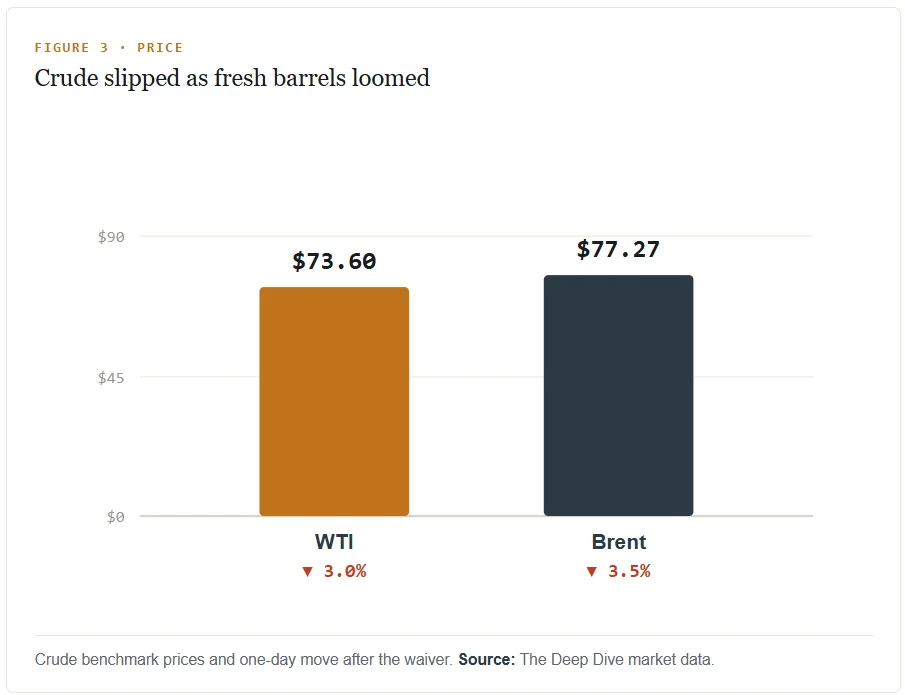
West Texas Intermediate fell about 3% to $73.60 a barrel. Meanwhile, Brent dropped 3.5% to $77.27. These moves suggest that investors expect more barrels to reach buyers soon. Cheaper crude could also ease pressure at the pump for drivers.
Oil had spiked earlier when the strait was first threatened with closure. Now the trend has flipped back toward steady supply. Even so, traders stay alert to any fresh flare-up in Lebanon. The conflict had already jolted global energy flows for months.
China holds the demand key
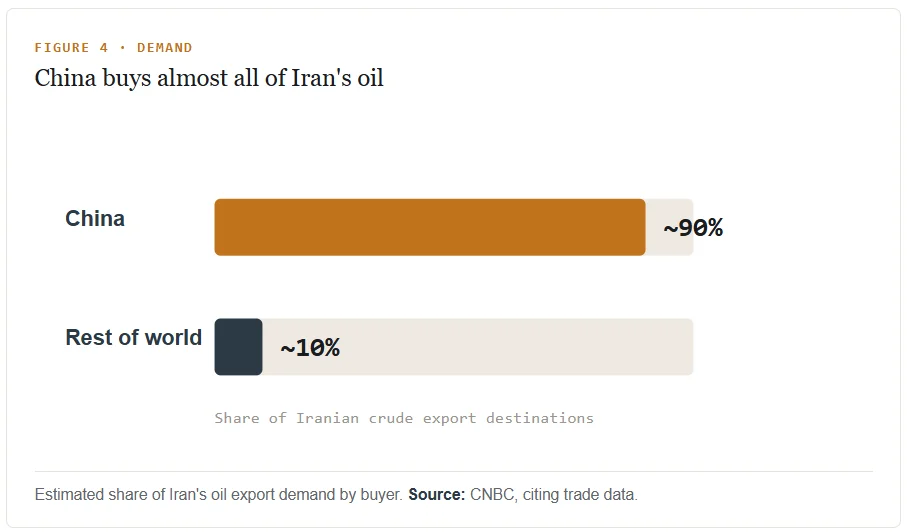
China remains Iran’s dominant customer by a wide margin. The country buys roughly 90% of Iranian oil exports. Independent “teapot” refiners drive most of that demand. These plants hunt for cheap, discounted barrels. Iranian crude often trades below global benchmarks. So the price gap keeps Chinese buyers loyal over time. Yet a fast rebound looks far from certain.
Chinese imports fell sharply during the conflict. Between February and May, the country’s crude imports shrank by 4.8 million barrels per day, per JPMorgan. That decline even topped the drop seen during the 2020 pandemic. For now, buyers are still reviewing compliance before they restart large purchases.
A fragile path to a final deal
The waiver buys time, not certainty. Both sides must reach a final agreement within the same 60-day window. Trump has warned he could resume strikes if Tehran breaks its pledges. In addition, the framework floats a $300 billion fund to rebuild Iran’s economy.
Israel is not a party to the agreement, which raises the risk. Israeli forces struck Hezbollah targets shortly before the signing. Nevertheless, mediators from Qatar and Pakistan helped keep the talks alive.
There is also a clear contradiction in US policy. Treasury sanctioned Iranian oil networks just weeks before this waiver. So Washington is not dismantling its broader sanctions system. Instead, it is inserting a temporary valve into it. Analysts therefore warn that the truce still rests on shaky ground.
What to watch next
Several markers will shape the coming weeks. First, watch whether Chinese refiners lift their purchases. Second, track tanker traffic through the Strait of Hormuz. Third, follow the talks in Switzerland on Iran’s nuclear program. Finally, gauge whether Tehran repairs its war-damaged oil sites. Ultimately, the final deal will decide whether this relief turns permanent.
For energy markets, the near-term signal looks clear. More Iranian crude could reach buyers within weeks. However, the politics stay volatile, and one misstep could quickly reverse the gains.