

July 29, 2026 – Crude rebounded sharply as traders priced renewed shipping risk, incomplete supply recovery, and a pivotal Federal Reserve decision.
In Summary
Brent and WTI rose roughly 4% as traders rebuilt supply-risk positions.
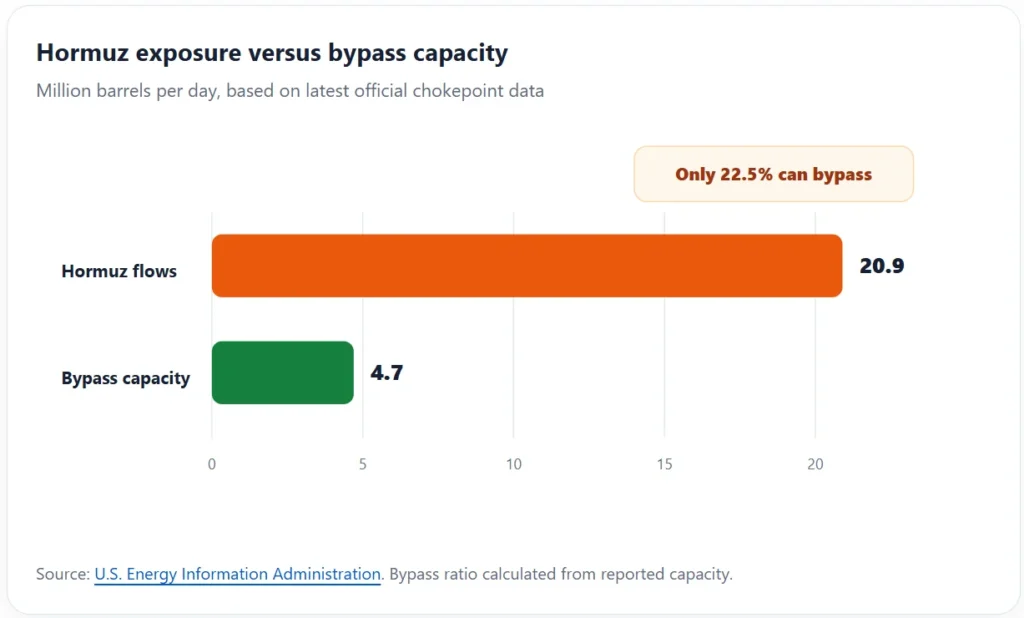
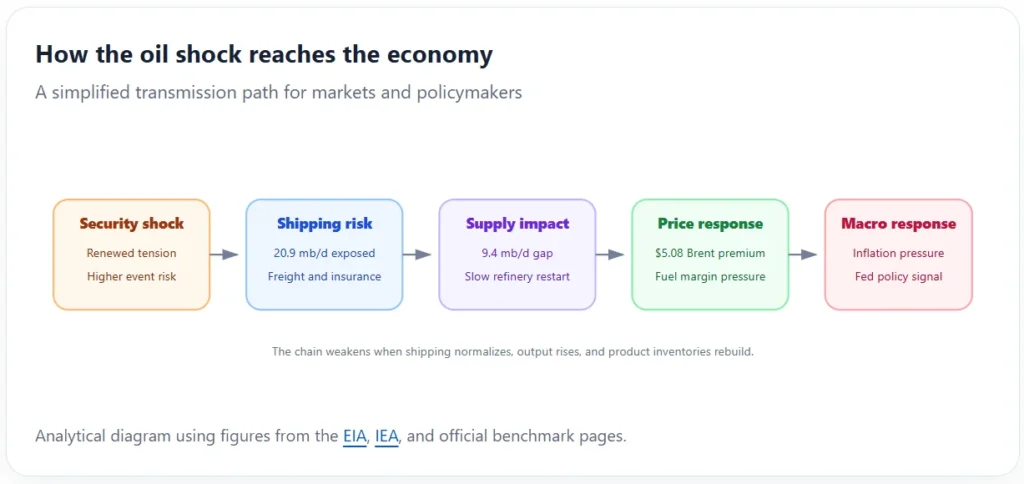
Hormuz carries 20.9 million barrels daily, while key bypass pipelines offer only 4.7 million.
Oil’s next move depends on tanker traffic, Gulf production, inventories, and the Federal Reserve.
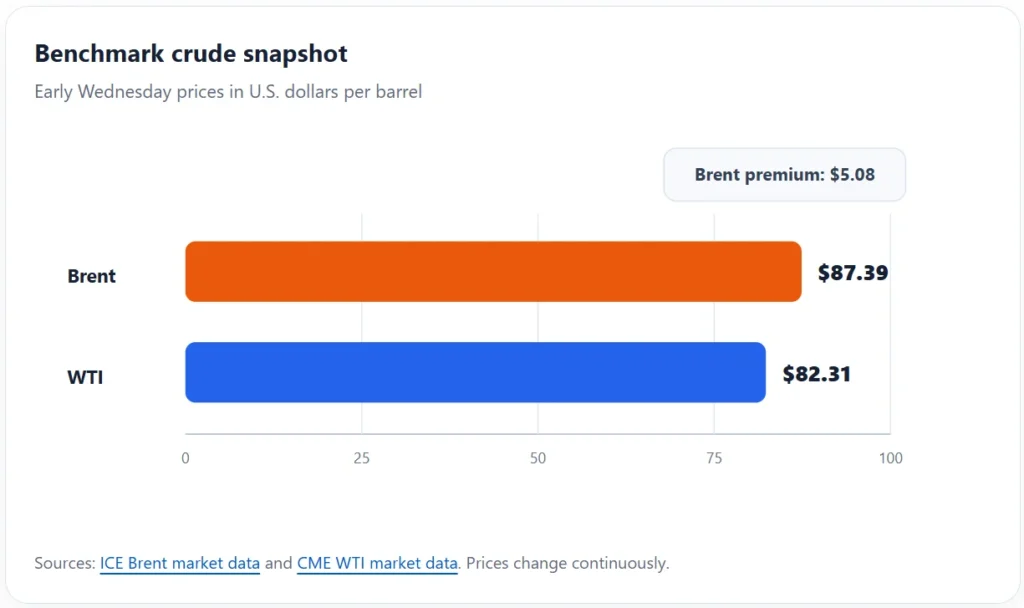
The Hormuz oil price surge returned abruptly as renewed regional tension pushed crude benchmarks higher. Brent traded near $87.39 per barrel, while WTI approached $82.31 during early Wednesday dealings. The rebound erased part of Tuesday’s steep decline and restored a geopolitical premium. However, the market still sits below last week’s highs. Traders now face two linked risks: disrupted shipping and tighter monetary policy.
Oil prices regain a war premium
The rally followed a sharp three-day retreat driven by hopes for calmer U.S.-Iran relations. That reversal shows how quickly headlines can reset oil’s risk premium. Brent’s roughly $5.08 premium over WTI also matters. It suggests seaborne crude faces greater disruption risk than inland American barrels.
The price move remains smaller than earlier wartime spikes. Therefore, traders are not pricing a full closure of Hormuz. Instead, markets reflect a higher probability of delays, seizures, attacks, and costly insurance. Each threat can slow loadings without formally closing the waterway.
For refiners, timing matters as much as volume. Delayed cargoes force buyers toward alternative grades and longer routes. That raises freight costs and can weaken refining margins. Consumers may then face higher diesel, gasoline, and aviation fuel prices. Volatility also raises hedging costs across airlines, shipping firms, refiners, and importers.
Why the Hormuz oil price surge matters
The Strait of Hormuz carried 20.9 million barrels daily during 2025’s first half. That volume equalled about 20% of global petroleum consumption. It also represented one-quarter of maritime oil trade.
Available bypass pipelines in Saudi Arabia and the United Arab Emirates provide around 4.7 million barrels daily. Therefore, they cannot replace normal Hormuz flows. A sustained Hormuz oil price surge would test these limited alternatives.
Asia carries the greatest direct exposure. China, India, Japan, and South Korea received 74% of Hormuz crude flows. Furthermore, Asian refiners often rely on specific Gulf grades. Replacing those barrels can increase freight distances and crude quality mismatches.
Supply recovery is still incomplete
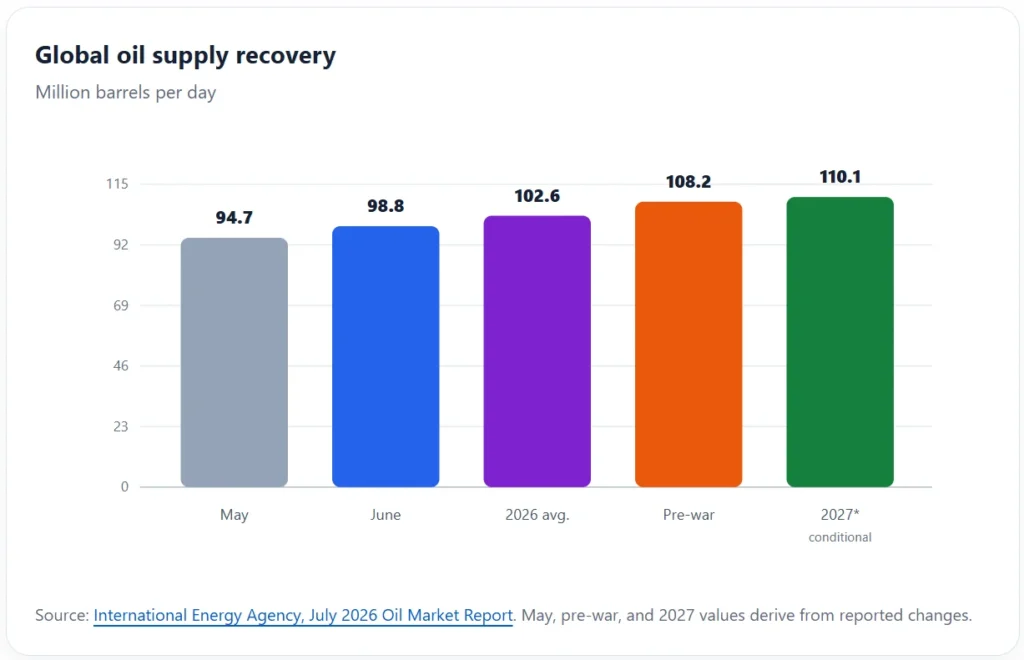
Global oil supply reached 98.8 million barrels daily in June. Output increased by 4.1 million barrels from May. Yet supply remained 9.4 million barrels below pre-war levels.
This recovery creates a fragile balance. More Gulf exports can pressure crude prices lower. However, renewed attacks can interrupt that recovery before fields and terminals normalize. The market therefore reacts strongly to each security update.
Product markets add another complication. Refinery runs remained six million barrels below last year during June. Meanwhile, product margins reached four-year highs in early July. Crude availability has improved faster than gasoline and diesel supply.
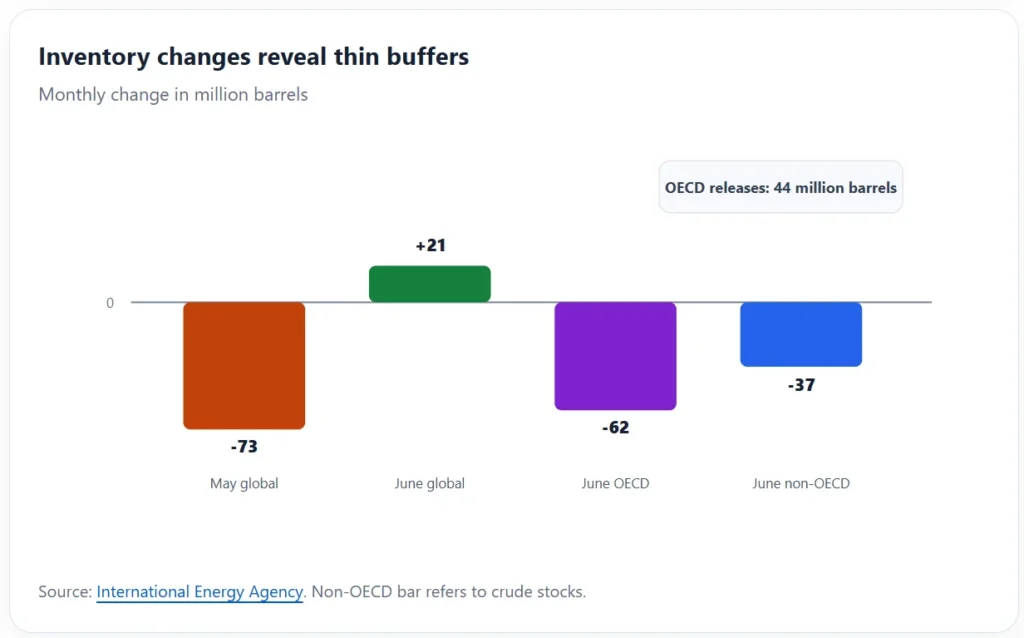
Inventory data also show uneven cushioning. Global observed stocks rose by 21 million barrels in June. Still, OECD inventories fell by 62 million barrels. Government releases supplied 44 million barrels of that decline. Therefore, commercial buffers remain thinner than headline totals suggest.
The Fed adds a second volatility channel
The Federal Reserve concludes its July meeting on Wednesday. Oil traders will study the rate decision and policy language. Higher crude prices can lift headline inflation and inflation expectations. Consequently, policymakers may retain a restrictive stance for longer.
A stronger dollar could partly offset oil’s geopolitical rally. Crude trades globally in dollars, so dollar gains raise costs for other buyers. Conversely, a softer policy signal could weaken the dollar and support commodity prices.
For households and businesses, this is not only a trading story. Higher fuel costs can squeeze transport budgets and operating margins. Airlines, logistics firms, manufacturers, and import-dependent economies face the fastest transmission. That uncertainty can delay purchasing decisions and widen consumer price pressures.
What traders should watch next
First, tanker movements through Hormuz will reveal whether risk becomes physical disruption. Second, Gulf production data will show whether exporters can sustain June’s recovery. Third, refined product margins will indicate whether fuel shortages are easing.
The key threshold is persistence. A one-day rally reflects fear and short covering. Several sessions above recent resistance would suggest tighter physical conditions. Until then, oil remains a headline-driven market with unusually wide outcomes.




