

May 07, 2026 – Millennium, Citadel, and Schonfeld all posted meaningful April gains. Global hedge fund assets hit a record $5.22 trillion. Here is what the numbers reveal.
In Summary
Millennium Management gained 2.7% in April, lifting its 2026 YTD return to 3.6%.
Citadel’s Wellington fund rose 1.4% in April; its Tactical Trading fund surged 2.8%.
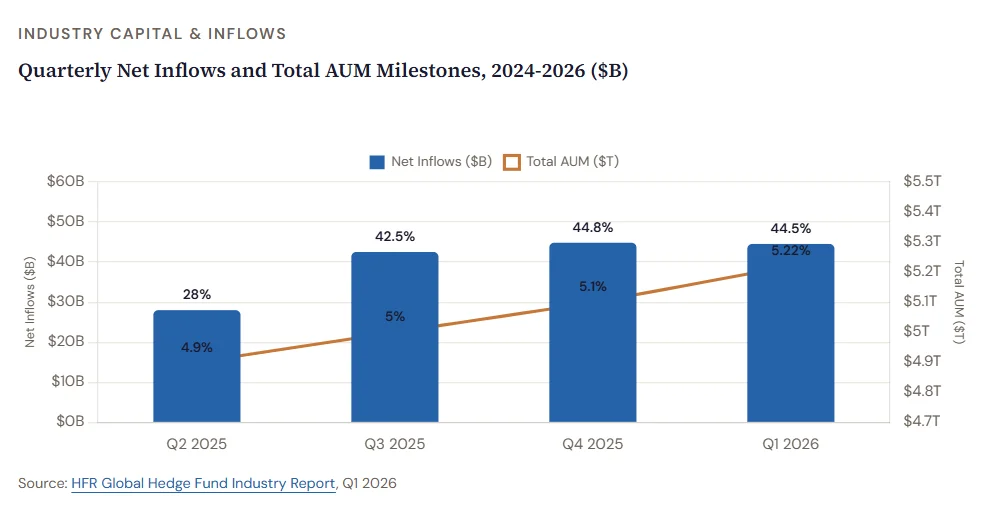
Global hedge fund AUM hit a record $5.22 trillion in Q1 2026, per HFR data.
The industry attracted $44.5 billion in Q1 net inflows, its best since 2007.
Macro strategies led Q1, with the HFRI Macro Index up 4.9% for the quarter.
The world’s largest multi-strategy hedge funds staged a clear recovery in April 2026. After a turbulent first quarter, equity markets stabilised, providing a favourable backdrop. Firms including Millennium, Citadel, Schonfeld, and Balyasny all posted gains.
This recovery is more than a monthly blip. It underscores the structural resilience of the “pod shop” model. These platforms spread capital across hundreds of independent trading teams. When one strategy stumbles, others absorb the shock.
April Numbers: Who Gained the Most?
Millennium Management led the pack with a 2.7% gain in April. That pushed its 2026 year-to-date return to 3.6%. Izzy Englander’s firm manages over $83 billion in assets.
Ken Griffin’s Citadel also performed well. Its flagship Wellington fund gained 1.4% in April, bringing its 2026 YTD to roughly 2.4%. Notably, its Tactical Trading fund did even better, rising 2.8% during the same month.
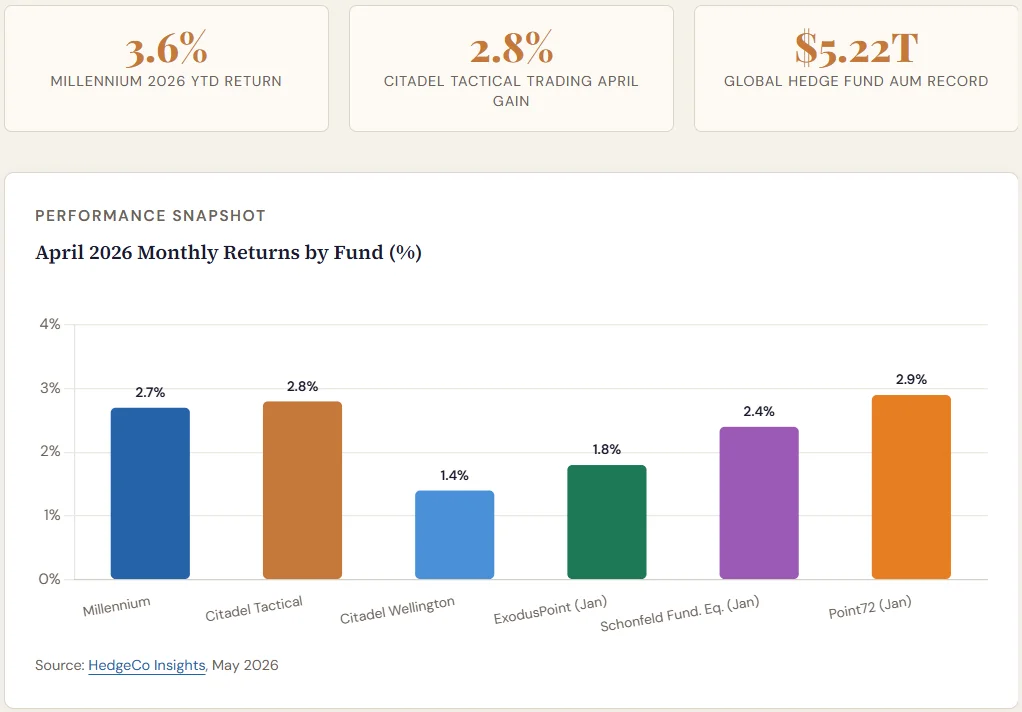
Schonfeld Strategic Advisors also produced positive results in early 2026. Its Fundamental Equity fund gained 2.4% in January, outpacing Schonfeld’s broader flagship offering. This pattern of specialist funds beating the flagship has been a recurring theme in 2025-2026.
Point72 posted a strong 2.9% gain in January. ExodusPoint returned 1.8% in the same month. Both firms benefit from the same pod-based architecture that has defined the multi-strategy era.
2026 YTD Comparison: The Big Picture
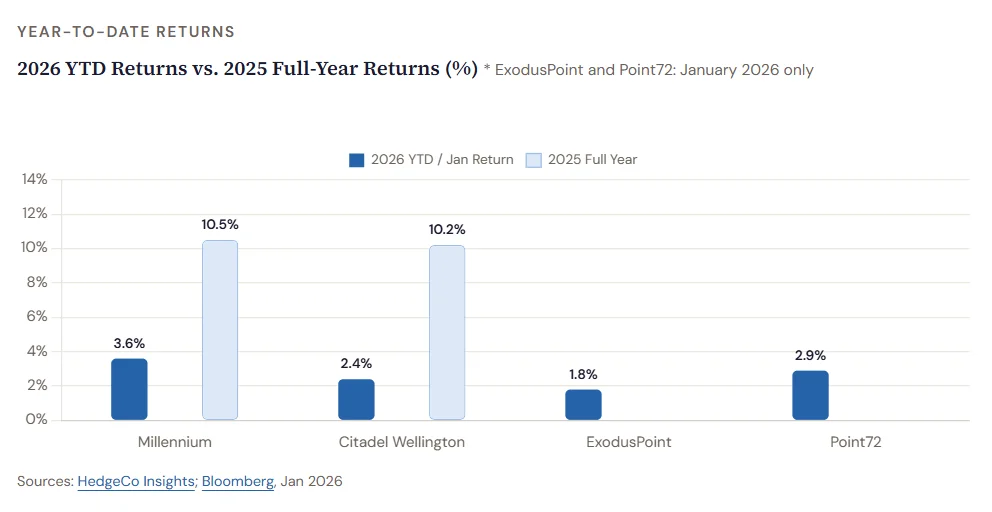
For context, 2025 was a strong year for these platforms. Millennium rose 10.5% in 2025, narrowly beating Citadel’s Wellington fund, which gained 10.2%. It was the first time Millennium outperformed Citadel’s flagship since 2020.
“The multi-strat giants have bounced back. Now the test is whether they can sustain 2026 momentum.”
– HedgeCo Insights, May 2026
The Industry Picture: A Record $5.22 Trillion
The broader hedge fund industry is in excellent health. HFR reported that total industry assets reached $5.22 trillion in Q1 2026. This marked the fourteenth consecutive quarter of growth.
Investors poured $44.5 billion into hedge funds during Q1 2026 alone. Combined with Q4 2025’s $44.8 billion, the two-quarter total reached $89.3 billion. That is the strongest two-quarter inflow period since 2007.
Macro Strategies: The Standout Winner
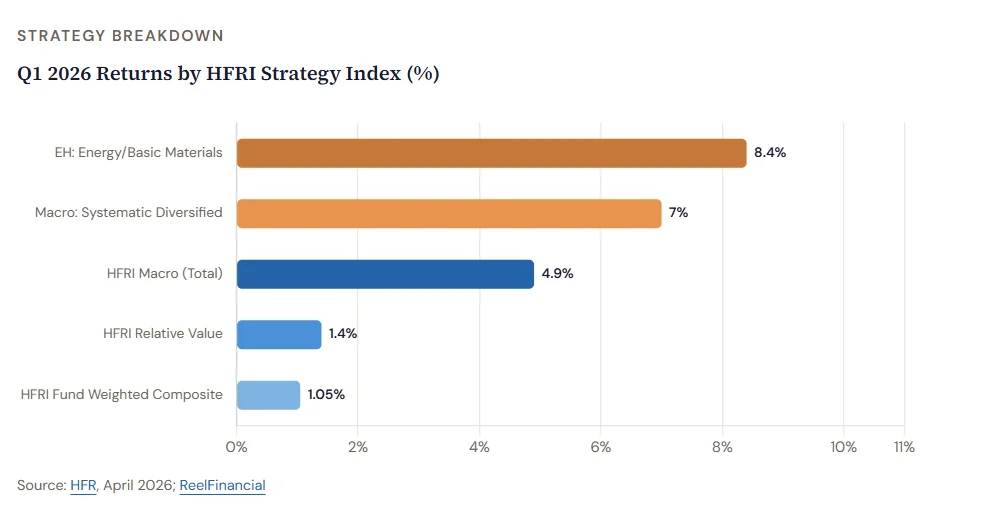
Not all strategies performed equally in Q1 2026. Macro funds stood out clearly. The HFRI Macro (Total) Index surged 4.9% for the quarter. By contrast, the HFRI Fund Weighted Composite added a more modest 1.05%.
Within macro, energy and commodities drove the biggest gains. The HFRI EH: Energy/Basic Materials Index jumped 8.4% in Q1. Systematic trend-following (CTA) strategies also excelled, rising 7.0%.
Geopolitics fueled these moves. The Iran military conflict pushed oil prices up by over 40% in March alone. Macro funds positioned for volatility captured much of that upside.
Q1 2026 HFRI Strategy Performance
Why Multi-Strategy Funds Dominate
The pod shop model is central to recent performance. Capital flows across dozens of independent teams within a single firm. Each team operates within tight risk limits set by the platform.
When one strategy underperforms, another can offset the loss. When opportunities arise, the platform quickly redeploys capital. This dynamic explains the simultaneous April recovery across multiple firms.
Institutional investors value this resilience. Traditional 60/40 portfolios remain exposed to inflation and equity concentration risk. Hedge funds offer genuine diversification. This is why inflows remain at multi-decade highs.
What Comes Next?
The April rebound is encouraging. However, sustaining it through 2026 is the real test. Markets remain volatile. Geopolitical risks are not resolved. Macro strategies may face tougher conditions if oil prices stabilise.
Meanwhile, competition is intensifying. Newer managers are attracting capital, too. High Ground Investment Management raised $550 million in Q1 2026 after strong recent performance. Allocators are becoming more selective about which platforms they back.
The numbers suggest the industry’s structural shift is real. Record AUM, record inflows, and resilient returns in a volatile quarter all point the same way. For now, the multi-strategy giants remain in charge.