

May 20, 2026 – BofA’s May 2026 survey reveals a historic shift into stocks. Fund managers drove equity allocations to a net 50% overweight in one month. However, a contrarian sell signal is now flashing.
In Summary
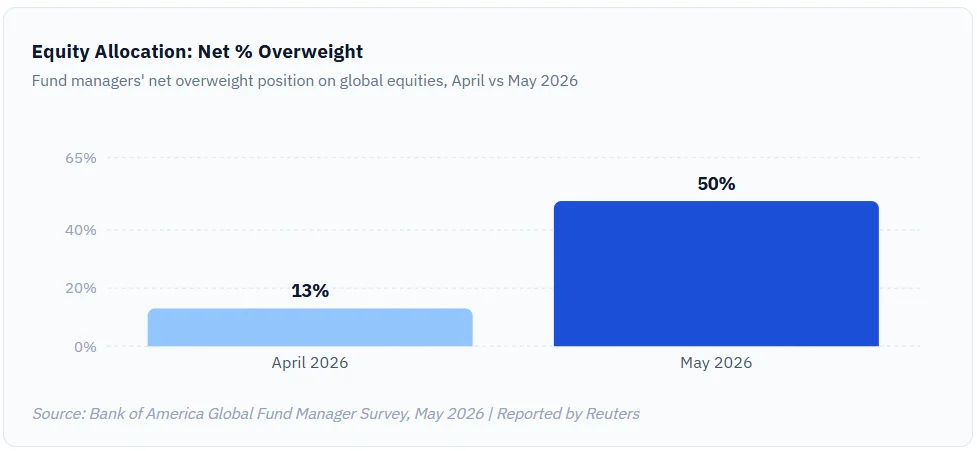
Equity allocations surged to a net 50% overweight in May 2026, up sharply from 13% in April.
This 37-point swing is the single largest monthly jump in BofA survey history.
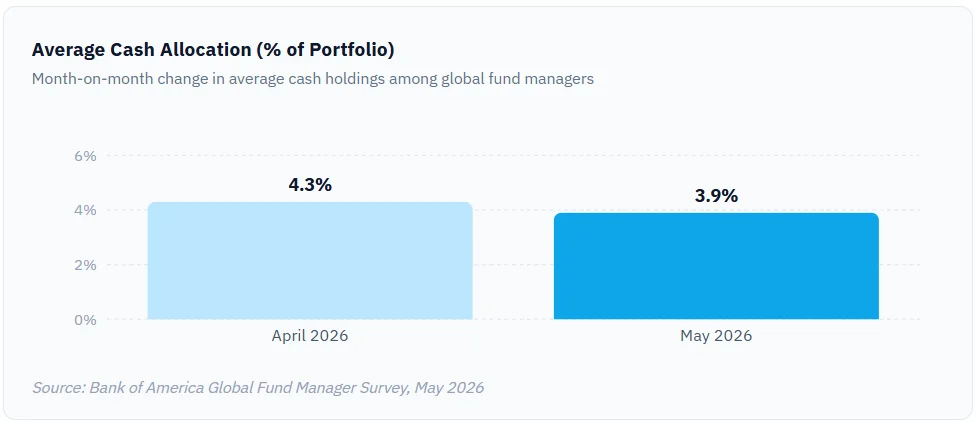
Cash levels fell from 4.3% to 3.9%, confirming full capital deployment into risk assets.
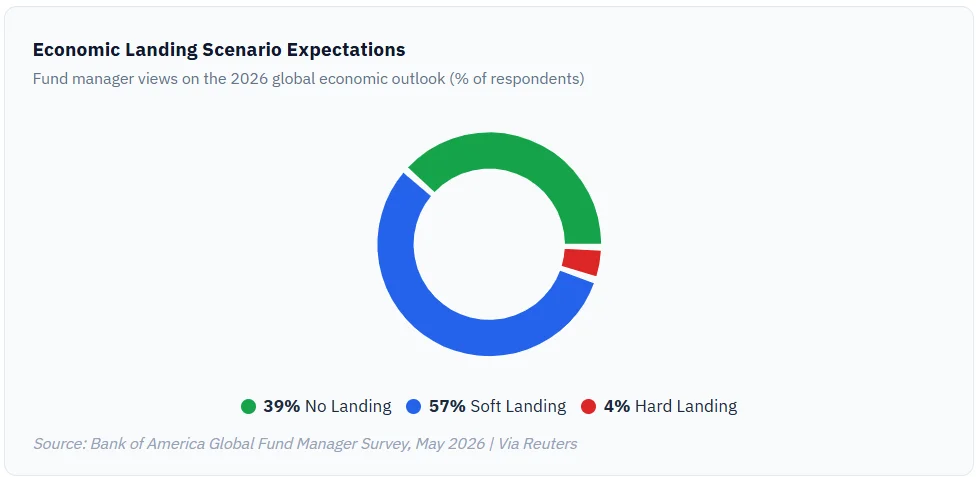
Only 4% of fund managers expect a hard economic landing in 2026.
BofA’s Bull and Bear Indicator is approaching its contrarian sell threshold.
40% of managers cite a second inflation wave as their primary tail risk.
Global fund managers made a historic bet on stocks in May 2026. According to the Bank of America Global Fund Manager Survey, reported by Reuters, equity allocations surged to a net 50% overweight. This is the biggest single-month jump on record. Furthermore, it signals a dramatic shift in investor confidence.
In April, the net overweight stood at just 13%. Therefore, the 37-percentage-point swing in one month is extraordinary. Moreover, managers are now the most bullish on equities since January 2022.

Survey Background
BofA polled 200 fund managers for its May survey. Together, they oversee $517 billion in assets under management. The survey ran between May 8 and May 14, 2026. According to Bloomberg, this marks the most bullish equity positioning since January 2022. Additionally, average cash allocations dropped sharply from 4.3% to 3.9%.
Why Are Managers So Bullish?
Three key forces are driving this historic repositioning. First, a robust corporate earnings season exceeded expectations. Second, investors expect the Federal Reserve to cut interest rates later in 2026. Third, ongoing enthusiasm around artificial intelligence spending continues to support markets. Consequently, stock markets are trading near record highs.
This combination of earnings growth, hopes of rate cuts, and AI tailwinds creates a powerful bull narrative. Furthermore, geopolitical risks have not deterred managers from chasing equity returns. Stock markets are defying oil prices above $100 per barrel, which analysts consider a significant headwind.
BofA’s Sell Signal Flashes Warning
However, this extreme bullishness carries a clear warning. BofA strategists, led by Michael Hartnett, note a critical concern. Managers are now close to triggering the bank’s contrarian sell signal. The BofA Bull and Bear Indicator measures positioning extremes. When it peaks in bullish territory, market pullbacks historically follow.
The inflow data reinforces this concern. Last week, equity ETFs attracted a record $145 billion in inflows. Moreover, US stocks drew $77.9 billion in one week. This is the second-highest weekly inflow on record. According to Seeking Alpha, Hartnett believes early June is now “ripe for profit-taking.” Bond yields, he added, will determine how deep any pullback may be. Therefore, investors should stay vigilant as sentiment reaches historic extremes.
Analyst Alert: BofA’s Bull and Bear Indicator is approaching contrarian sell territory. Extreme bullish positioning has historically preceded short-term market corrections. Early June could see profit-taking pressure intensify.
Cash Levels Signal Full Deployment
Cash holdings fell sharply in May. Average allocations dropped from 4.3% to 3.9%. This decline confirms that investors are fully deploying capital into risk assets. Historically, cash levels below 4% coincide with market peaks. Consequently, the declining cash buffer leaves less firepower for further gains.
Hard Landing Fears Have All but Vanished
Recession fears have largely disappeared from managers’ outlooks. According to InvestingLive, only 4% of respondents expect a hard landing scenario. By contrast, 39% predict “no landing” at all. Furthermore, the majority anticipates a soft landing. This reflects deep confidence in economic resilience, despite several global risks.
Top Tail Risks: Inflation Leads the Pack
Despite optimism, managers recognise key risks on the horizon. A second wave of inflation tops the list of concerns. 40% of respondents cite this as their primary tail risk. Furthermore, oil prices above $100 per barrel put upward pressure on costs in the global economy. These factors could force the Fed to delay or reverse planned rate cuts.
Stalled US-Iran peace negotiations continue to weigh on global bond markets. Meanwhile, the Strait of Hormuz remains a geopolitical flashpoint. However, most managers remain broadly optimistic. 66% expect the Strait of Hormuz disruption to resolve within months. Therefore, they do not view geopolitical risk as a long-term barrier to the bull market.
30-Year Treasury Yield Outlook
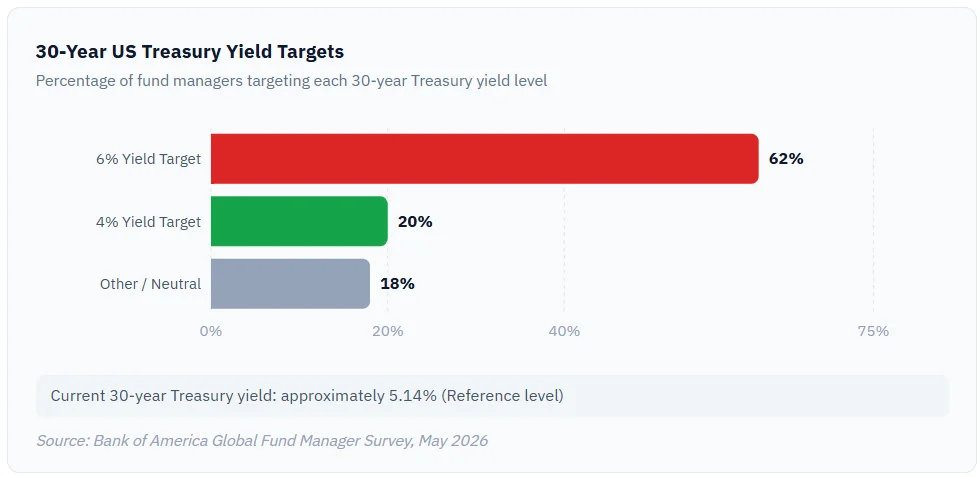
Bond markets face mounting pressure from rising yield expectations. According to BofA survey data published by Reuters, 62% of respondents target a 6% yield on 30-year US Treasuries. Currently, 30-year yields sit near 5.14%. Therefore, managers are pricing in significant further increases. By contrast, only 20% target a 4% yield, suggesting bearish bond sentiment dominates.
Bottom Line for Investors
The May 2026 BofA survey reveals peak bullishness in global equity markets. Fund managers completed their biggest-ever monthly shift into stocks. However, BofA’s contrarian signals are now flashing a clear caution.
Extreme positioning, falling cash reserves, and record inflows all suggest the easy gains may already be captured. Therefore, savvy investors should balance optimism with caution as June 2026 begins. Monitoring bond yields and inflation data will be critical. Furthermore, watching for any sudden shift in fund manager sentiment could reveal the next market turning point.