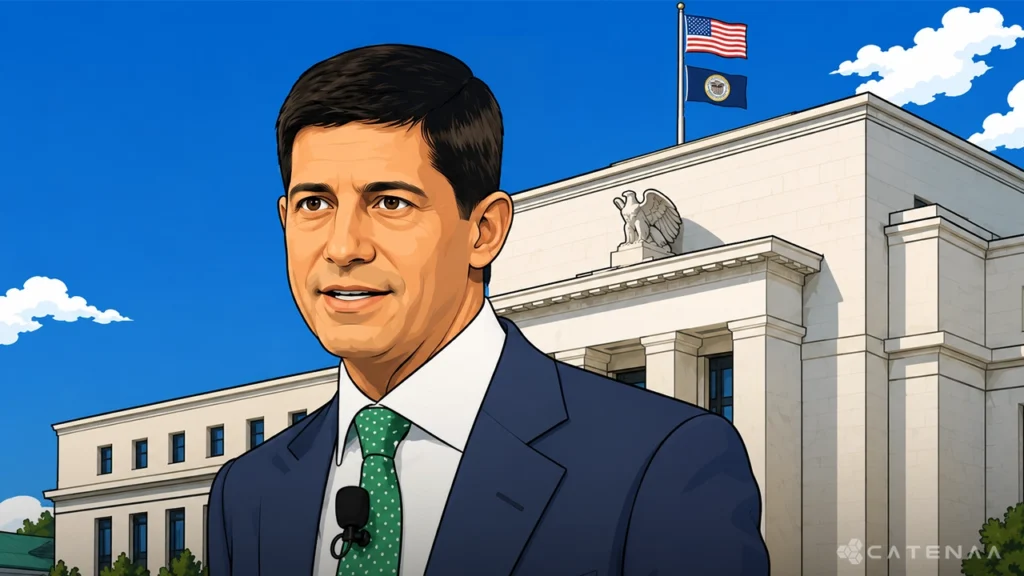


June 18, 2026 – The Federal Reserve kept interest rates on hold this Wednesday. The decision was announced at 2:00 p.m. ET on June 17, 2026. It marked the fourth straight pause. Moreover, it was the first meeting led by new Chair Kevin Warsh. Therefore, investors watched the tone as much as the numbers.
In Summary
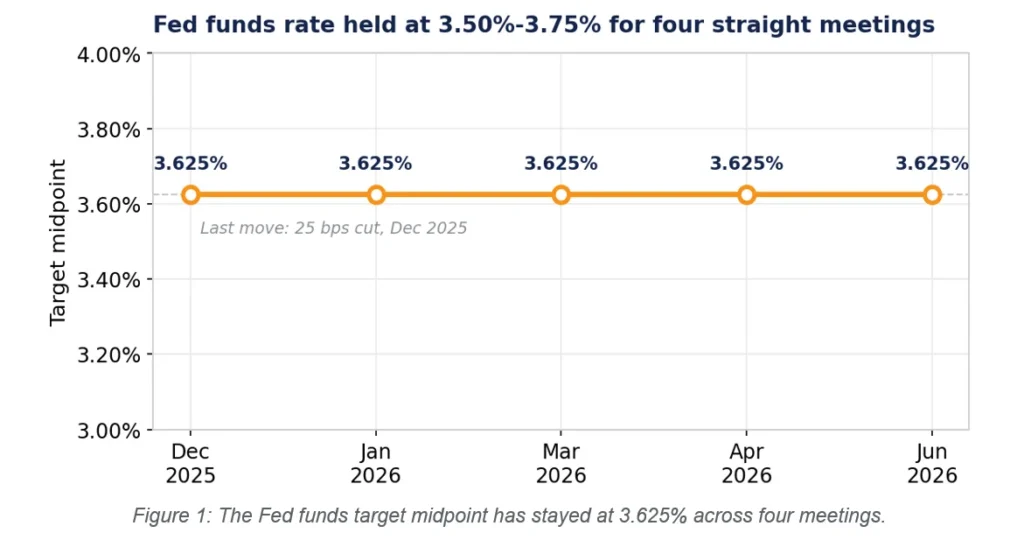
The Fed held its target range at 3.50% to 3.75% for a fourth meeting.
Kevin Warsh chaired his first session after a 54-45 Senate vote.
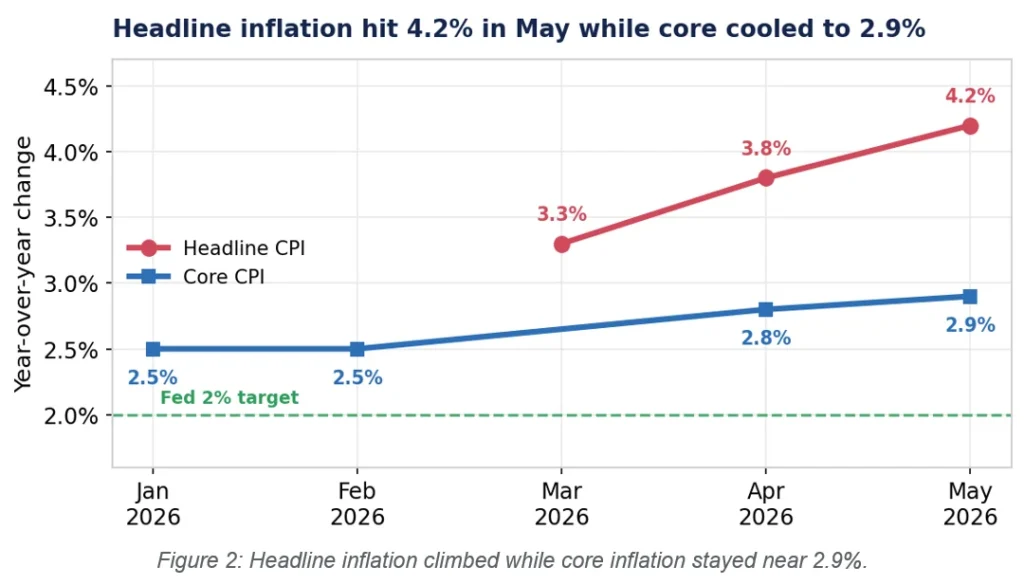
May headline inflation reached 4.2%, a three-year high.
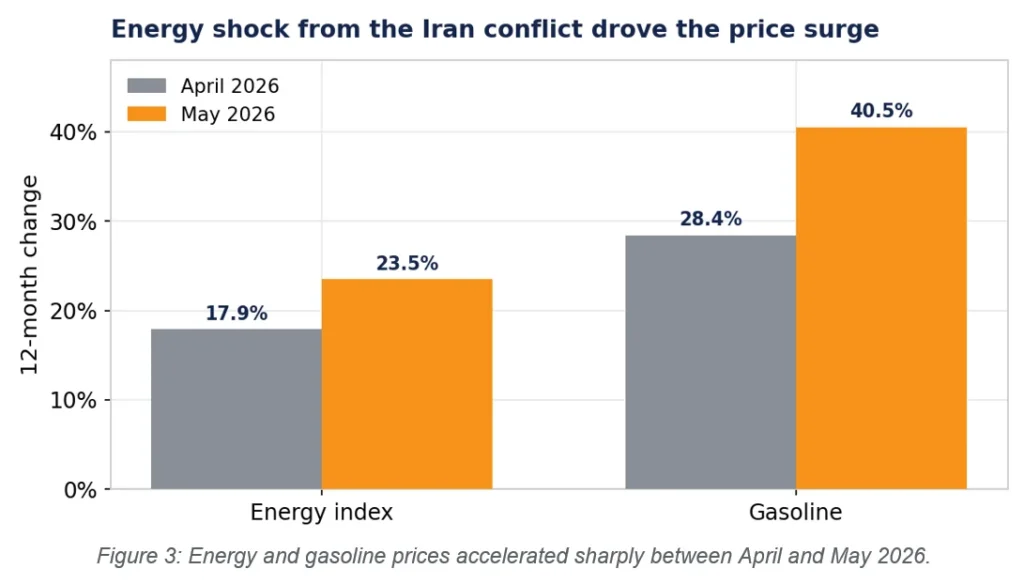
Energy prices surged because of the conflict with Iran.
The April vote split 8-4, the most divided result since 1992.
A widely expected pause
Markets priced this outcome with near certainty. Futures tracked by CME FedWatch showed about a 97% chance of no change before the meeting, as StockTitan reported. Consequently, the rate itself held few surprises. However, the path ahead drew intense focus.
The range has stood at 3.50% to 3.75% since December 2025. Furthermore, the Fed paused again in January, March, and April. As a result, this hold extends a steady stretch rather than starting one.
Inflation keeps running hot
Price pressure shaped the whole debate. The Bureau of Labor Statistics said May headline inflation rose to 4.2% year over year. That figure was the highest since April 2023. Additionally, it was the third straight monthly acceleration.
Yet the core picture looked calmer. Core inflation, which strips out food and energy, rose just 2.9%. Moreover, the monthly core gain eased to 0.2%, as CNBC noted. Therefore, the headline and the core told different stories.
Energy drives the surge
Energy did most of the damage. The energy index jumped 23.5% over twelve months in May. By comparison, the April reading was 17.9%. Gasoline rose even faster, climbing 40.5% over the year.
The conflict with Iran lies behind the spike. It began in late February and disrupted supply in the vicinity of the Strait of Hormuz. Consequently, oil and gas prices climbed sharply. The energy index alone accounted for over 60% of May’s monthly gain.
A resilient labor market
The job market gave the Fed little reason to cut. May payrolls added 172,000 jobs, well above the 80,000 forecast. In addition, revisions lifted prior months by a combined 93,000.
Unemployment held steady at 4.3% during the month. Wage growth, however, eased to 3.4% annually, per REX Shares. Therefore, the data handed both hawks and doves something to cite.
Warsh faces his first test
Kevin Warsh now steers the committee. The Senate confirmed him in a 54-45 vote, and he was sworn in on May 22. However, he inherits a hard moment. Inflation sits at a three-year high, and the committee remains split.
Warsh has long criticized the dot plot. He has even suggested the tool should become a relic, according to REX Shares. Therefore, analysts watched whether he would reshape the Fed’s guidance. Bank of America also flagged that at least three members may project hikes this year, per CBS News.
The starting point matters here. The March projection still showed a 2026 median near 3.4%. In other words, policymakers then penciled in one more cut this year.
Hot inflation has since challenged that view. As a result, many economists expected the single cut to vanish. Markets now lean toward fewer cuts, or even a possible hike.
The politics add further pressure. President Trump appointed Warsh and has urged lower rates. Yet Warsh has vowed the Fed will stay strictly independent.
A divided committee
The previous meeting revealed deep cracks. The April decision passed by an 8-4 vote. Notably, that result was the most contentious since 1992. One official wanted a cut, while three objected to dovish language.
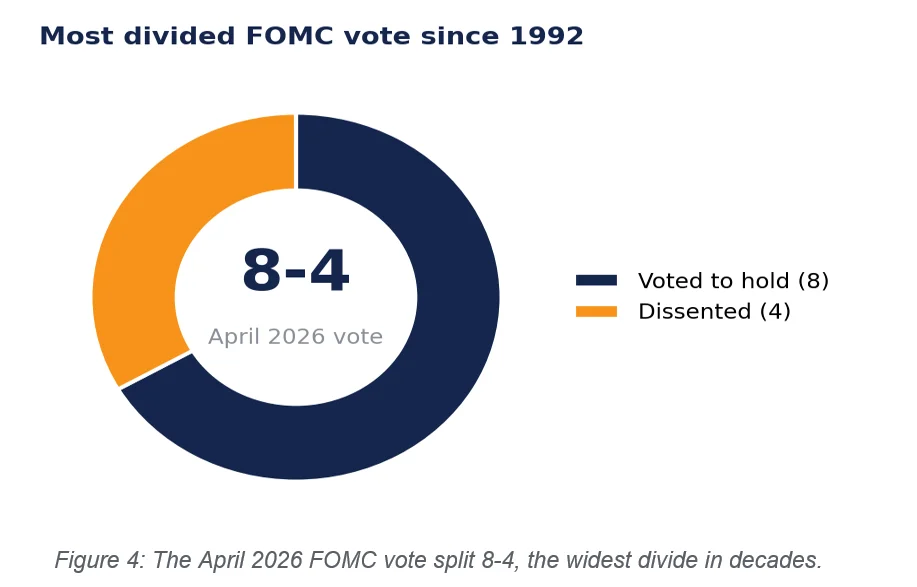
This split matters for the road ahead. Fewer dissents would suggest Warsh built consensus quickly. By contrast, more dissents would signal a widening rift. As a result, the vote tally became a key signal for traders.
What it means for markets
The fallout reaches well beyond bonds. Treasury yields, the dollar, and equities can all move in response to the Fed’s tone. In addition, rate-sensitive groups such as banks and homebuilders react fast. Crypto markets also track Fed liquidity closely.
High-duration growth stocks face the most risk. Their value rests on distant cash flows, so rate signals hit them hard. Therefore, any hawkish shift could quickly ripple through tech and AI shares.
For now, the message is patience. The Fed wants more data before it moves again. Meanwhile, energy prices remain the wild card. Investors will watch the next inflation print, due on July 14, closely.
The bond market already reflects this caution. A 30-year Treasury auction on June 11 cleared at 4.84%. In short, borrowing costs stay elevated across the curve.
Looking ahead, the 2027 outlook may guide expectations more than 2026. The March projections implied a year-end 2027 range near 3.00% to 3.25%. However, sticky inflation could yet delay that easing path.