

June 11, 2026 – Brussels will spread out a 30 billion euro permit sale, betting that patience protects prices while it funds Europe’s clean-energy shift.
In Summary
The EU will stagger sales of a €30 billion ($35 billion) carbon tool to protect permit prices.
The new “ETS Investment Booster” draws on 400 million existing Emissions Trading System allowances.
Spreading the auctions aims to prevent a sudden supply glut and a price slump.
Proceeds will finance decarbonization projects for industry and the clean-energy transition.
The plan arrives amid fears of rising energy costs and concerns about European competitiveness.
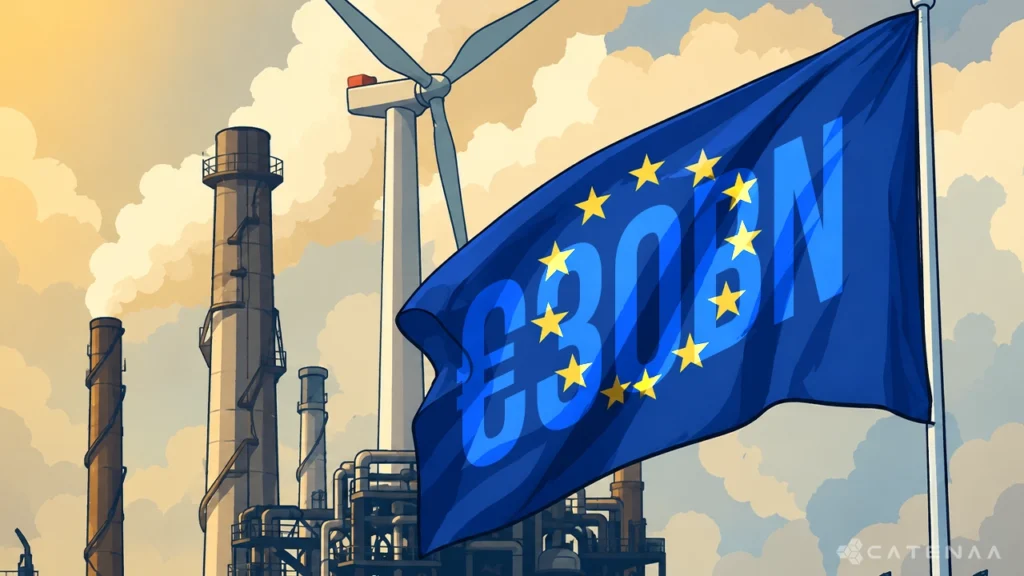
The European Union wants to fund its clean-energy shift without crashing its own carbon market. The bloc will stagger the sale of €30 billion ($35 billion) in carbon permits, according to Bloomberg. The goal is straightforward. Officials want to avoid flooding the market and depressing prices.
The Commission calls the new instrument the ETS Investment Booster. It draws on 400 million existing allowances from the Emissions Trading System. President Ursula von der Leyen pledged the tool back in March. Therefore, the current work focuses on timing rather than size.
Why timing matters for prices
Carbon permits trade on supply and demand. Too many permits at once push prices down. Lower prices then weaken the incentive to cut emissions. As a result, a rushed sale could undercut the EU’s own climate targets.
The Commission plans to spread sales across several auctions. Consequently, it hopes to prevent sudden price slumps during the process. People familiar with the plan say this staggered approach sits at the heart of the design.
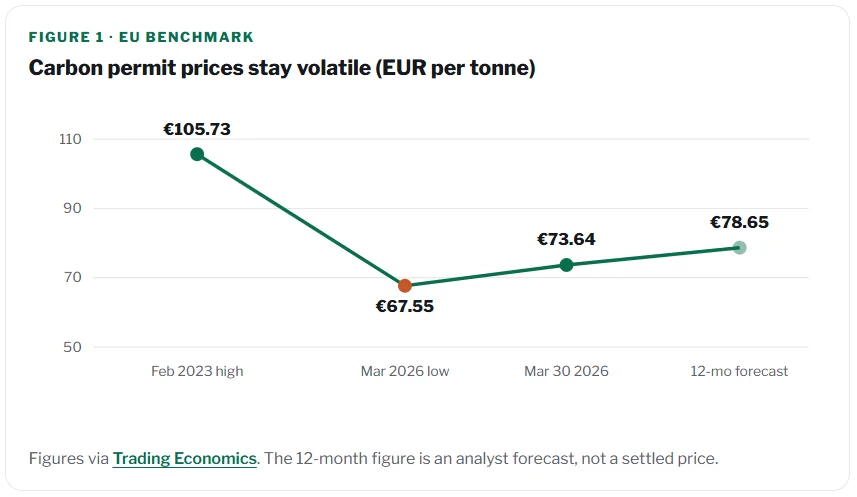
The stakes are visible in recent trading. EU carbon permits traded near €73.64 on March 30, 2026, per Trading Economics. Prices had touched a 45-week low of €67.55 earlier that month. Moreover, the benchmark hit an all-time high of €105.73 in February 2023. Such swings explain why a supply shock worries policymakers.
Deluge versus a steady drip
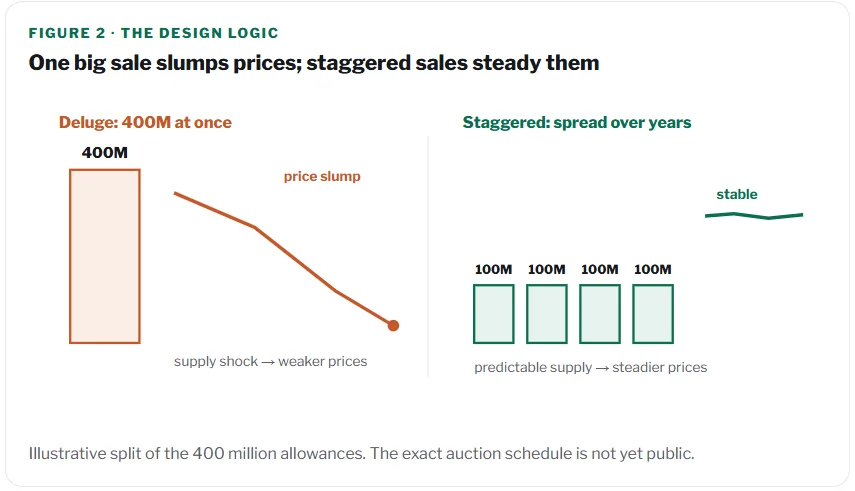
The core design choice is about pacing. A single large sale would dump permits onto the market. Buyers would then bid less, and prices would sag. By contrast, a phased release keeps supply predictable. The chart below shows the logic in simple terms.
What the money will fund
The Booster targets decarbonization projects. In practice, it helps industry finance the move to cleaner production. The EU faces real pressure on this front. Energy costs have climbed since the conflict in Iran escalated. Furthermore, leaders fear Europe is losing ground to China and the United States.
Carbon auctions already raise serious money. The Emissions Trading System had collected about €245 billion by mid-2025, the European Commission reports. That revenue supports climate investment and social programs across member states.
The link to ETS2 and households
A second market, known as ETS2, shapes much of this debate. It will price emissions from road transport and buildings. After a one-year delay, ETS2 now starts in 2028. The change followed concerns about household energy bills.
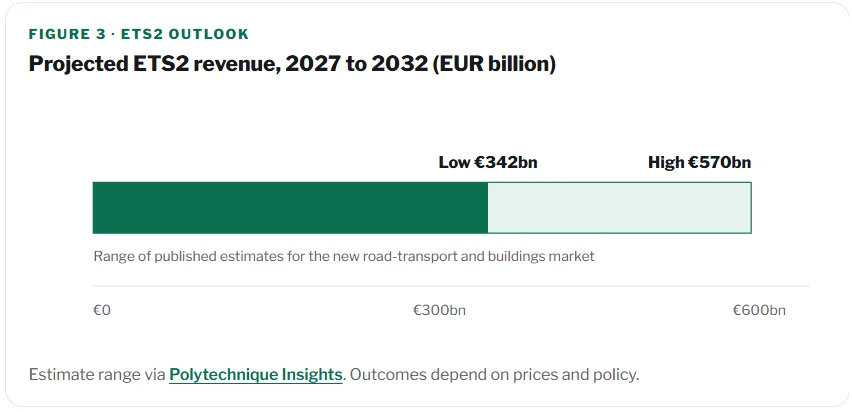
This new market could raise large sums. Estimates put revenue between €342 billion and €570 billion for 2027 to 2032. However, higher fuel and heating costs could hit poorer families hardest. For this reason, the EU built a financial cushion into the system.
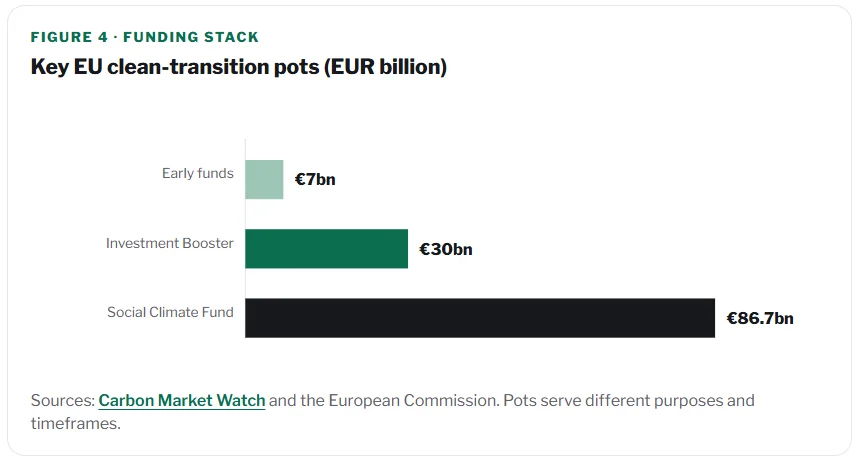
That cushion is the Social Climate Fund. It will mobilize at least €86.7 billion between 2026 and 2032, the Commission says. In addition, the European Investment Bank approved a €3 billion Frontloading Facility in February. Combined with earlier money, roughly €7 billion is available before 2028, per Carbon Market Watch.
A delicate political balance
The Booster shows the EU walking a tightrope. On one side, the bloc wants firm carbon prices to drive change. On the other, it must keep industry and voters on board. Negotiators opened fresh talks on related carbon rules on June 10.
Critics warn against weakening the market. Adding too many permits could raise allowable emissions. Carbon Market Watch argues that dilution does not fix pollution. Supporters counter that smart timing protects both prices and investment. Both sides agree that design details now carry real weight.
What to watch next
Several questions still remain open. First, the exact auction calendar is not yet public. Second, the balance between revenue and climate impact needs detail. Third, member states must transpose ETS2 rules quickly.
The design choice signals a clear lesson. Carbon markets often reward patience over haste. By spacing out sales, the EU tries to raise cash while holding prices steady. Whether that balance holds will shape Europe’s climate path for years.