

July 22, 2026 – The ECB July rate decision may deliver no change. However, stubborn energy costs and weak growth keep September firmly in play.
In Summary
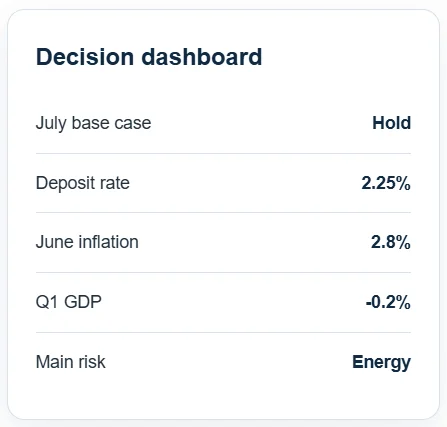
The deposit rate stands at 2.25% after June’s 25 basis point increase.
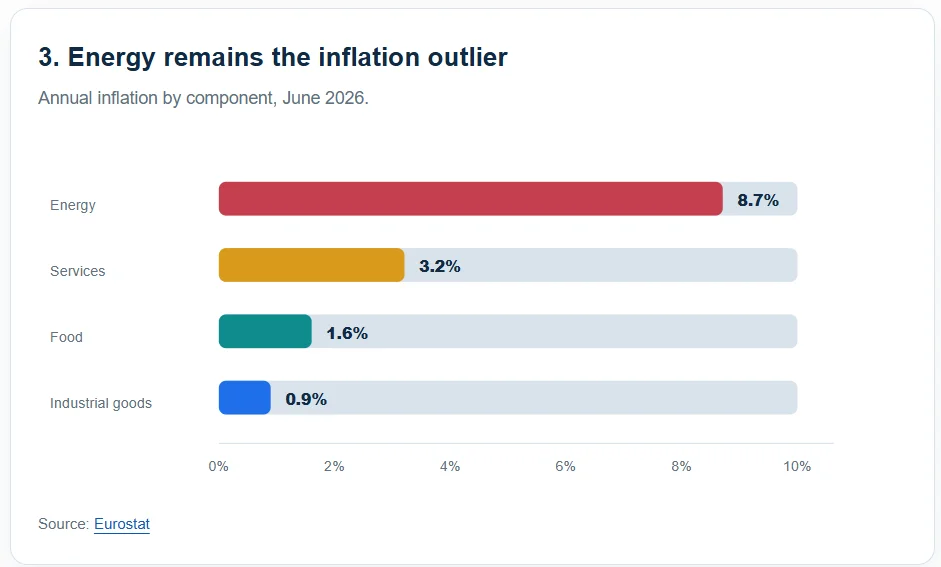
June inflation eased to 2.8%, but energy prices still rose 8.7% annually.
Euro area GDP contracted 0.2% during the first quarter of 2026.
Credit demand remains uneven, while bank lending conditions continue to tighten.
ECB July rate decision favours a pause
The European Central Bank enters its 23 July meeting with less pressure for immediate action. June inflation slowed, while economic activity remained fragile.
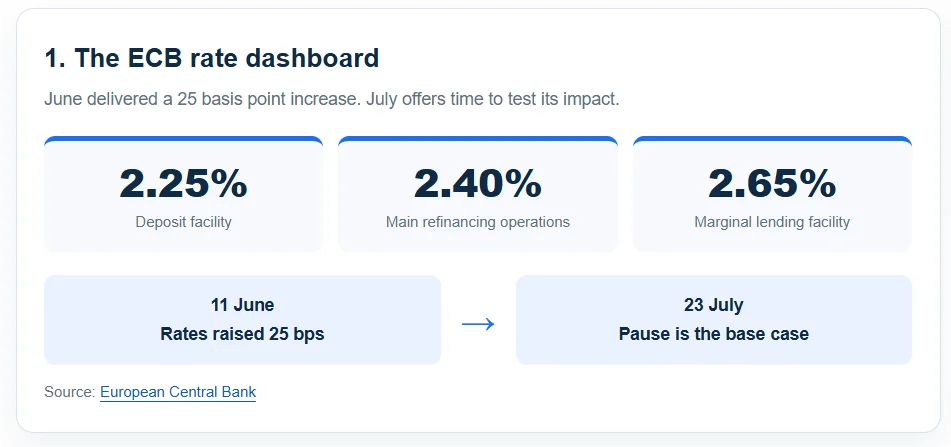
Therefore, policymakers can pause after raising all three key rates by 25 basis points in June. The deposit rate now stands at 2.25%. The main refinancing rate is 2.40%, while the marginal lending rate is 2.65%.
Yet this pause would not signal victory over inflation. Instead, it would give officials time to assess energy prices, credit conditions, and wage pressures.
That tension gives the press conference much greater market significance than the unchanged headline decision may initially suggest to investors.
Energy keeps the inflation threat alive
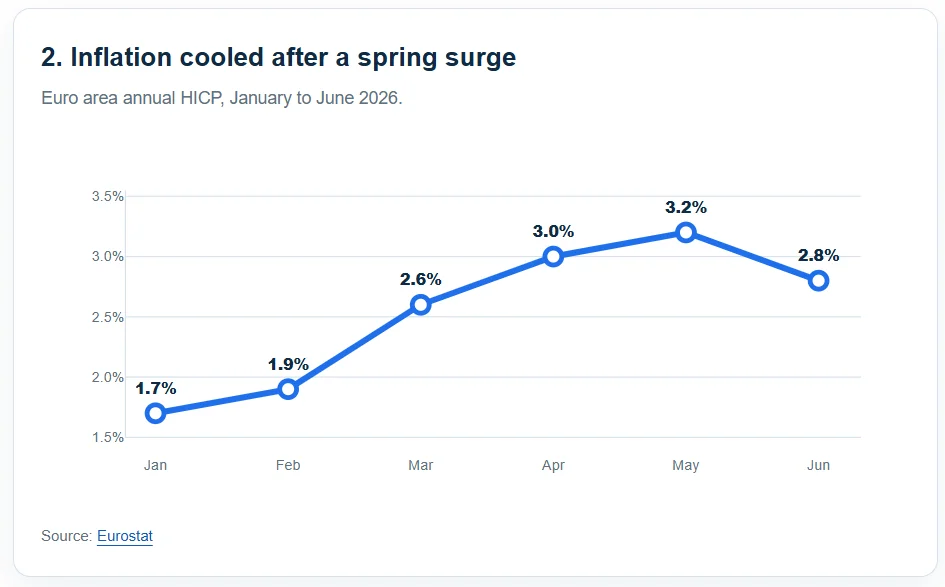
Headline inflation fell to 2.8% in June from 3.2% in May. That decline offers relief after a sharp spring acceleration.
However, the composition still looks uncomfortable. Energy inflation reached 8.7%, far above the ECB’s medium-term target. Services inflation also remained elevated at 3.2%.
Meanwhile, inflation excluding energy and food stood at 2.4%. This measure suggests domestic price pressure has not disappeared.
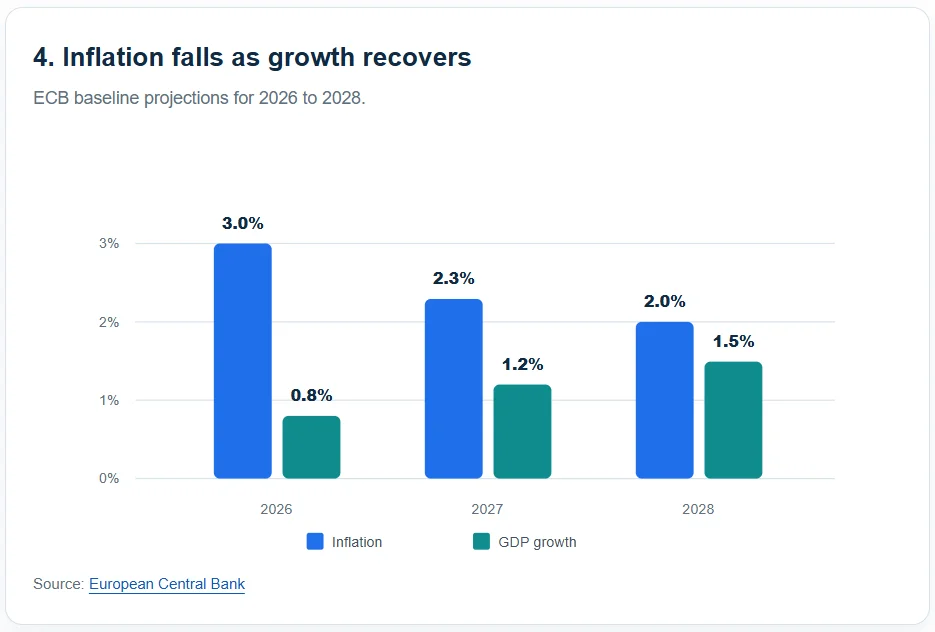
The ECB’s June projections reinforce that concern. Officials expect headline inflation to average 3.0% in 2026. They forecast 2.3% in 2027 and 2.0% in 2028.
Consequently, the July meeting should focus on persistence rather than one softer monthly figure. A renewed energy shock could quickly reverse June’s improvement.
Growth weakness limits the ECB
The inflation problem sits beside a weakening economy. Euro area GDP contracted 0.2% during the first quarter.
Net trade reduced quarterly growth by 0.3 percentage points. Investment and inventories also dragged activity lower.
Still, employment increased 0.1% during the quarter. That resilience gives households some protection, although hours worked fell 0.2%.
The ECB now expects growth of only 0.8% in 2026. Growth may improve to 1.2% in 2027 and 1.5% in 2028.
Therefore, another rate increase would carry clear costs. Higher borrowing rates could weaken investment, housing demand, and consumer spending.
The policy trade-off is unusually sharp
Normally, weaker growth would support lower rates. Yet supply-driven inflation changes that calculation because higher rates cannot produce more energy.
They can only suppress demand and prevent second-round price effects. That makes wages, services inflation, and inflation expectations especially important.
If those indicators remain contained, the ECB can tolerate temporary energy pressure. If they accelerate, policymakers may tighten despite slower growth.
This asymmetry explains why July can bring a pause without creating a dovish turning point.
Credit markets show growing strain
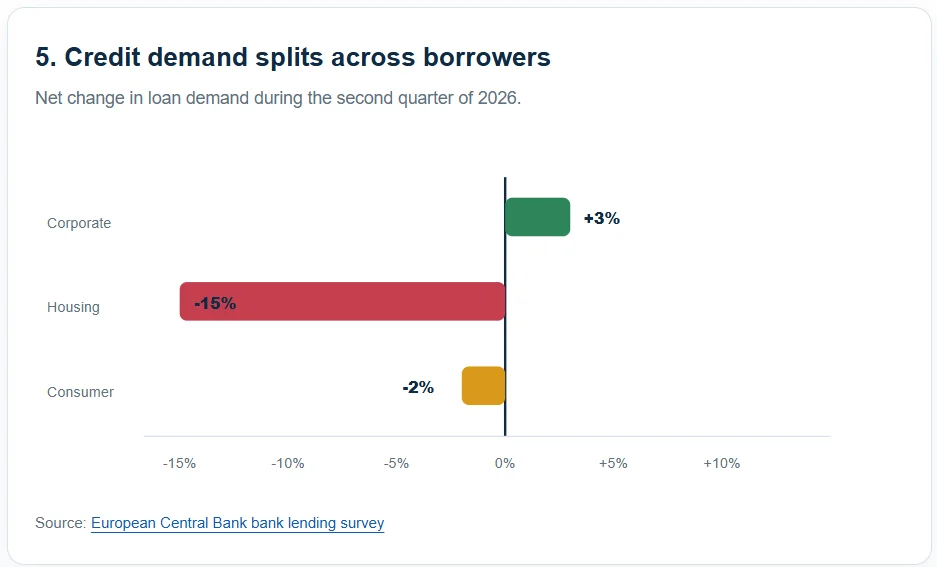
Recent bank surveys reveal a mixed credit picture. Demand for corporate loans increased slightly, with a net reading of 3%.
Working capital, inventories, and refinancing supported business demand. However, housing loan demand fell sharply, producing a net reading of minus 15%.
Consumer credit demand also weakened by 2%. Banks tightened contract terms across all loan categories, mainly because interest rates increased.
Furthermore, banks reported more rejected applications. They also expect funding access to deteriorate across several wholesale and retail channels.
This matters because monetary policy works through credit. A restrictive banking channel can slow demand without another official rate increase.
What markets should watch next
The July decision will probably leave rates unchanged. Yet the communication could move bonds, bank shares, and the euro.
Investors should watch three signals. First, officials may describe June’s move as insurance rather than a new tightening cycle.
Second, they may emphasize energy risks and avoid ruling out September action. Third, they may highlight weaker credit transmission and growth.
A balanced message would preserve flexibility. It would also reduce the risk of markets treating a pause as a permanent policy pivot.
For borrowers, the practical message remains cautious. Financing costs may stay high even without another July increase.
For investors, the ECB July rate decision is less about today’s rate. It is about the threshold for the next move.




