

April 25, 2026 – Brazil’s largest bank is moving closer to Bitcoin mining. The real story is not only crypto. It is energy waste, mobile data centres, and a new revenue model for renewable power producers.
Itaú Unibanco, Brazil’s largest bank by assets, has entered the Bitcoin mining infrastructure space through Itaú Ventures. The bank’s venture arm has invested in Minter, a company building mobile data centres for Bitcoin mining across Brazil. The investment could reach up to $10 million, according to Bitcoin.com.
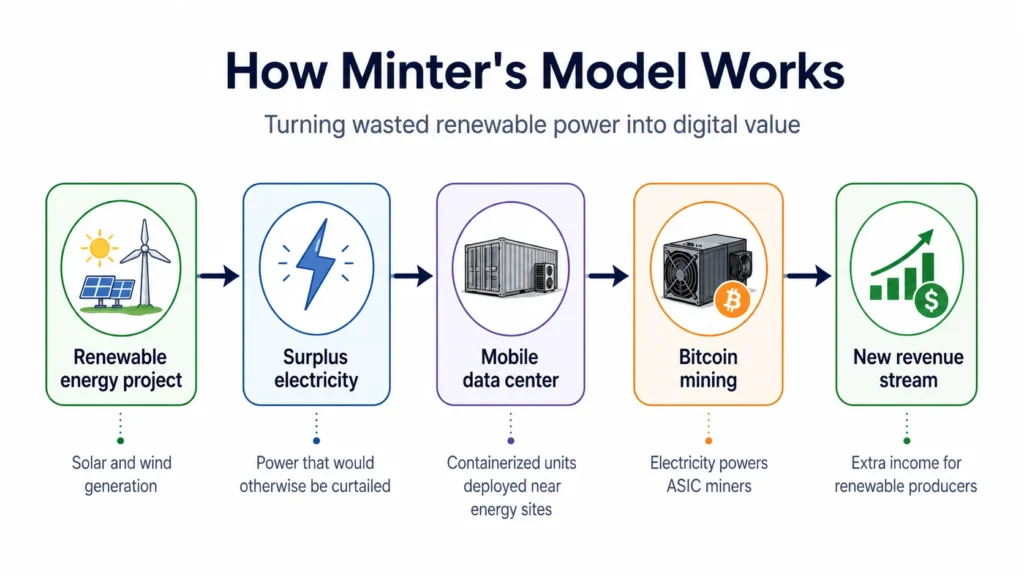
Minter’s model is simple but powerful. It places container-based data centres near renewable energy projects. These units can consume surplus electricity that would otherwise be curtailed. That makes Bitcoin mining a flexible buyer of stranded power.
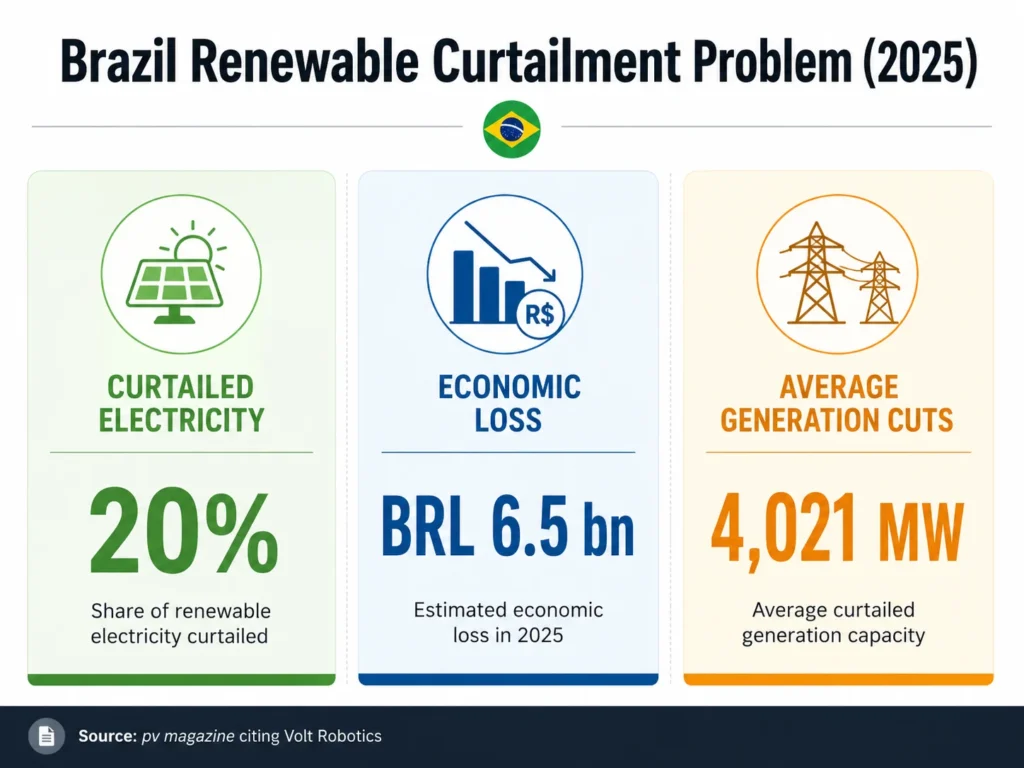
The timing is important. Brazil failed to use around 20% of its solar and wind electricity in 2025. That resulted in estimated losses of BRL 6.5 billion, or about $1.23 billion, according to data from Volt Robotics reported by PV Magazine.
Why This Deal Matters
This is not a simple crypto investment. It signals a deeper shift in banking, energy, and digital infrastructure.
Itaú is not a small financial player testing a speculative asset. S&P Global ranked Itaú Unibanco as Latin America’s largest bank by assets in 2025. The bank had $492.90 billion in assets at the end of 2024.
That makes the Minter deal symbolically important. A major regulated bank is backing infrastructure linked to Bitcoin mining. It also frames mining as an energy-management tool, not only a crypto activity.
Brazil’s renewable energy sector faces a structural challenge. Solar and wind generation are growing quickly. However, grid capacity and demand flexibility have not kept pace. PV magazine reported that average generation cuts reached 4,021 MW in 2025. That is equivalent to the monthly output of a large hydropower plant.
Minter wants to turn that lost electricity into digital value. Its mobile units can be deployed directly at generation sites. This reduces dependence on fixed data centre locations and grid availability.
Minter’s Expansion Plan
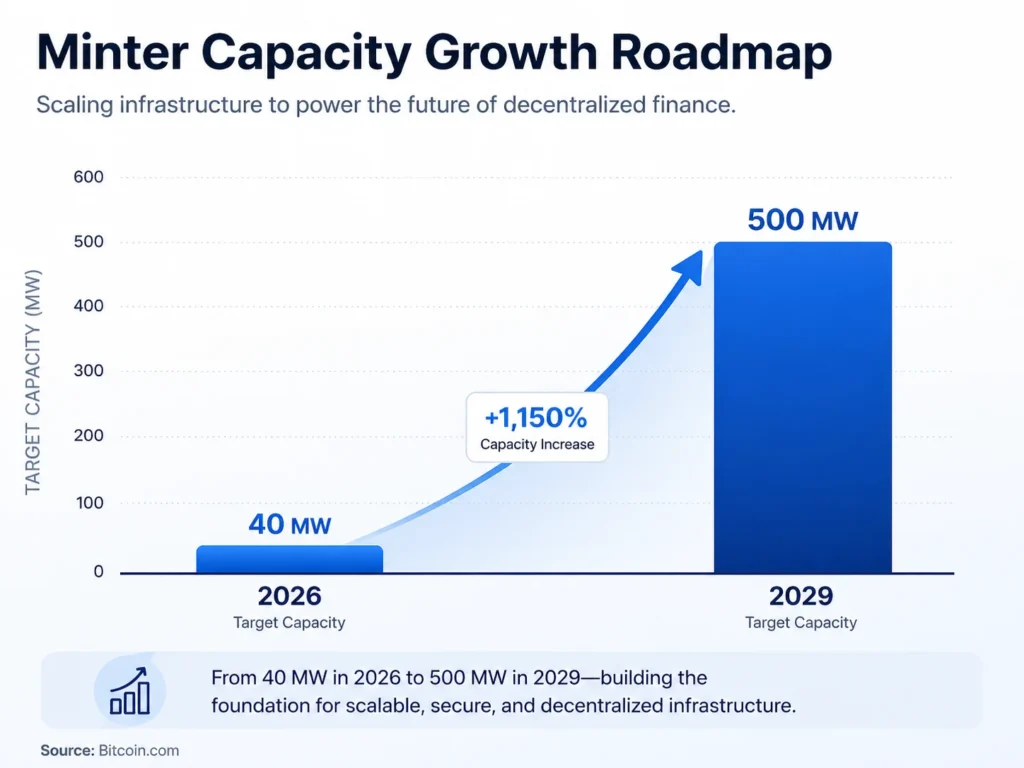
Minter currently serves one customer, according to Bitcoin.com. However, CEO Stefano Sergole expects the company to reach 40 MW of capacity this year. He also targets 500 MW by 2029 across Brazil and the United States.
That growth target is ambitious. Yet the commercial logic is clear. Renewable energy producers lose money when power is curtailed. Bitcoin miners need cheap and reliable energy. Mobile mining units can address both of these problems.
This model could also support energy-sector cash flows. Producers may monetise electricity that cannot reach the grid. Miners may lower costs by operating where electricity is underused.
The Bigger Bitcoin Mining Context
Bitcoin mining remains under pressure. CoinShares reported that the weighted average cash cost to produce one Bitcoin reached around $79,995 in Q4 2025. The report also said the hash price fell near breakeven for many miners.
That makes low-cost energy critical. Miners with access to stranded or curtailed power may gain a competitive edge. Minter’s mobile model directly targets that advantage.
However, the environmental debate remains complex. Cambridge Judge Business School reported that sustainable energy sources accounted for 52.4% of Bitcoin mining energy use. The same study estimated Bitcoin’s annual electricity consumption at 138 TWh, or around 0.5% of global electricity use.
Therefore, Brazil’s bitcoin mining may become more acceptable if it uses wasted renewable power. Still, transparency will be essential. Investors and regulators will want proof that mining consumes surplus energy, not power diverted from households or industry.
Market Analysis
Itaú’s investment may encourage other banks to examine Bitcoin-adjacent infrastructure. The opportunity is not limited to mining. It includes energy trading, data centres, flexible load management, and digital infrastructure finance.
For Brazil, the deal highlights a major policy issue. Renewable generation is expanding, but grid flexibility remains weak. Bitcoin mining will not solve all transmission problems. Yet it can act as a demand-response tool in selected locations.
For Minter, Itaú’s backing provides credibility. Energy producers may be more willing to work with a mining infrastructure company supported by a major bank.
For the Bitcoin sector, the message is also clear. Mining is becoming an infrastructure business. The winners may be companies that can combine energy efficiency, financial discipline, and grid flexibility.




