

June 11, 2026 – Last week’s relief rally is unwinding fast. Hot inflation and a hawkish Warsh Fed are draining demand from assets that pay no yield.
In Summary
Bitcoin slid to about $61,200, down roughly 7% on the week, while gold dropped below $4,200 an ounce.
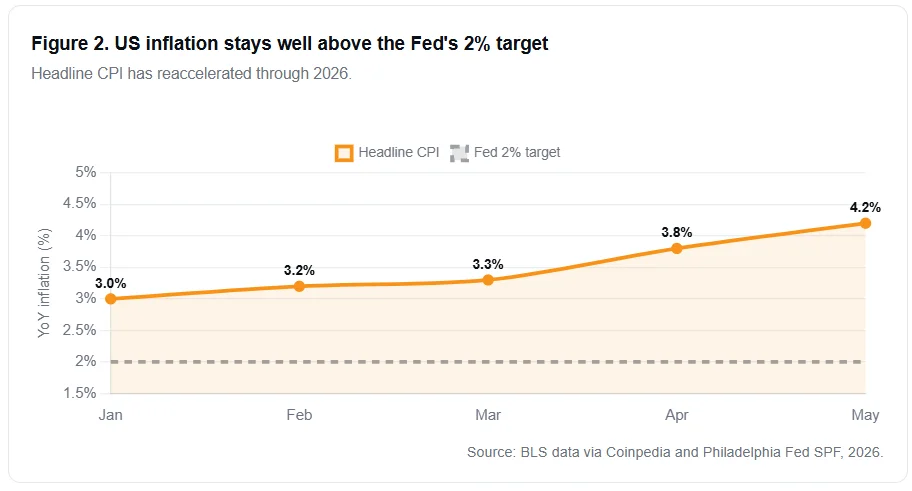
May US inflation came in at 4.2% year over year, the hottest reading since April 2023.
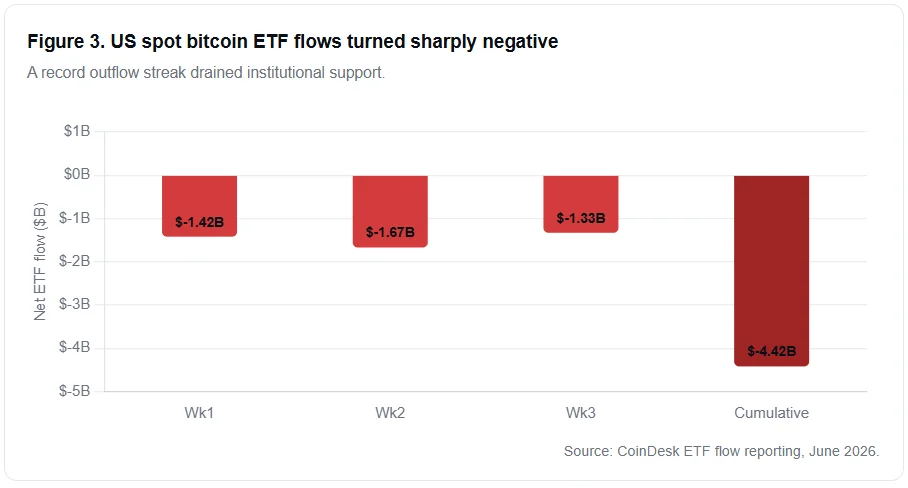
US spot bitcoin ETFs shed more than $4.4 billion across a record 13-day outflow streak.
A higher-for-longer Federal Reserve threatens bitcoin’s appeal as a macro hedge.
Bitcoin and gold rarely fall together. This week, however, they did exactly that. Both assets pay no yield, so both suffer when traders bet on higher interest rates. Consequently, a single macro fear has hit nearly every popular hedge at once.
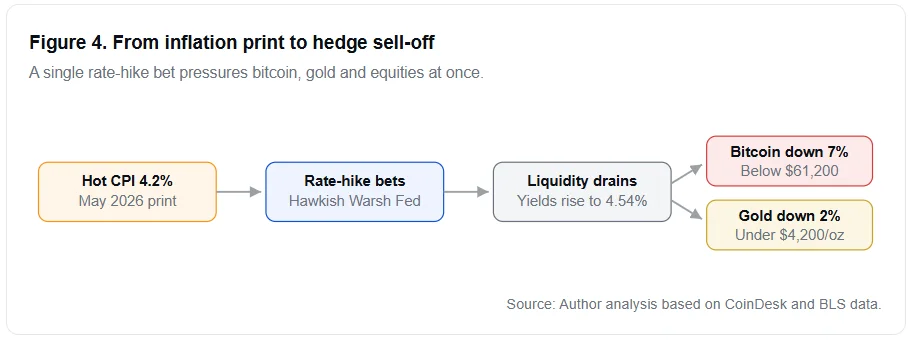
Bitcoin changed hands near $61,200 on Wednesday, down about 3% on the day. The token has now lost close to 7% over the week. Meanwhile, gold fell 2% and slipped under $4,200 an ounce. Therefore, the two classic safe havens moved in unusual lockstep.
The trigger was clear. The May US Consumer Price Index rose 4.2% year over year, its highest level since April 2023. As a result, markets pushed back hopes for rate cuts even further into the future.
A broad risk-off move
The selling spread well beyond bitcoin. Ether dropped 3.4% to about $1,625, and Solana fell 4.1%. Furthermore, XRP lost more than 4%, while higher-beta names fared worse still. Hyperliquid’s HYPE token tumbled around 10% on the day.
Equities felt the same pressure. South Korea’s Kospi, heavily tied to the artificial-intelligence chip trade, sank 6.3%. Additionally, Nasdaq-100 futures pointed lower after a volatile session on Wall Street. The 10-year Treasury yield, by contrast, climbed to 4.54%.
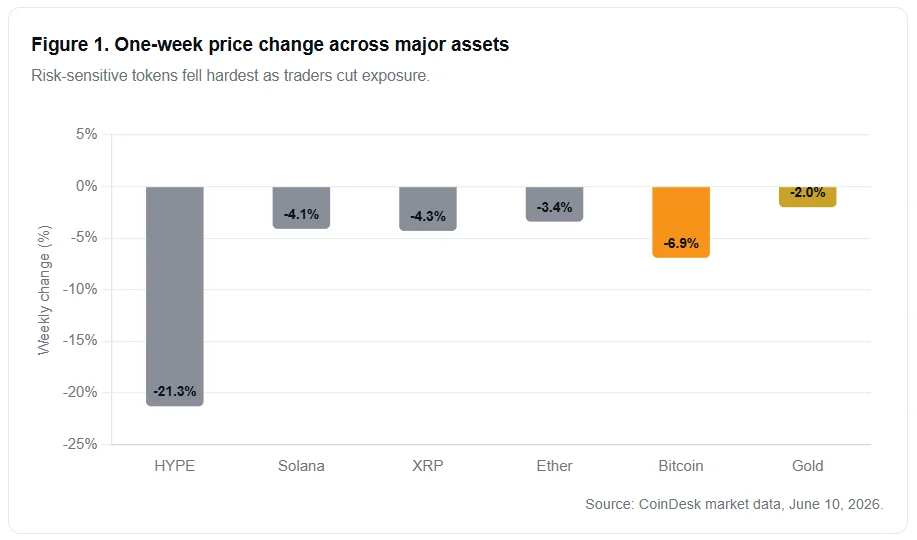
The pattern tells a simple story. Investors sold the assets that had run hardest on cheap money. In turn, speculative crypto tokens and AI-linked equities led the decline together.
Why the inflation print matters
Inflation drives Federal Reserve policy, and policy drives liquidity. A hot reading hardens the case for keeping rates high. Subsequently, expensive money pulls capital away from non-yielding bets like bitcoin and gold.
The latest data made that risk concrete. Annual inflation of 4.2% sits far above the Fed’s 2% target. Moreover, core inflation reached 2.9%, its highest since September 2025, according to Federal Reserve forecast data.
The Warsh factor
New Fed Chair Kevin Warsh adds another layer of pressure. The Senate confirmed him in a narrow 54-45 vote in May 2026. Many investors view him as a hawk on inflation.
His first policy meeting falls on June 16-17. Traders will watch it closely for signals. Should Warsh stay firm, rates could remain elevated for longer. Thus, the liquidity drain on risk assets may continue.
Short squeeze, not fresh demand
Last week’s bounce looked stronger than it really was. The rally was a short squeeze rather than genuine buying. Indeed, more than $500 million in bearish bets were liquidated, the highest figure since April.
Spot demand, however, never truly arrived. Buyers stepped in after the dip, yet real money stayed cautious. “Spot demand has yet to return in a meaningful way,” said Diana Pires, chief business officer at sFOX, in the original CoinDesk report.
Institutional flows confirm her concern. US spot bitcoin ETFs posted a record 13-day outflow streak. During that run, funds shed more than $4.4 billion since mid-May. As a result, total ETF holdings fell about 7% from their October 2025 peak.
How one bet hit every hedge
The chain of events is straightforward. Each step feeds the next, and together they explain the synchronized fall.
What traders should watch next?
The next test is psychological as much as technical. Bitcoin must hold a bid through the inflationary aftermath. Otherwise, it risks trading tick-for-tick with the Nasdaq.
The hedge narrative also hangs in the balance. Gold could stabilize while bitcoin keeps sliding. If that happens, bitcoin’s case as a macro hedge weakens further. For now, both assets remain hostage to one question: how high, and how long, will rates stay?




