


June 21, 2026 – A slower week for mega deals still spread capital across AI, cybersecurity, quantum computing and fintech.
In Summary
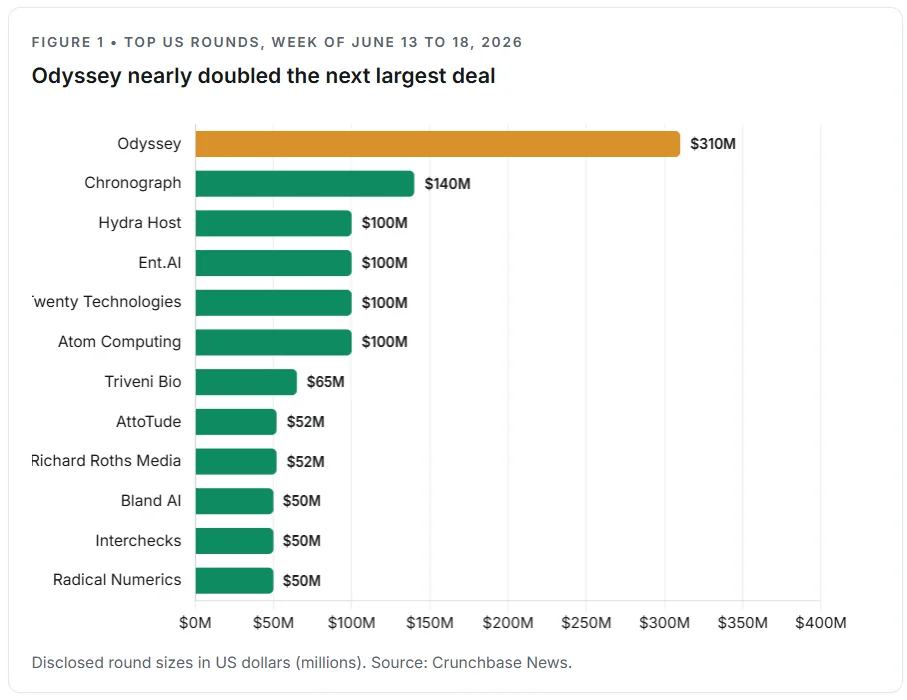
Odyssey raised $310 million at a $1.45 billion valuation, the week’s largest round.
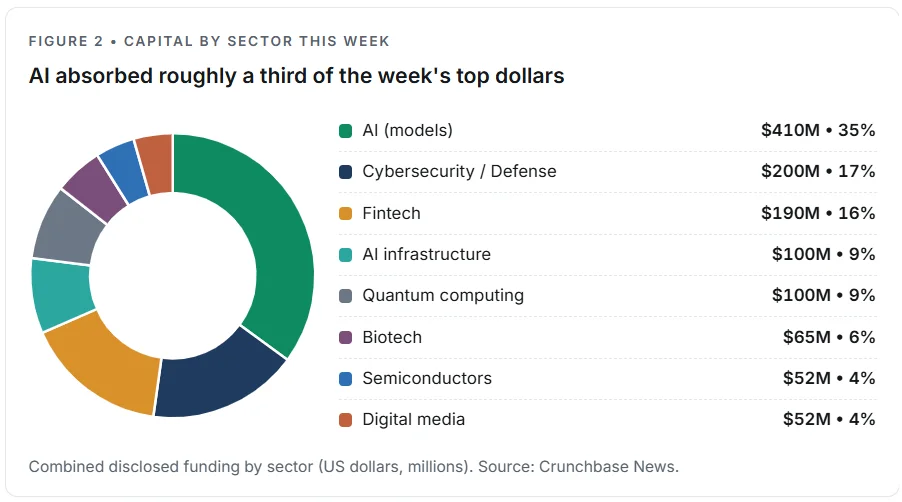
The top US startups collected roughly $1.17 billion in combined funding.
Cybersecurity and defense startups pulled in $200 million across two deals.
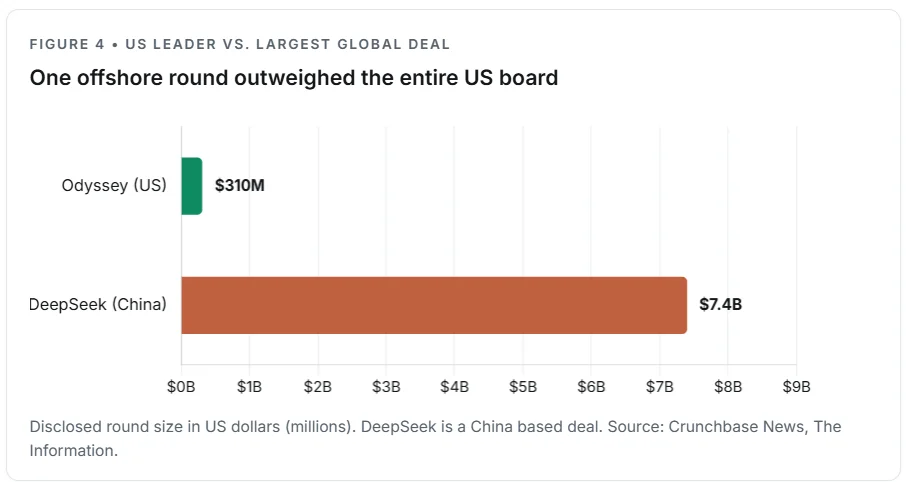
DeepSeek’s reported $7.4 billion round dwarfed every US deal on the board.
Venture investors slowed their pace this week. Large rounds grew scarce. Even so, capital still reached many corners of tech. AI, fintech, cybersecurity, quantum computing and biotech each drew fresh money. The biggest funding rounds of the week, tracked by Crunchbase News, show where conviction stays strongest in mid 2026.
Odyssey leads the biggest funding rounds
Odyssey claimed the top spot with room to spare. The Menlo Park, California, startup raised $310 million in a Series B. Natural Capital led the financing. Furthermore, the round valued the company at $1.45 billion. Amazon, AMD Ventures, EQT and Google Ventures also joined.
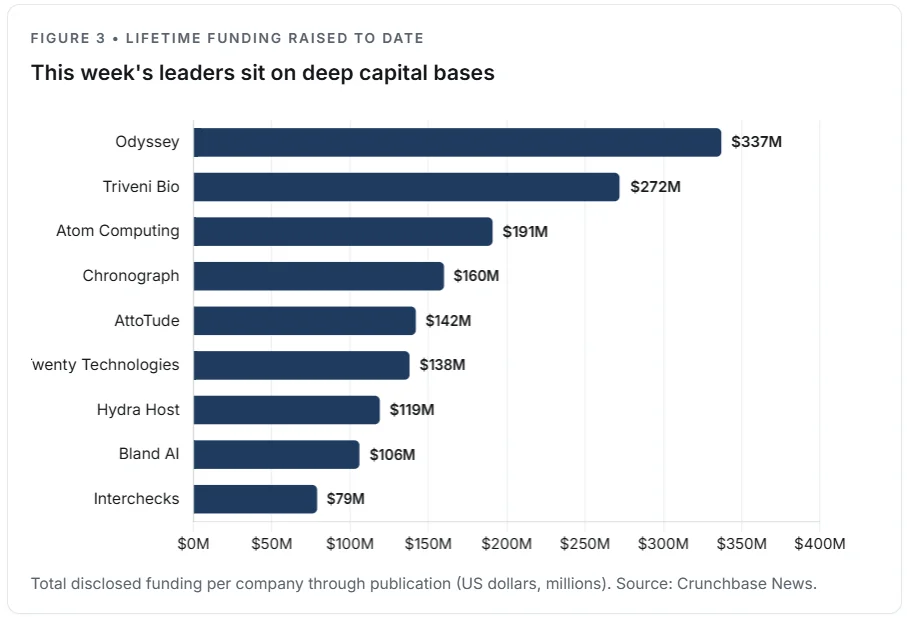
Odyssey builds AI “world models.” These systems generate multimodal simulations of real environments. Such tools could reshape gaming, robotics and film. As a result, Odyssey’s lifetime funding now reaches $337 million.
Big-name backers reinforced the trend. Amazon, Nvidia, Google Ventures and AMD Ventures all appeared this week. Strategic corporate money clearly chases AI capacity. In turn, that demand lifts infrastructure and chip startups alike.
Chronograph took second place for the week. The New York company raised $140 million in growth capital. Sixth Street Growth led the deal. Chronograph sells reporting and diligence software to private capital investors. That market continues to expand as private assets grow. Its total funding now sits at $160 million.
Cybersecurity and defense draw heavy bets
Security startups raised striking sums this week. Two companies each banked $100 million. Together, they delivered $200 million for the sector.
Ent.AI stepped out of stealth with a $100 million seed round. Decibel Partners led the financing. Former RiskIQ executives and Microsoft Security Copilot veterans founded the firm. Their platform tracks user and AI agent behavior in real time. Consequently, it tries to stop threats before they spread.
Twenty Technologies matched that figure with a $100 million Series B. Accel led the round at a $1 billion valuation. The Arlington, Virginia company builds AI-driven cyber warfare systems. Notably, it serves the US military and intelligence community. Defense tech funding has climbed toward record highs, according to Crunchbase News.
AI infrastructure and the $100M club
Hydra Host also reached the $100 million mark. Kindred Ventures led its Series A. Founders Fund and Nvidia joined the long list of investors. The Colorado company operates a bare-metal GPU platform. In effect, it links customers to distributed AI computing power. Its total raised now nears $119 million.
The pattern here matters. Four separate startups each closed $100 million rounds. Moreover, two of those were seed or Series A deals. Such early checks signal unusual investor conviction.
Quantum, biotech and chips round out the list
Atom Computing secured a $100 million Series C round led by Third Point Ventures. The Berkeley firm builds neutral atom quantum computers. Additionally, it won a $100 million letter of intent from the US Department of Commerce. That support flows through the CHIPS and Science Act. Quantum startups have attracted heavy investment across the sector this year.
Biotech earned its spot as well. Triveni Bio raised $65 million in a Series C. The company develops antibody therapies for inflammatory disease. Meanwhile, AttoTude collected $52 million for high-speed data center interconnects.
Several AI startups closed out the leaderboard. Bland AI raised $50 million for voice agents. Radical Numerics added $50 million to model biology. Interchecks likewise banked $50 million for payments infrastructure.
DeepSeek towers over the global field
The week’s largest deal sat far outside the US. DeepSeek reportedly raised about $7.4 billion. The Chinese AI firm rattled tech stocks back in early 2025. However, the deal structure looks highly unusual. Investors received stakes in an LLC controlled by founder Liang Wenfeng. They did not receive equity in DeepSeek itself, per reporting by The Information. On top of that, they face a five-year lockup and hold no voting rights.
The terms raise familiar governance questions. Yet investors still rushed to join. Demand for Chinese AI exposure evidently outweighs the caveats.
That single round dwarfs every US deal combined. By comparison, the entire US top tier raised about $1.17 billion. Odyssey’s leading $310 million therefore looks modest on the global stage.
What the data signals
The week reveals several clear trends. First, AI continues to absorb the most capital. Second, security and defense now attract growth scale checks. Third, governments increasingly invest alongside private funds. Atom Computing’s federal letter of intent proves that point.
Valuations also stayed rich for category leaders. Odyssey and Twenty Technologies both crossed the billion-dollar line. Therefore, appetite for frontier technology still looks strong.
Syndicate sizes grew this week too. Many rounds listed long investor lists. That breadth spreads risk across more funds. Liquidity still favors a narrow set of themes, however. Capital concentrates where future exits look plausible.
For founders, the message reads clearly. Investors will pay up for frontier tech and defense. For everyone else, the bar has risen. Overall, a slow week still rewarded bold and well-timed bets.
How the numbers were tracked
These figures come from announced rounds in the Crunchbase database. The window covered June 13 to 18, 2026. The list includes only US-based companies. Some late-reported deals may slightly shift the rankings. Still, the data offers a reliable weekly snapshot. Each company total reflects Crunchbase records at publication.




