

August 07, 2026 – The search giant taps the bond market again as record AI spending pushes free cash flow negative for the first time.
In Summary
Alphabet launched a note offering split across ten tranches on August 6.
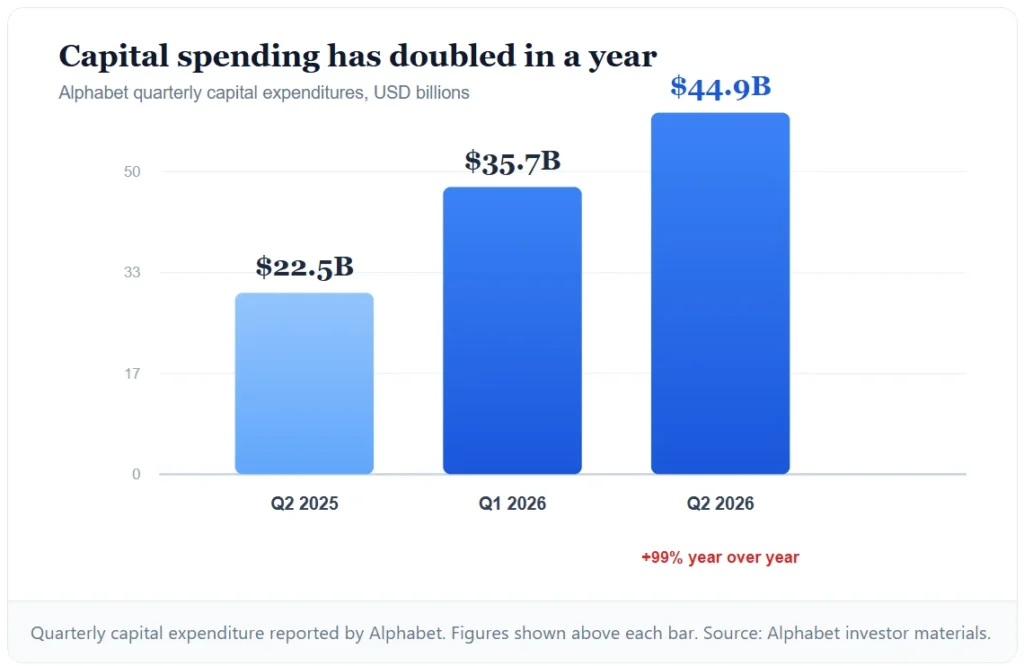
Second quarter capital spending hit 44.9 billion dollars, roughly double a year earlier.
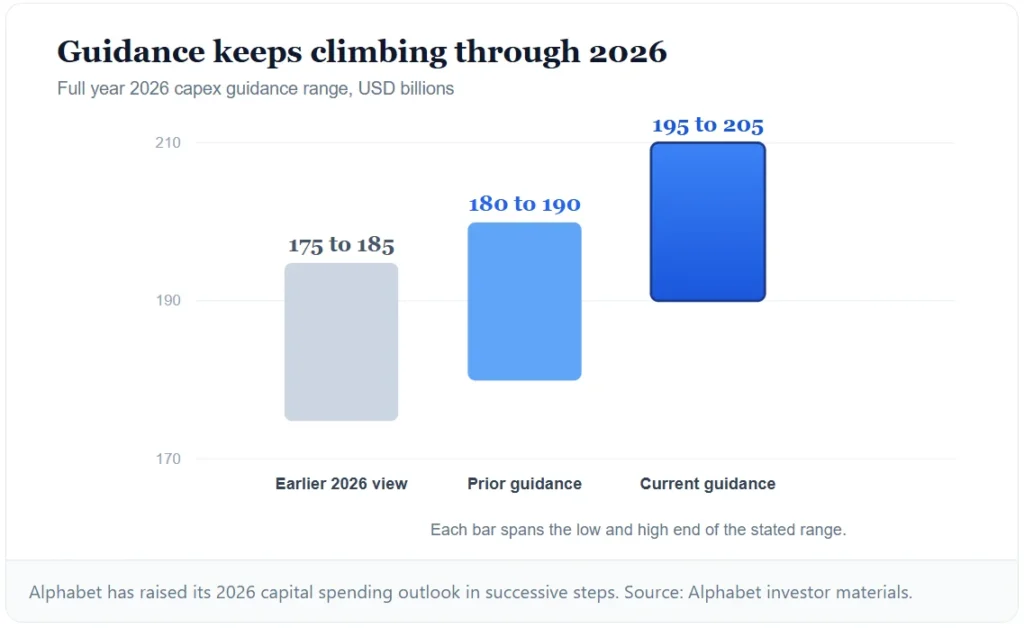
Full year 2026 spending guidance rose to a 195 to 205 billion dollar range.
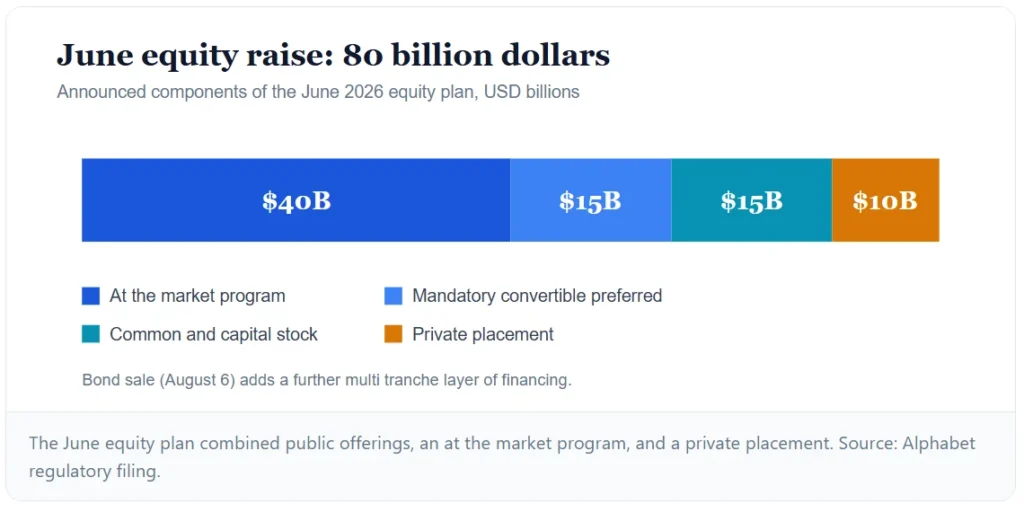
The debt follows an 80 billion dollar equity raise announced in June.
The latest Alphabet bond sale landed on August 6, and its timing speaks volumes. Regulatory filings show a note offering split across ten separate tranches. Moreover, the deal arrives only weeks after a record equity raise. Investors now watch closely, because Alphabet rarely borrows on this scale.
The offering carries two floating-rate tranches and eight fixed-rate tranches. Furthermore, Alphabet issued the notes under its long-standing February 2016 indenture. The filing left final sizes and coupons blank, as issuers usually do at launch. Still, the structure points to a broad and carefully staged capital plan.
Why the Alphabet bond sale matters now
Alphabet has become one of the biggest spenders in the AI race. Consequently, the group needs fresh cash to fund servers, chips, and data centers. Second-quarter capital spending hit 44.9 billion dollars, roughly double the year-earlier figure. That single number shows how fast the bill has climbed.
Management also lifted full-year 2026 capital spending guidance to 195 to 205 billion dollars. Previously, the company had guided to a range of 180 to 190 billion dollars. Therefore, the fresh bond deal helps cover a widening funding gap. In short, borrowing now supports an aggressive build-out across the world.
Capex doubles as AI demand surges
The spending surge did not slow revenue growth. In fact, Alphabet reported second-quarter revenue of 119.8 billion dollars, up 24 percent. Cloud revenue jumped 82 percent, driven by heavy demand for AI tools. However, the cash picture told a harder story this time.
Free cash flow turned negative during the quarter, a rare event for the company. Because capital spending outran operating cash, the group posted a clear shortfall. As a result, investors began to question how far future returns can stretch. Meanwhile, the shares slipped after the report as spending fears grew.
The order book also swelled to record levels. Cloud backlog reached 514 billion dollars by the end of June. Additionally, total future purchase commitments climbed toward 811 billion dollars. These figures explain why fresh funding matters so much right now.

Equity first, now debt
Alphabet already tapped equity markets in a major way this year. In June, the company announced offerings totaling 80 billion dollars to expand AI compute. Notably, that plan included a 10 billion dollar private placement with a well-known long-term investor. Additionally, the company launched a 40 billion dollar at-the-market share program.
Now the group turns to bonds rather than selling more stock. This choice matters, since debt avoids further dilution for existing shareholders. Besides, strong credit ratings let Alphabet borrow at relatively attractive terms. Consequently, the mix of equity and debt spreads the funding load sensibly.
The balance sheet gives Alphabet real room to move. Cash and marketable securities stood near 242 billion dollars at quarter-end. Meanwhile, long-term debt sat close to 98 billion dollars before this deal. That gap leaves plenty of headroom for extra borrowing.
Rates raise the stakes
Higher borrowing costs make the timing worth watching. On August 5, the ten year Treasury yield stood at 4.63 percent. Meanwhile, the thirty-year yield reached 5.17 percent. These levels sit well above the cheap rates of recent years.
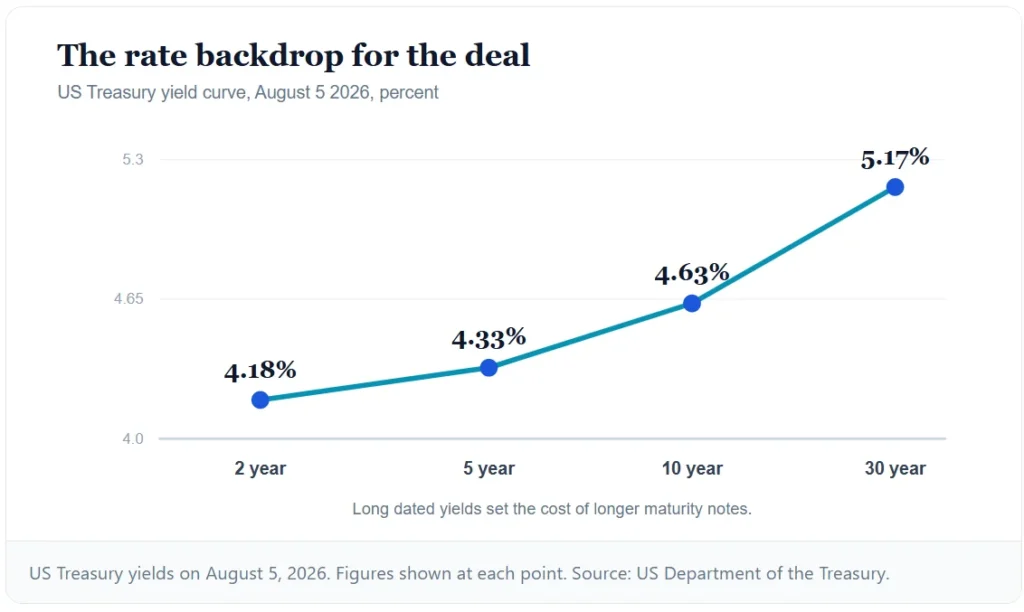
Alphabet still enjoys deep investor demand and top-tier credit standing. Therefore, the company can likely price the deal smoothly. Yet every extra point of yield adds real cost across billions in debt. In contrast, a smaller borrower would face far tougher conditions today.
Rival cloud giants are spending at a similar pace. As a result, lenders now face a growing wave of AI-linked debt. Investors will judge whether these huge bets pay off in time. Above all, the market wants proof that heavy spending drives durable profit.
What to watch next
The bond deal will test appetite for AI-linked corporate debt. First, watch the final size once pricing closes. Next, track the coupons across the fixed and floating tranches. Finally, follow how quickly Alphabet turns this cash into working capacity.
Management has framed AI spending as a long-term commitment. Because demand keeps rising, further capital raises look likely into 2027. For readers, the underlying signal stays simple and clear. Big technology now funds the AI boom with both stock and bonds.




