


June 29, 2026 – Artificial intelligence again dominated America’s largest venture rounds. Baseten led with $1.5 billion, while ad giants poured $1 billion into AppsFlyer.
In Summary
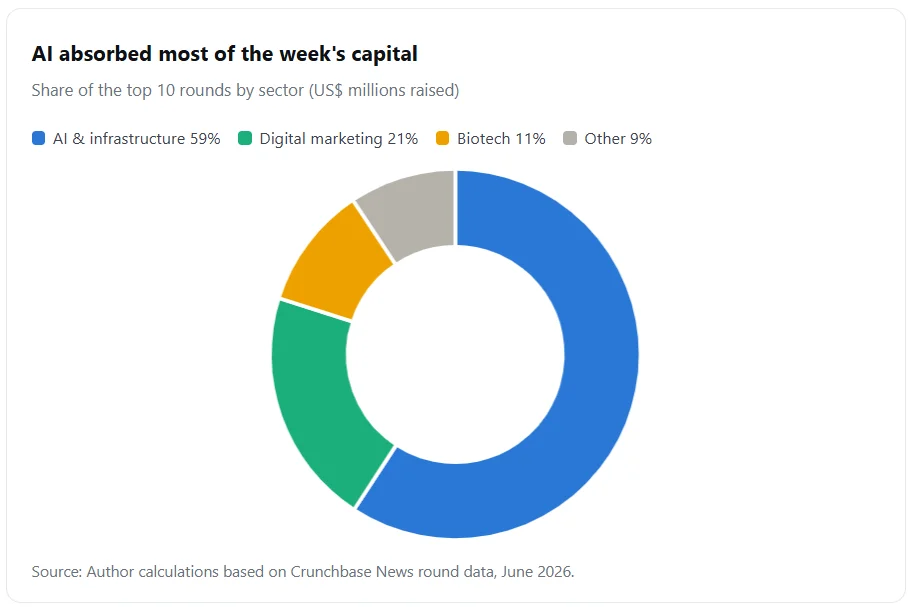
AI startups captured most of the week’s 10 biggest US venture rounds.
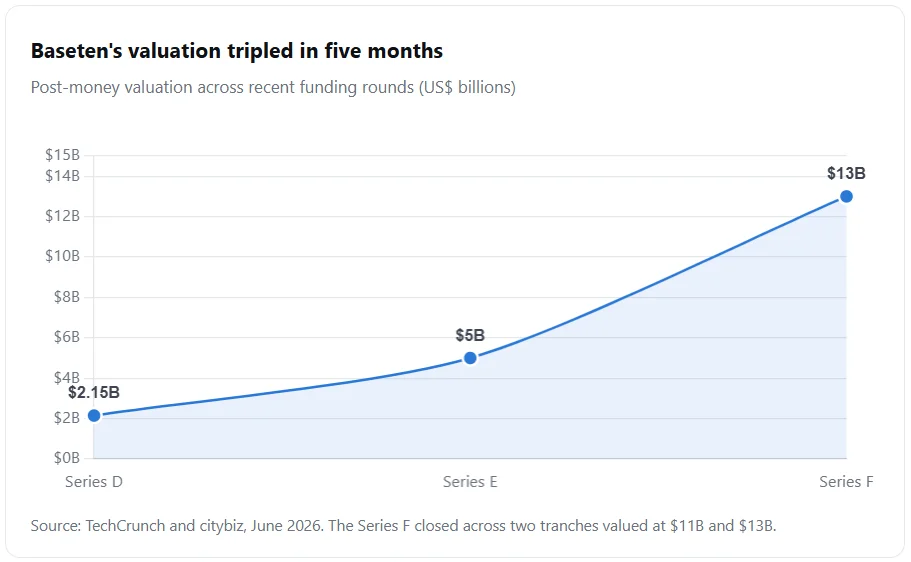
Baseten raised a $1.5 billion in Series F at a $13 billion valuation.
AppsFlyer secured over $1 billion from Google, Meta, Unity and Moloco.
Inference infrastructure has emerged as a distinct, high-value AI category.
Biotech ranked as the second-largest funding sector behind AI.
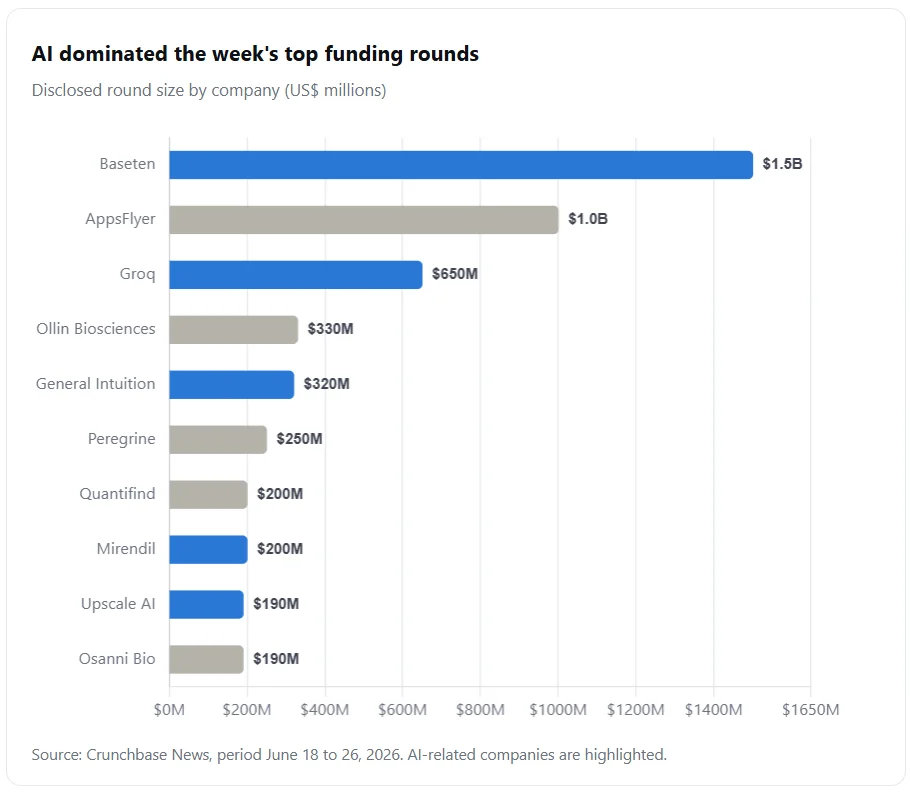
Venture capital flowed heavily toward artificial intelligence once more. Most of the week’s largest US startup rounds landed in the AI sector, according to Crunchbase News. Biotech followed as the next-busiest area for big checks.
The pattern is now familiar. Investors continue to concentrate capital in a handful of AI infrastructure firms. Moreover, valuations are climbing at a striking pace. This week underlined just how fierce that competition has become.
Baseten Tops the Week at $1.5 Billion
San Francisco-based Baseten led every other deal. The company provides systems software that runs AI application workloads. It raised $1.5 billion in Series F funding, its fourth raise in just 18 months.
Altimeter Capital, Conviction, Spark Capital, Sands Capital and Wellington Management co-led the round. The financing set a $13 billion valuation, citybiz reported. Total funding now exceeds $2 billion since the firm’s founding in 2019.
That valuation marks a remarkable climb. Baseten raised a $300 million in Series E funding at a $5 billion valuation only five months earlier, TechCrunch noted. Consequently, the company roughly tripled its worth in under half a year.
Revenue growth helps explain the leap. Baseten processes more than one billion inference calls each day. Its annualized revenue run-rate jumped from roughly $200 million to $600 million in a single quarter, Startup Fortune reported.
The Week’s 10 Largest US Rounds
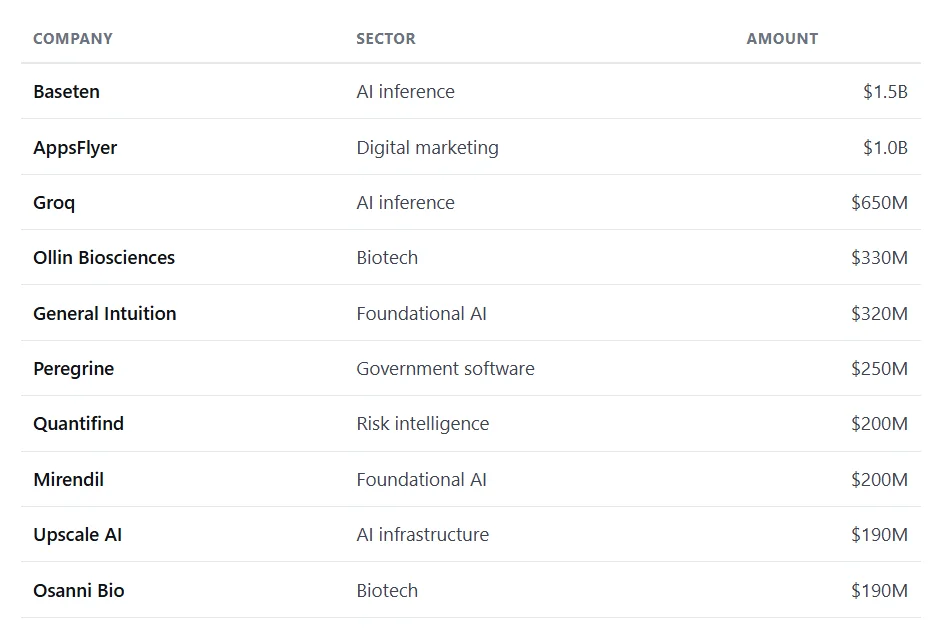
AI claimed the top spots, yet the list spanned several sectors. Biotech, government software and risk intelligence all featured. The table below ranks each disclosed round.
Ad Giants Back AppsFlyer’s $1 Billion Round
The second-largest deal came from marketing measurement. AppsFlyer, a San Francisco-based data analytics firm, raised more than $1 billion. The Series E set a post-money valuation of $2.7 billion, Axios reported.
Notably, four advertising rivals jointly funded it. Google, Meta, Unity and Moloco each took a minority, non-controlling stake. They are betting that AI-driven advertising will demand independent, neutral measurement.
“As AI takes over more of how advertising gets bought and optimized, the signals feeding those systems become the most consequential infrastructure in the industry,” said CEO Oren Kaniel. AppsFlyer serves more than 15,000 brands and intends to go public eventually.
Inference Becomes Its Own Battleground
Three of the top rounds targeted AI inference or infrastructure. Baseten, Groq and Upscale AI together raised more than $2.3 billion. Therefore, the “serving layer” now rivals model-building for investor attention.
Groq alone closed $650 million to scale its inference cloud. The raise followed a deal in which Nvidia hired away its founder and licensed its technology. Demand for inference capacity, it seems, keeps outrunning supply.
Marketing Tech Funding Stays Below Boom Levels
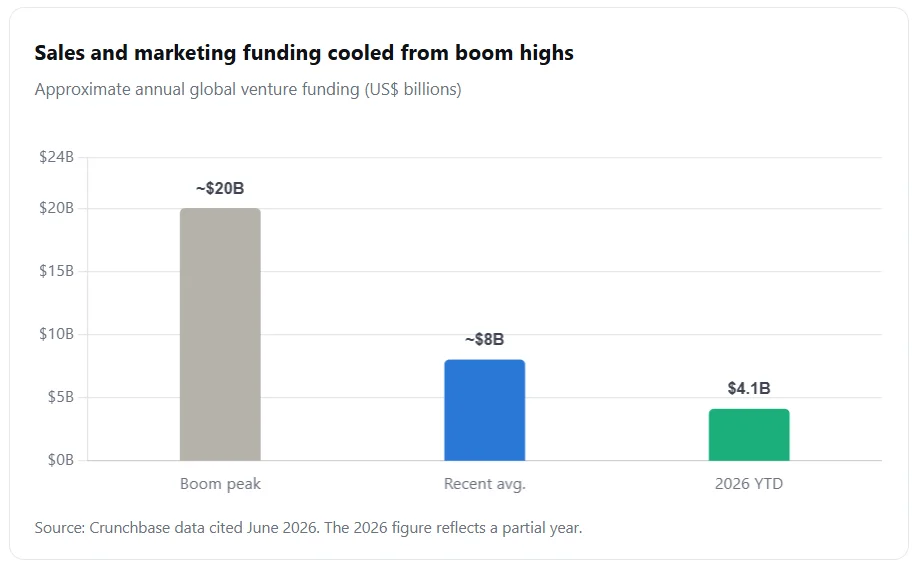
AppsFlyer’s haul stands out for another reason. Sales and marketing startups raised about $4.1 billion globally in 2026 so far, per Crunchbase data. That pace tracks roughly flat with recent years.
However, the sector remains far below its peak. Annual investment once topped $20 billion during the boom era. Today’s totals hover nearer the $8 billion mark, signalling a more disciplined market.
Europe Adds Two Large Rounds
The momentum was not confined to America. Berlin defense-tech startup Stark reportedly raised $569 million. Founders Fund and Sequoia Capital led that financing.
Paris-based health insurer Alan also raised fresh capital. Prosus led the new equity investment. Together, these deals show European venture activity holding firm.
What It Signals for AI Investing
This week confirms a clear thesis. Capital is consolidating around AI’s foundational layers. Furthermore, infrastructure providers now command valuations once reserved for model labs.
Investors appear convinced that inference is where durable margins sit. Whether revenue can justify these valuations remains the open question. For now, though, the AI funding spree shows little sign of slowing.




