

June 21, 2026 – Hyperscalers now fund the AI buildout with record debt. Rising rates raise the stakes for every tech portfolio.
In Summary
Big Tech funds AI with debt now, not just spare cash.
Morgan Stanley sees AI debt near $570 billion in 2026.
The 10-year Treasury yield trades close to 4.45%.
Higher rates lift the cost of the whole AI buildout.
Tech learns to watch the bond market
For years, Big Tech ran on cash. Today the picture looks very different. Amazon, Alphabet, Meta, Oracle, and Nvidia now borrow tens of billions each. These firms once sat on huge reserves. However, the AI buildout drains those reserves fast. As a result, debt has become a core funding tool.
Fidelity expects several hundred billion dollars of new tech debt in 2026. Therefore, rates and inflation suddenly matter to equity investors too. That shift marks a real break from the past.
“Tech investors are not as used to looking at rates,” said Peter Boockvar of One Point BFG Wealth Partners.
His warning lands hard this month. Moreover, the Federal Reserve has turned more hawkish under new leadership. So the cost of money now shapes valuations across the sector.
The AI bond market hits record scale
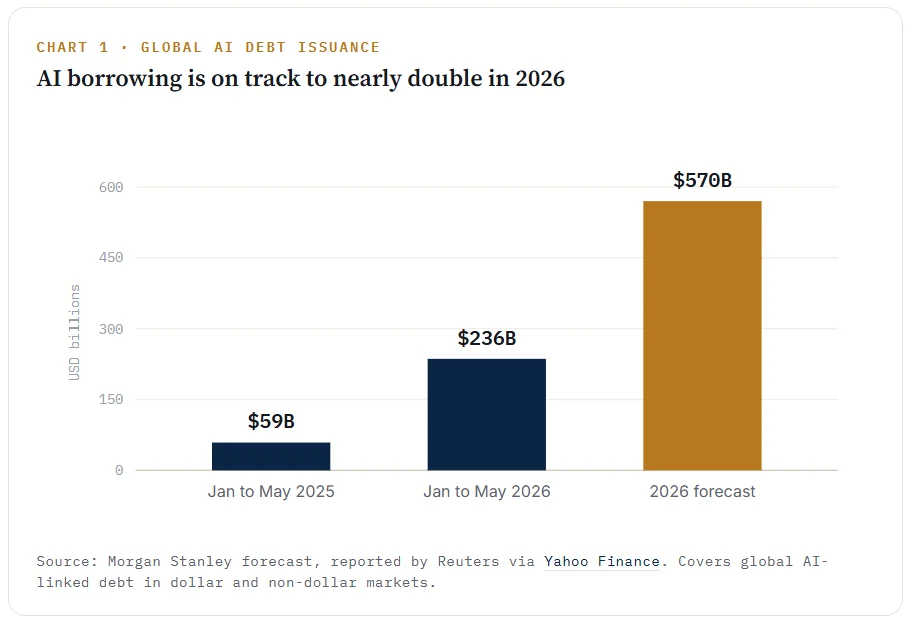
The numbers tell a striking story. Morgan Stanley expects global AI debt issuance near $570 billion in 2026. That total would more than double last year. By May 31, issuers had already sold about $236 billion. Furthermore, that pace is roughly four times the prior year’s pace.
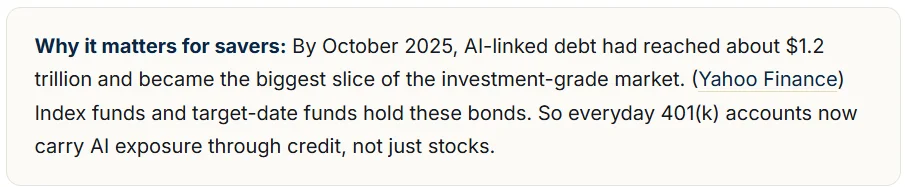
The trend is not new, yet it keeps accelerating. Five hyperscalers issued $121 billion in U.S. bonds during 2025, says Bank of America. Between 2020 and 2024, they averaged just $28 billion a year. In short, yearly borrowing has jumped more than fourfold. Consequently, AI debt now forms one of the largest slices of the high-grade market.
Big single deals show the global reach of this borrowing. Alphabet announced an $85 billion raise and issued a rare 100-year bond. Amazon, meanwhile, sold the largest euro corporate bond ever, worth 14.5 billion euros. It also set a Canadian “maple bond” record with C$14 billion of notes.
Why the buildout needs so much cash
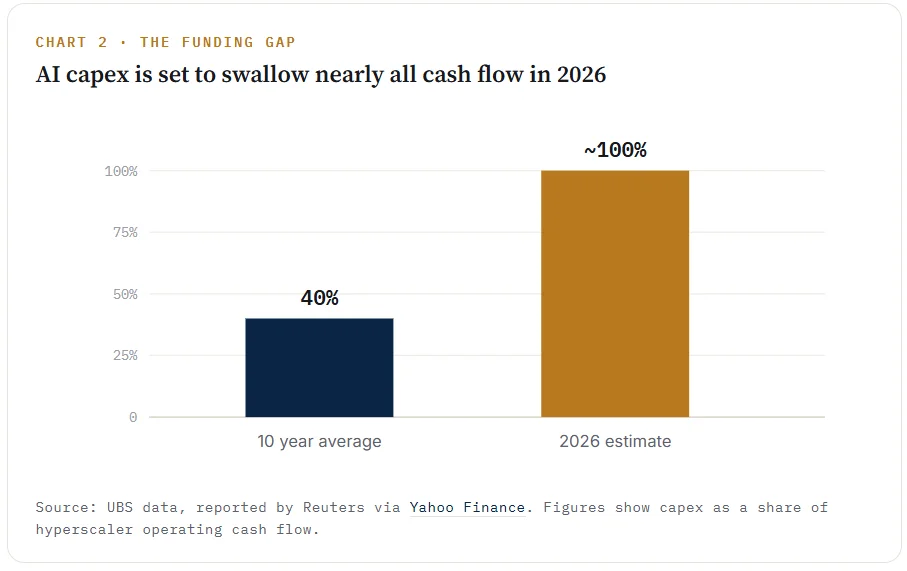
The math behind the borrowing is simple. Capital spending now outruns what these firms earn. During 2026, hyperscaler capex may consume nearly all operating cash flow, per UBS. The 10-year average sat near 40%. Bond markets fill that widening gap.
The spending plans keep climbing higher. Morgan Stanley estimates roughly $700 billion of hyperscaler capex in 2026. By 2027, that figure could top $1 trillion. Separately, UBS data suggests 2026 capex could even reach $770 billion, about 23% above earlier estimates. Naturally, more spending means more debt.
Investors once kept speculative AI spending separate from credit markets. That so-called unspoken contract has now broken. Because debt funds the boom, lenders share the risk as well.
Rates now move tech stocks
The Fed angle changes everything here. Kevin Warsh chaired his first policy meeting this week. Officials held rates at 3.50% to 3.75%. Still, fresh projections now point to a possible 2026 hike.
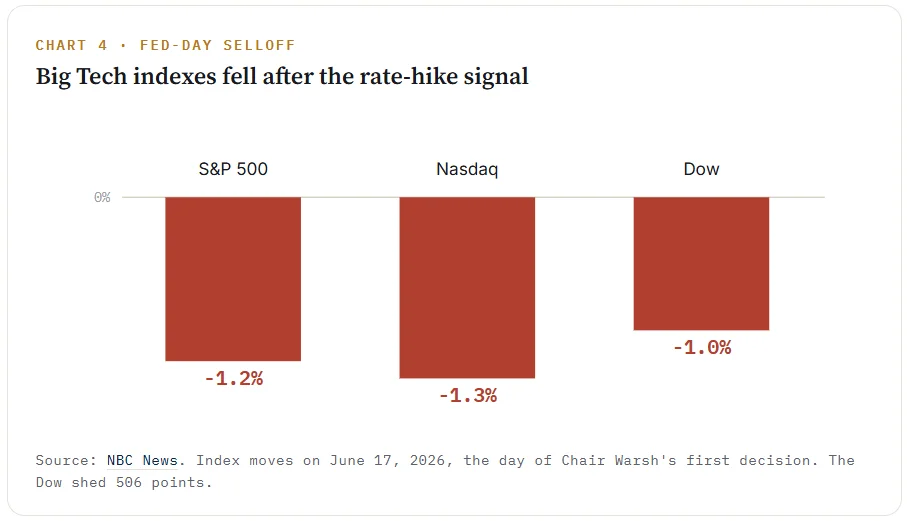
Markets reacted within minutes. Stocks fell, with the S&P 500 down 1.2%. The Nasdaq dropped 1.3%, while the Dow lost 506 points. Traders also sharply raised the odds of an October rate hike.
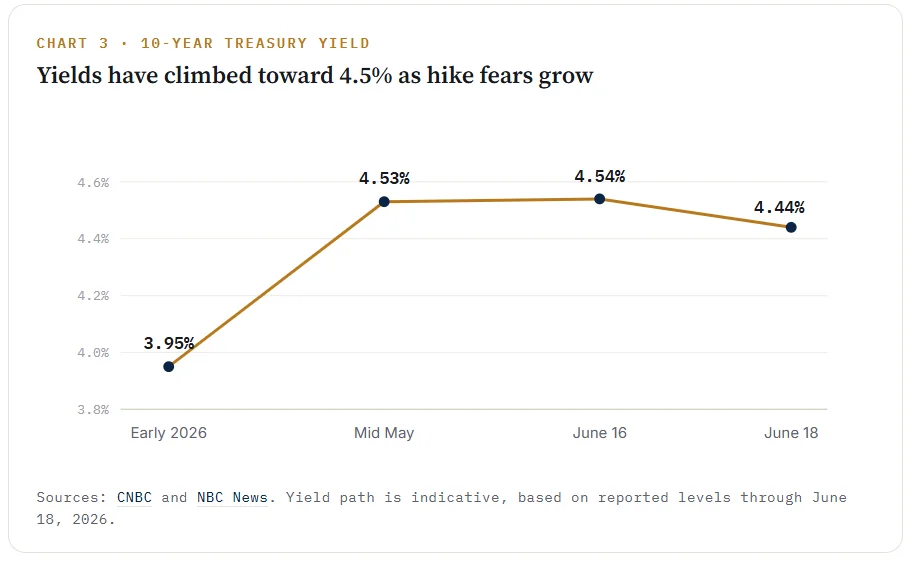
Yields jumped at the same time. The 10-year Treasury note trades near 4.45%. Earlier this month, a hot jobs report pushed it to 4.54%. Higher rates hit tech valuations directly. Because investors price tech on future profits, a steeper discount rate stings.
What it means for investors
The risk-reward picture has narrowed sharply. These borrowers carry high credit ratings. Therefore, their bonds pay only small premiums over Treasurys. Fidelity’s team treats AI-linked deals with caution for that reason. Meanwhile, supply continues to grow across the sector.
New offerings arrive almost weekly. Bankers for SpaceX are preparing a bond sale of at least $20 billion, Reuters reported. Smaller data-center builders are tapping the same window. In addition, hyperscalers now sell debt in euros and other currencies.
The bottom line
Tech and bonds now move together. For investors, that link demands new habits. Watch the 10-year yield closely. Track each inflation print. Follow the Fed without fail. Above all, remember one simple rule. When rates rise, the AI buildout grows costlier, and tech valuations feel the strain.