

August 15, 2026 – Buyers demanded the steepest long bond yield since 2001. Demand held up. Yet the price of that demand keeps climbing.

In Summary
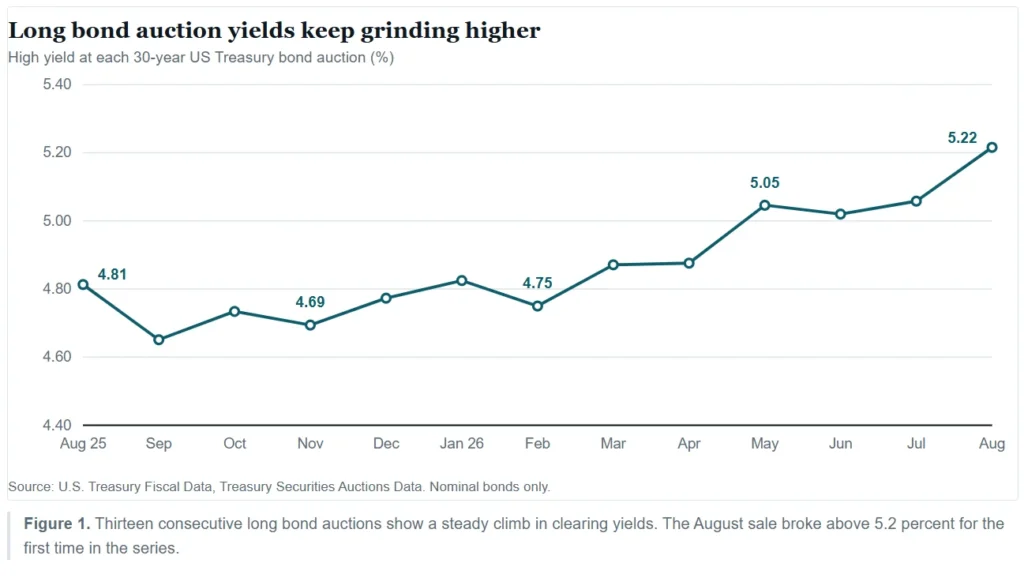
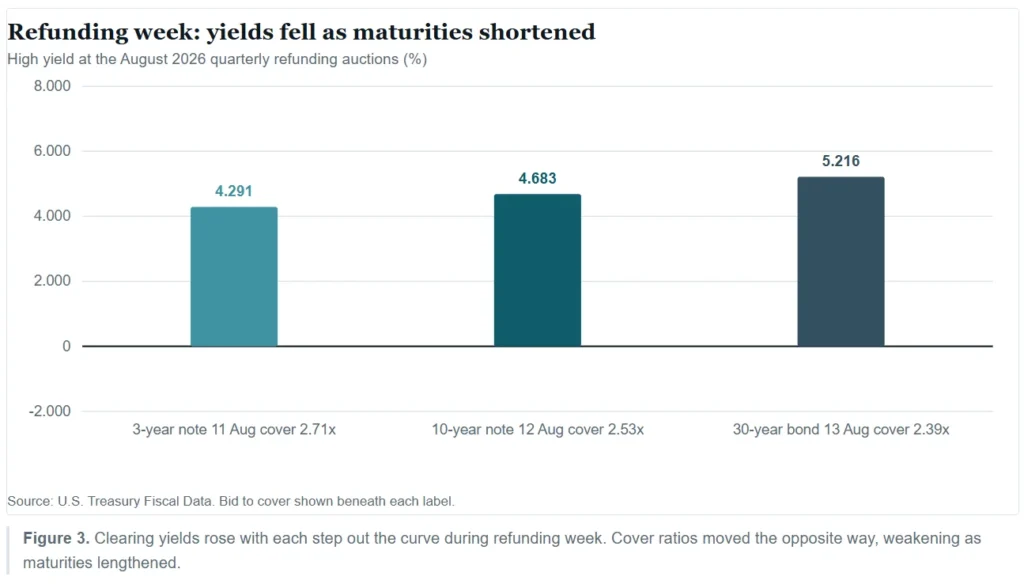
Treasury sold 25 billion dollars of 30-year bonds at a 5.216 percent high yield.
That clearing level is the highest for the tenor since August 2001.
Bid to cover reached 2.39, so demand held despite the higher price.
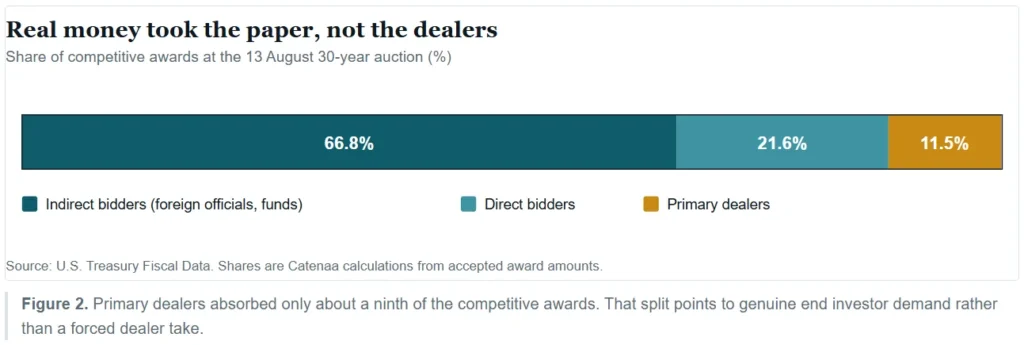
Indirect bidders absorbed close to 67 percent of competitive awards.
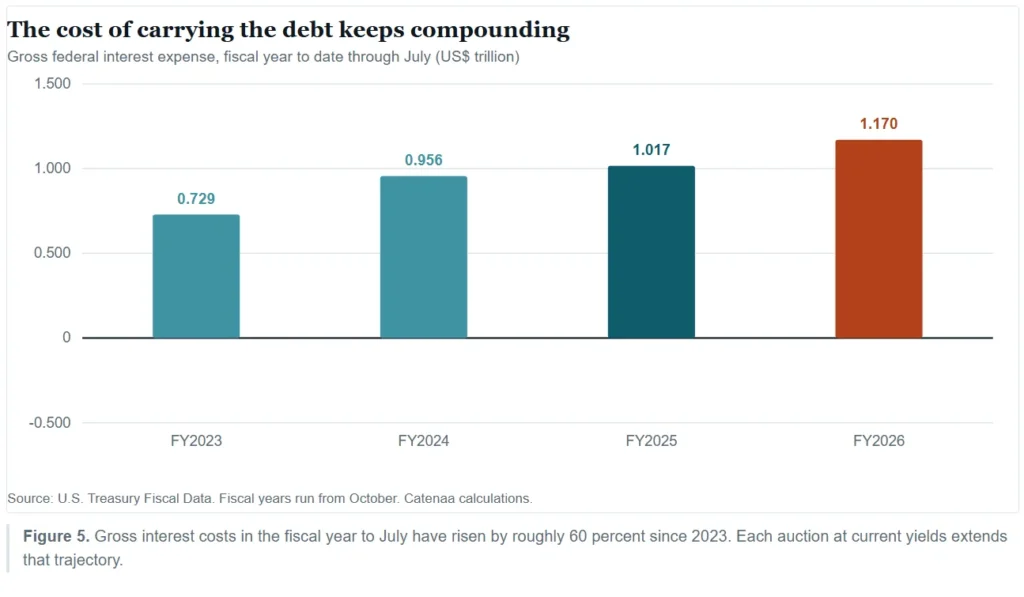
Federal interest costs hit 1.17 trillion dollars in the fiscal year through July.
The 30-year Treasury auction on Thursday cleared at 5.216 percent. No long bond sale has priced that high since August 2001. Treasury sold 25 billion dollars of new bonds due in 2056. Also, the coupon came in at 5.125 percent. The price settled near 98.63.
Buyers still turned up in force. Bids reached 59.7 billion dollars. Of that, 24.9 billion won awards. So the bid to cover ratio printed 2.39. In short, the sale went fine. Only the cost hurt.
Who bought the 30-year Treasury auction
The bidder split looked calm. Indirect bidders took 16.6 billion dollars of the awards. So they took close to 67 percent of the total. That share comes from Catenaa calculations on Treasury records.
Indirect bidders tend to be foreign central banks and big funds. Direct bidders claimed 5.4 billion dollars. In turn, that works out near 22 percent. Primary dealers kept just 11 percent on their books.
Dealers act as buyers of last resort. A small dealer share therefore points to healthy real money demand. In truth, the issue was price rather than turnout.
A hard week for long duration
Thursday capped a heavy refunding week. On Tuesday, Treasury sold 58 billion dollars of three year notes. That sale priced at 4.291 percent. Next came 42 billion dollars of ten year notes at 4.683 percent.
The ten year level merits a closer look. Treasury records back to 2014 show no higher clearing yield. Yet the three year sale drew a solid 2.71 cover ratio.
Demand clearly improved as the term got shorter. Lenders will commit for three years without much fuss. Thirty years, though, is another matter. Duration risk now carries a real price tag.
The fiscal maths behind the yield
Supply explains much of the strain. Total public debt hit 39.9 trillion dollars on 12 August. Treasury must roll a large slice of that pile each year. As a result, sales like Thursday come round often.
Costs have climbed just as fast. Gross interest expense reached 1.17 trillion dollars in the fiscal year through July. By contrast, the same span a year earlier cost 1.02 trillion dollars.
That works out at a 15 percent rise in twelve months. The figure rests on Catenaa calculations from Treasury data. Every fresh sale near 5 percent locks in higher costs for decades. Buyers grasp that loop. So they price it in.
How the curve has shifted in 2026
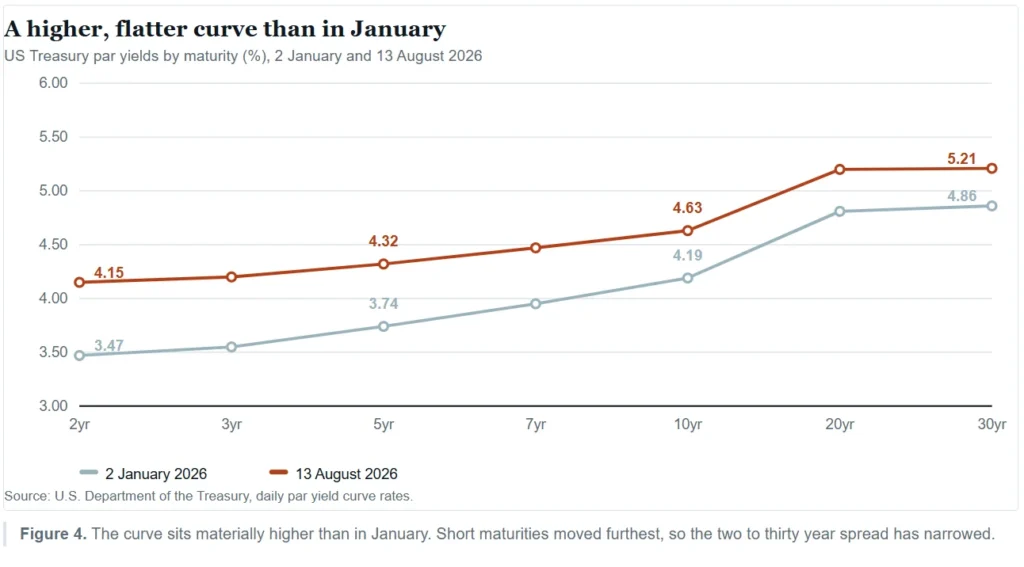
Cash market yields tell a similar story. The thirty year traded at 5.21 percent on Thursday. In early January it sat at 4.86 percent. The two year, though, jumped from 3.47 percent to 4.15 percent.
Short rates thus moved further than long rates. The gap between two and thirty year yields shrank to about 106 basis points. Before that, the spread sat near 139 basis points.
Such flattening usually points to tighter policy ahead. Traders now allow for a Fed hike this autumn. At the same time, term premium keeps pushing the far end higher. Long money wants payment for that risk.
What this means for portfolios
Bonds at the far end now pay real income again. A 5.2 percent coupon beats the yield on most share indices. However, mark to market risk cuts both ways.
Timing drives the outcome here. A buyer who locks in 5.2 percent for thirty years needs no rally to win. Still, that buyer must sit through every swing along the way.
Another 50 basis point rise would inflict harsh capital losses. By contrast, a soft inflation shock could deliver sharp gains. So pension funds and insurers face a very live choice.
The next 30-year Treasury auction reopening lands in September. Until then, buyers will read each price print for clues. Thursday proved that demand exists. It also proved the yield must pay for it.