


April 19, 2026 – The author of Rich Dad Poor Dad is sounding the alarm again. But this time, global debt data and market signals suggest his warnings carry real weight.
In Summary
Global debt reached $251 trillion in 2024, equal to 235% of global GDP, according to the IMF.
Kiyosaki links the collapse to cities like Dubai, Tokyo, and New York City.
Gold hit an all-time high of $5,589/oz in January 2026, up 80% since 2025.
Bitcoin trades near $74,000, down sharply from its $126,000 peak in October 2025.
The IMF’s April 2026 outlook is titled “Fiscal Policy Under Pressure: High Debt, Rising Risks.”
Robert Kiyosaki issued a stark warning on April 16, 2026. The bestselling author of Rich Dad Poor Dad said the “Everything Bubble” is now bursting. He predicted this could spark the worst economic depression in modern history.
Kiyosaki cited his 2002 book, Rich Dad’s Prophecy, as the basis for his forecast. He wrote on X: “In 2026 the predictions in Prophecy are coming true.” The remarks quickly went viral across financial media.

What the Data Actually Says
Kiyosaki’s alarm is not entirely without basis. According to the IMF’s Global Debt Monitor, total global debt hit $251 trillion in 2024. That equals 235% of world GDP. Public debt alone rose by 1 percentage point of GDP in a single year.
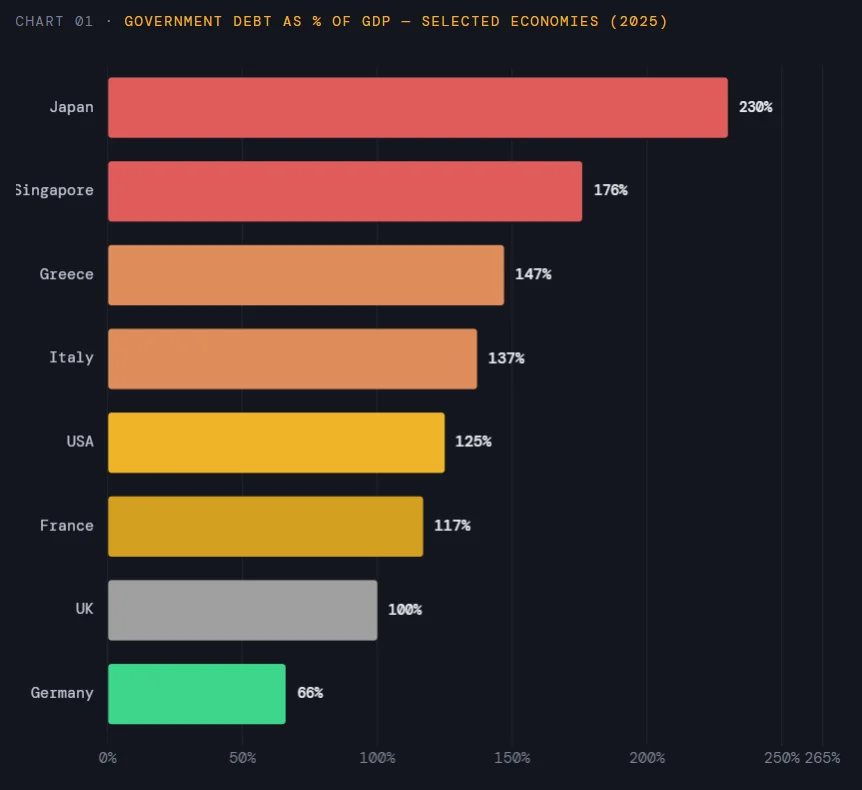
The IMF’s April 2026 World Economic Outlook is titled “Fiscal Policy Under Pressure: High Debt, Rising Risks.” The title alone signals institutional concern. US debt-to-GDP now stands at 125%, according to IMF calculations. Japan leads globally at 230%. France sits at 117%.
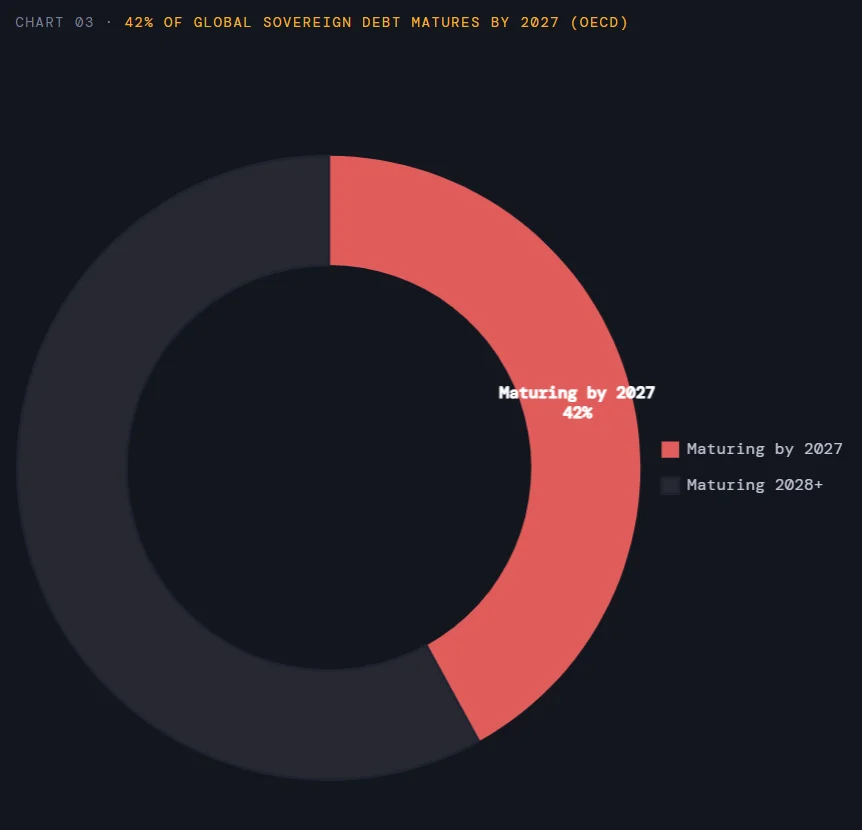
The OECD’s Global Debt Report 2025 adds further context. It warns that 42% of all global sovereign debt matures by 2027. Much of it was issued at near-zero rates. Refinancing at today’s higher rates could severely strain government budgets.
Markets in 2026: Gold Up, Bitcoin Down
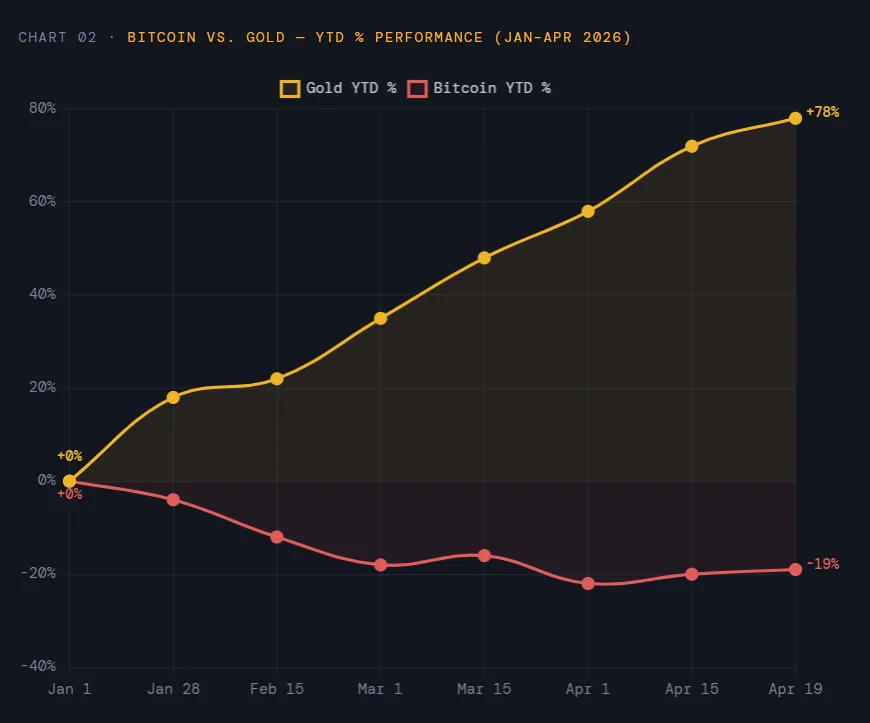
The market response to global uncertainty has been uneven. Gold and Bitcoin have diverged sharply in 2026. The data tells a clear story.
According to 247 Wall St., gold hit an all-time high of $5,589 per ounce in January 2026. It is still up roughly 80% since the start of 2025. Bitcoin, meanwhile, has shed around 20% year-to-date. It peaked at $126,000 in October 2025. It now trades near $74,000.
“You don’t have to be a victim to the ‘Everything Bubble.’ You can still be a winner even as the world economy crashes.”
— Robert Kiyosaki, April 16, 2026
Kiyosaki has long championed Bitcoin as a hedge against fiat debasement. However, the 2026 data complicates that thesis. Analysis from The Middle East Insider shows Bitcoin moved alongside the Nasdaq on 78% of trading days in Q1 2026. That makes it a risk asset, not a safe haven, during acute crises.
Is a ‘Greatest Depression’ Realistic?
Most mainstream economists do not share Kiyosaki’s catastrophic framing. But risks are real and mounting. The IMF projects that government debt could hit 100% of world GDP by 2029. That would be the highest since World War II.
Kiyosaki flagged cities like Dubai, Las Vegas, Tokyo, and New York City as flash points. These are hubs of real estate, capital markets, and tourism. A synchronised slowdown across all four would be serious. There are early signs of stress in commercial real estate and consumer credit globally.
The author also warned of social consequences. “Homelessness will spread globally,” he wrote. Whether that comes to pass depends on how governments respond to tightening liquidity. History shows that policy responses, rate cuts, and fiscal stimulus tend to follow crises. Bitcoin advocates argue that those responses ultimately benefit digital assets most.
Bottom Line
Kiyosaki’s warnings are hyperbolic by design. He is a marketer as much as a forecaster. But the underlying data on debt levels, asset valuations, and refinancing risk is legitimate.
For investors, the divergence between gold and Bitcoin in 2026 is a lesson in asset behaviour during stress. Gold protects during kinetic crises. Bitcoin may recover during the monetary expansion that follows. Neither is a guaranteed hedge. Both carry risk.
The IMF is watching. The OECD is watching. And now, so is the rest of the world.